
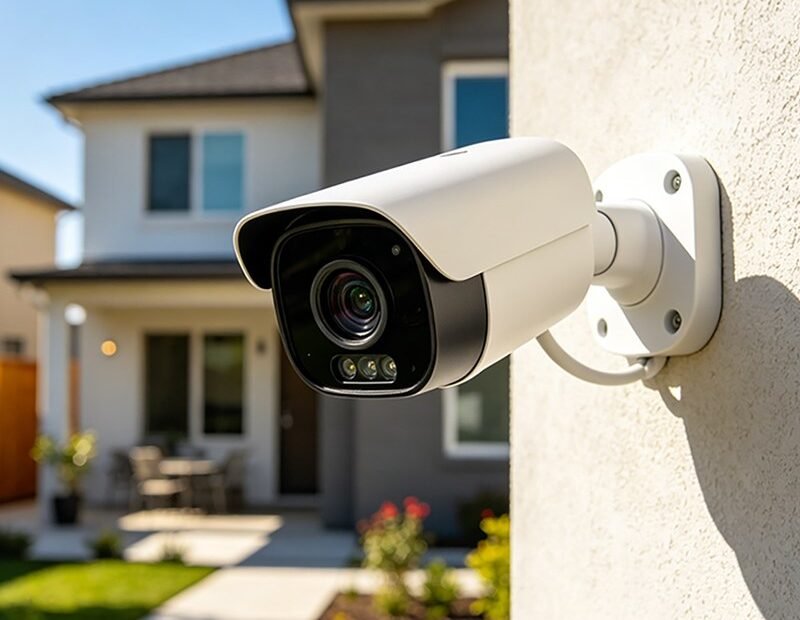
How much does a basic home security camera system cost? It’s a fair question, and the honest answer is: it depends — but not in the annoying way. It depends on a handful of specific factors, and once you know what they are, you can figure out your situation in about five minutes. That’s what this article is for.
I’ve seen too many people overpay, waste a weekend, or pick the wrong option simply because nobody gave them the full picture. So here it is: the full picture, written like I’d explain it to a friend over coffee.
How Much Does a Basic Home Security Camera System Cost: What You Need to Know
A basic home security camera system costs less than most people expect upfront — and more than most expect over time. The cameras themselves run $100 to $400 for a solid 2–4 camera setup, but the subscription fees for cloud storage and smart features are where the real long-term cost hides. Let’s price the whole picture honestly.
The budget king is Wyze: individual cameras run $30 to $50 each, so a three-camera setup costs under $150. Video quality is genuinely good for the price, and local storage via microSD card means you can skip subscriptions entirely. The trade-offs are less polished apps, occasional connectivity quirks, and fewer smart-home integrations than the big brands. Related: our breakdown of What is the Best Way to Back Up Family Photos covers the numbers in detail.
What Actually Affects the Outcome
In the mid-range, Ring’s indoor/outdoor cameras run $60 to $100 each — a three-camera setup lands around $200 to $300. Ring’s strength is the ecosystem: excellent app, reliable alerts, and deep Alexa integration. The catch is the subscription: Ring Protect costs $5 to $20 a month, and without it you lose video history, person alerts, and rich notifications. Over three years, the subscription can exceed the hardware cost. You can also check Consumer Reports’ buying advice for the authoritative details.
Arlo sits at the premium end: $130 to $200 per camera, with a 3-camera system around $400 to $500. You get excellent 2K/4K video, better night vision, and more flexible power options (battery, solar, wired). Arlo Secure subscriptions run $8 to $25 monthly. It’s the choice for people who want the best image quality and are willing to pay for it — overkill for most apartments, sensible for larger homes.
Your Action Plan
- Wyze: $30–$50/camera (~$150 for 3); local microSD storage, subscriptions optional.
- Ring: $60–$100/camera (~$250 for 3); great app, but Protect plan ($5–$20/mo) needed for full features.
- Arlo: $130–$200/camera (~$450 for 3); best video quality, premium pricing.
- 3-year true cost: subscriptions often exceed hardware — do the math before buying.
- Wired NVR kits (Reolink/Lorex, $300–$600): 24/7 local recording, zero subscriptions.
- Start with front door + driveway coverage; enable 2FA on the camera account.
Looking Closer at Your Options
Here’s the cost most buyers miss: subscriptions are the real price. A $200 camera system with a $10/month plan costs $560 over three years; a $150 Wyze system with local storage costs $150 total. Before buying any system, decide whether you need cloud video history (useful for evidence, package theft) or whether live viewing plus local recording suffices. That one decision swings the 3-year cost by hundreds.
Installation is refreshingly cheap: most modern cameras are wireless, battery-powered, and mount with a couple of screws — genuine DIY in under an hour. Wired PoE systems (like Reolink or Lorex NVR kits, $300–$600 for 4–8 cameras) take more effort but record 24/7 locally with no subscriptions ever. For renters, battery cameras with magnetic mounts mean zero holes in walls. Related: our breakdown of How Can I Improve my Cell Phone Signal at Home covers the numbers in detail.
My recommendation for most homes: start with two or three cameras covering the front door and driveway — that’s where 80 percent of incidents involve. Buy a system with local storage options so subscriptions stay optional, not mandatory. And whatever you buy, enable two-factor authentication on the camera account; an unsecured camera account is worse than no camera at all.
Common Mistakes to Avoid
- Comparing only camera prices while ignoring $10–$25/month subscriptions that dominate long-term cost.
- Buying cameras without local-storage options, locking yourself into perpetual subscription fees.
- Pointing cameras at neighbors’ windows — illegal in many places and a fast track to disputes.
- Skipping two-factor authentication on the camera account; hacked cameras are a privacy nightmare.
Questions People Ask
Do I need a subscription for security cameras?
Not necessarily. Cameras with local storage (microSD or NVR) record without any monthly fee. Subscriptions add cloud backup, longer history, and smart alerts — nice but optional.
How many cameras does a typical house need?
Start with 2–3: front door, driveway/garage, and back door. That covers the vast majority of incidents. Add more only for specific blind spots.
Are wireless cameras reliable?
Battery/Wi-Fi cameras are reliable for alert-based recording but can miss split-second events. Wired PoE systems recording 24/7 are more thorough but cost more and need installation.
How often should I restart my phone and computer?
A weekly restart is a good habit for both phones and computers. It clears temporary memory glitches, finishes pending updates, and kills runaway background processes that drain battery and slow things down. You don’t need to power off nightly — modern devices handle standby well — but if something starts acting strangely, a restart is always the first troubleshooting step worth trying.
Is it safe to buy refurbished electronics?
Yes, when you buy from reputable sources. Manufacturer-refurbished programs (Apple, Dell, Samsung) include new batteries or thorough testing plus a full one-year warranty — often indistinguishable from new. Third-party refurbishers like Back Market add their own warranties. Avoid no-name sellers with 30-day warranties and no return policy; the seller matters more than the ‘refurbished’ label.
The Bottom Line
Budget $150–$300 for a solid 2–4 camera DIY system, but calculate the 3-year cost including subscriptions before choosing — a subscription-free Wyze or NVR setup often wins long-term. Cover the front door first, keep subscriptions optional with local storage, and lock the account with 2FA.
Worth reading next: How do I Set Prices for Handmade Products I Sell Online.
The takeaway is simple — know your options before you’re forced to pick one under pressure. Bookmark this guide, follow the action plan, and you’ll handle it like a pro.



