Three weddings this year, and a hard cap of $100 per dress. Under the old math — a new dress per wedding at $150 a time — the season would cost $450 before a single gift was bought. Under the $100 cap, with the channels below used properly, it costs less than a third of that and the outfits are, honestly, better. The under-$100 wedding guest dress is not a compromise category. It is a market with its own geography: certain retailers that specialize in it, a thrift channel that outperforms retail at the same money, a rental channel that rents you the $400 version, and a calendar that discounts everything twice a year. This is the full map.
The retail champions: who actually sells the dresses
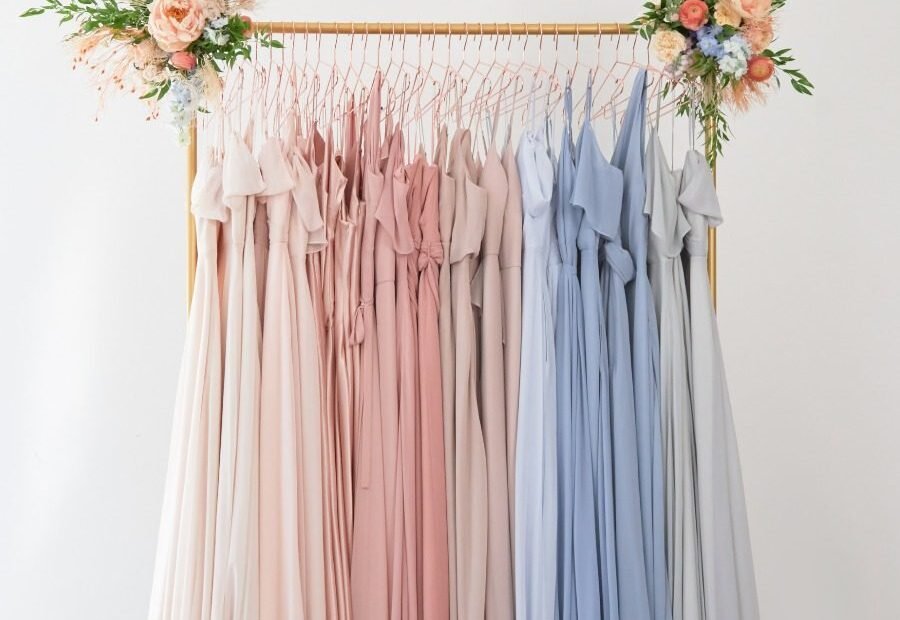
A small set of retailers has industrialized the wedding-guest dress at $40 to $90. Lulus built its name on exactly this customer; ASOS’s occasion lines run deep in every size range; Baltic Born owns the flowy, romantic end; and Amazon’s premium dress lines — the reviewed, higher-tier labels rather than the unbranded listings — deliver the same formula with faster shipping. What unites the good listings is information density: review counts in the hundreds, customer photos, fabric content stated, measurements given. The universal $60 dress formula lives at these retailers: a simple midi in a solid jewel tone or a tasteful floral, from a review-rich listing, in a wrinkle-resistant fabric. It works for the large majority of weddings, photographs beautifully, survives dancing, and accepts accessories as its personality. Buy the formula first; experiment later. Dress codes still govern everything — the register rules in MasterClass’s wedding guest attire guide are the frame the budget operates inside, and no bargain excuses white, ivory, or upstaging the couple’s stated code.
The thrift channel: silk and structure for the price of a pizza
Thrift and consignment stores are where the $100 budget becomes unfair. Occasion dresses are the most donated and least worn category in every charity shop — bought for one event, worn for five hours, donated in perfect condition. The hunting rule is fabric and structure: silk, lined bodices, real construction, in your approximate size, at $15 to $30. Add $20 of tailoring — a hem, a taken-in waist — and the result beats every fast-fashion option at triple the price on fabric, uniqueness and fit simultaneously. Shop the thrift channel in the weeks after wedding season ends, when the donations arrive, and in neighborhoods whose events out-dress yours. This channel rewards patience inversely to retail: the best dress in the store this week is gone next week, and the budget that visits monthly dresses better than the budget that visits desperately.
The rental channel: the $400 dress at a guest price
Rental converts the whole problem for formal weddings. Designer dresses rent for roughly $30 to $75 per event — the real garment, current season, professionally cleaned, returned in a bag. For a black-tie or black-tie-optional wedding, where the under-$100 retail dress strains hardest, rental is not a hack but the correct tool: it is also the honest answer to the black-tie question generally, since a rented gown outperforms a cheap imitation gown on every axis the dress code cares about. The economics flip the usual shame: the person in the rented designer dress spent less than the person in the new mid-range one. Book early in peak season, order the backup size when the service offers it, and treat the return date with respect.
The rewear economy: one dress, three weddings
The most powerful channel is the one already in the closet. One $80 dress worn to three weddings costs $27 per event, and — the part nobody believes until they test it — nobody notices, because weddings are different social circles, different cities, different photos. Restyling does the camouflage: change the shoes, the jewelry, the hair, the wrap, and the dress reads as a new outfit in every set of pictures. The fear of repeating is a retail invention; before it was monetized, everyone rewore their best dress as a matter of course. Build the season around one excellent formula dress, restyle it ruthlessly, and let the second and third weddings be dressed by accessories alone — comfortable ones, ideally, since a wedding is a six-hour standing event, which is why the shoe planning in the most comfortable heels for a wedding belongs in the same budget conversation as the dress.
Reading a listing like a skeptic: the $60 dress, audited
The formula dress is bought online, which means it is bought from evidence. Audit a listing the way the channels above taught you. Fabric content first: a stated blend with percentages is a good sign; “high-quality fabric” with no content is a confession. Construction second: lined bodice, finished seams, a zipper that is named rather than hidden — listings that photograph the inside of the garment are selling to inspectors, and inspectors are who you are pretending to be. Reviews third, filtered for your purpose: ignore the star average, read the reviews that mention fit on a body like yours, fabric honesty, and whether the color matched the photographs. Sizing fourth: a real garment-measurement chart, compared to your numbers, beats any size letter. And the total-cost check last: shipping, returns friction and the possible $20 tailor visit all belong in the dress’s true price — a $55 dress with paid returns and a needed alteration is an $85 dress, which may still be the right dress, but it should win honestly.
What to check in the mirror before the tags come off
The under-$100 dress earns its place in a five-minute home fitting, done properly: in the shoes you will wear, in daylight-mirror light, sitting, standing, and dancing one song’s worth in the kitchen. Check the sitting test hardest — budget dresses are most often betrayed by a skirt that rides or a bodice that gapes when seated, and weddings involve a great deal of sitting. Check the back view with a phone photo, because that is the view most of the room gets. Check the fabric against a window for sheerness. If it passes, steam it and hang it where the season’s weddings can reach it. If it fails one test fixably — a hem, a strap length — that is the tailor’s $20 and the dress is still a bargain. If it fails two, it goes back, whatever it cost: the most expensive dress in this entire system is the $60 one you do not feel good in, worn once, resented in every photograph.
Where the last $20 goes: accessories and alterations
A $100 dress budget is really an $80 dress plus a $20 finishing fund, and the fund’s allocation decides whether the dress looks its price or triple it. First claim on the fund is the alteration the mirror fitting identified — a hem to the exact right length is the difference between a dress that was bought and a dress that was fitted. Second claim is the understructure the dress assumes: the right bra, the slip that stops cling and show-through, the shapewear only if you already know you like it — underlayers are invisible in the budget and unmistakable in the photographs. Third claim is one accessory with intent: statement earrings, a real clutch, the belt that gives a simple dress a waist and a point of view. Shoes, mercifully, usually come from the existing closet — a wedding is precisely what the one good pair of heels or dressy flats is for. Spend the $20 in that order and the $80 dress stops reading as a budget decision at all.
Rewearing without repeating: the second and third wedding
The formula’s economics compound when the dress is worn across a whole season of weddings, and the fear that stops people — “everyone will have seen it” — dissolves under a change of accessories. The same dress reads fresh with a different formula each time: swap the statement earring for a necklace, change the clutch’s color family, wear the hair up instead of down, add or remove the belt. Guests remember that you looked good, not the garment’s SKU; the photographs differ because the styling does. This is the final argument for buying the best-constructed dress the budget reaches rather than two flimsier ones for variety: one good dress styled three ways outperforms three dresses styled once each, in cost, in photographs, and in how the wearer feels at hour five. The $100 was never really for a dress. It was for a season.
The calendar: January and July
The final channel is timing. Occasion dresses hit clearance in January and July — post-holiday and mid-summer — at 60 to 80% off, when a $120 dress sells for $35 because the calendar says so. The patient shopper with a known wedding next spring buys this January, in the formula silhouette, in a color that waits well. Nothing about the dress changes; only the month does. Put the map together and the season resolves: one formula dress bought off-season or thrifted-and-tailored, restyled across two weddings, one rental for the formal one — three weddings, dressed properly, for roughly the price of one old-math dress. The $100 cap was never the constraint. It was the strategy.