
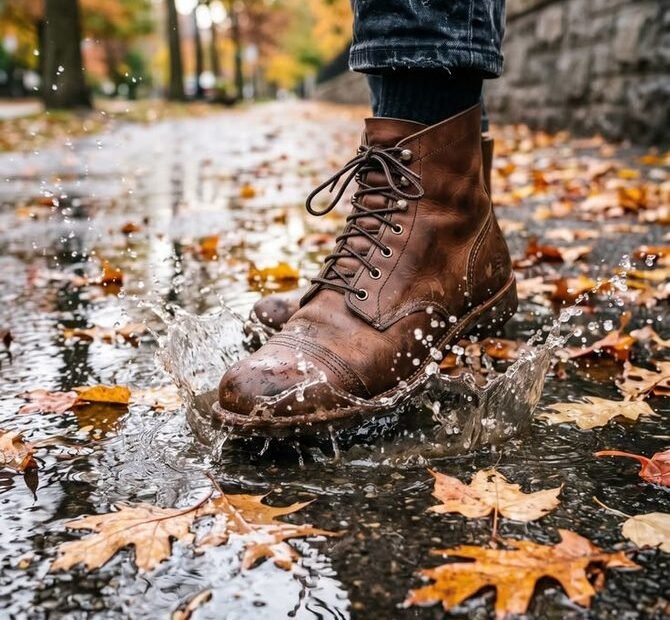
Rain destroyed my first good pair of boots. The next pair has survived six wet seasons — the difference is a 20-minute protection routine.
Fashion advice is either suspiciously vague (‘just be confident!’) or suspiciously expensive. This is neither — it’s the practical stuff that actually works in real life, on a real budget, for real bodies. I learned most of it the hard way so you don’t have to.
Protect leather boots from rain: What the Evidence Shows
Let’s get specific about protect leather boots from rain — what it means, why it matters, and the practical steps that make a difference. Everything below is actionable starting today.
Waterproofing spray before first wear. Silicone or fluoropolymer spray (like Crep Protect or Tarrago) before the boots ever see rain. Spray evenly from 6 inches, let dry, second coat. Reapply every few months in wet season. This is the single most important step — do it before, not after, the damage. This is one of those fixes that feels too easy to matter — until it does.
Condition the leather regularly
Wet-dry cycles strip leather’s oils, causing cracking. Condition every 2-3 months with a quality leather conditioner (mink oil for work boots, cream conditioner for dress boots). Conditioned leather resists water naturally — dry leather absorbs it. The people who do this consistently swear by it, and the logic holds up.
Stuff and dry correctly after soaking
If boots get soaked: remove insoles, stuff with newspaper (changed once), dry at room temperature away from heat. Never use radiators or hairdryers — heat cracks leather and melts adhesives. Patience preserves; heat destroys. Small change, real payoff — that’s the pattern with this one.
Related reading: our guide to what are the best budget-friendly maternity clothes covers a closely connected topic worth understanding alongside this one.
Rotate pairs in wet season
Leather needs 24 hours to dry fully between wears. Two pairs rotated last dramatically longer than one pair worn daily through rain. The rest day lets moisture evaporate completely instead of accumulating. File this under ‘boring but effective,’ the best category there is.
Resole before it’s too late
Worn soles let water in from below and change your gait. Resoling ($40-70) when tread wears thin extends boot life by years. Good boots are resoleable by design — that’s part of what you paid for. Worth trying for two weeks. You’ll know by then if it’s your fix.
Waxed leather for the worst weather
If your climate is truly wet, consider waxed or oiled leather boots — they’re inherently water-resistant and age beautifully. A waxed-leather boot with regular re-waxing shrugs off weather that destroys fashion boots. It sounds simple because it is. The hard part is just doing it consistently.
Quick Takeaways
- Waterproofing spray before first wear: Silicone or fluoropolymer spray (like Crep Protect or Tarrago) before the boots ever see rain.
- Condition the leather regularly: Wet-dry cycles strip leather’s oils, causing cracking.
- Stuff and dry correctly after soaking: If boots get soaked: remove insoles, stuff with newspaper (changed once), dry at room temperature away from heat.
- Rotate pairs in wet season: Leather needs 24 hours to dry fully between wears.
- Resole before it’s too late: Worn soles let water in from below and change your gait.
- Waxed leather for the worst weather: If your climate is truly wet, consider waxed or oiled leather boots — they’re inherently water-resistant and age beautifully.
Shopping Smarter, Not More
The best-dressed people I know shop less, not more. They know their sizes across brands, keep a running list of actual gaps, and pounce on the right piece when it appears — often thrifted or on sale. Impulse shopping is the enemy; intentional shopping is the skill.
Build a relationship with a few reliable sources: one thrift store you know well, one or two brands whose sizing you trust, and a tailor. This infrastructure beats endless browsing — you’ll spend less time shopping and look better doing it.
A Common Mistake to Avoid
Wearing fashion boots (thin leather, no protection, glued soles) as rain boots and being shocked when they die. Not all boots are rain boots — know your pair’s limits. For real downpours, actual waterproof boots or overshoes (galoshes are back) save the good pair.
If you want to go deeper on a related topic, see our guide to how do I find jeans that fit curvy body types — and for a different angle on everyday wellness, our guide to how do I dress professionally on a hot summer day is worth your time.
Thrift Like a Pro
The best thrifters shop often, know their measurements by heart, and check fabric labels before price tags. Natural fibers and quality construction are what you’re hunting — a $8 wool blazer beats a $8 polyester one by miles. Go on weekday mornings for the best selection, and always try things on; thrift sizing is chaos.
Look past styling to potential: dated buttons can be swapped, hems can be altered, and a good tailor turns thrift finds into custom pieces. The thrift store is a raw-materials shop for people with vision — and a tailor’s phone number.
For authoritative background, see Good Housekeeping’s clothing and style lab tests, and also Real Simple’s practical clothing advice for a second perspective.
Frequently Asked Questions
Can I wear leather boots in heavy rain?
Protected, conditioned, quality leather boots handle rain fine. Standing water and downpours warrant actual waterproof footwear — even the best leather has limits.
How do I remove salt stains?
Wipe with a 50/50 water-vinegar solution, let dry, then condition. Salt is leather’s winter enemy — address stains promptly, as dried salt damages fibers permanently.
Your Action Plan This Week
Day 1: pull out everything related to this topic from your closet and assess honestly — what works, what’s dead. Day 2-3: handle the maintenance — wash, de-pill, steam, repair. Day 4: identify the single biggest gap and shop for it with the rules from this article. Day 5-7: wear the new setup and notice what still bothers you. One focused week beats months of vague intention.
Set a budget before you shop and write down the specific piece you’re hunting — vague shopping produces vague results. The most stylish people shop with lists, not moods.
The Bottom Line
Rain-proof boots: spray before first wear, condition every few months, dry stuffed at room temp, rotate pairs, resole on time. And know when to reach for actual waterproof boots instead.



