
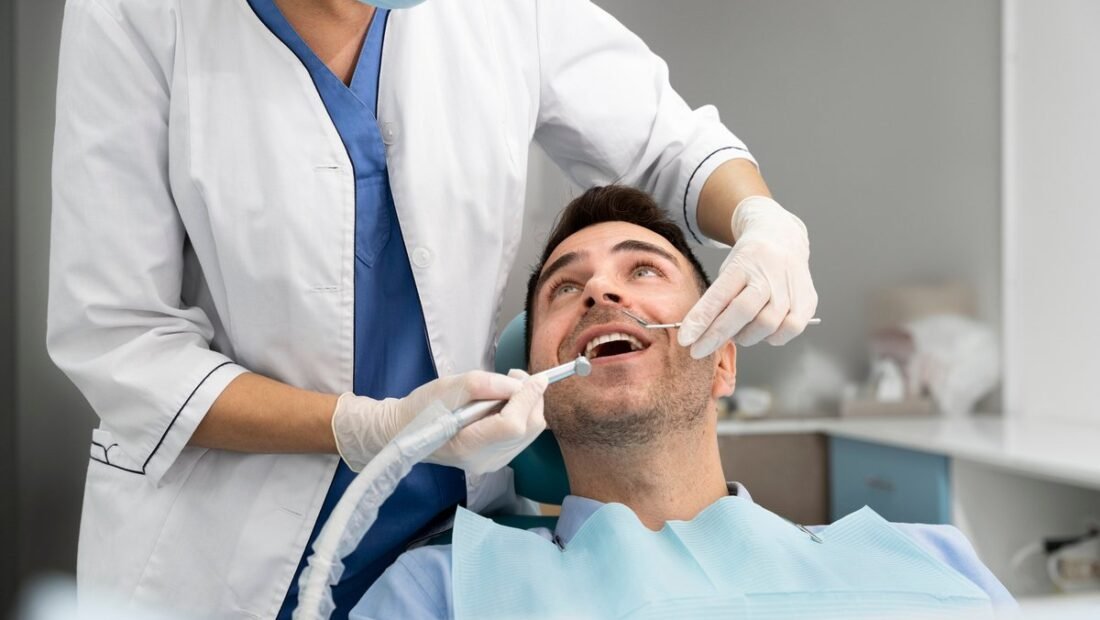
Skipping dental cleanings because you don’t have insurance is one of those decisions that feels thrifty and costs you thousands later. A routine cleaning is one of the cheapest things a dentist does — and one of the most expensive things to skip. Here’s what it actually costs out of pocket.
Before we get tactical, it helps to understand why this trips so many people up. Once you see the pattern, the fixes make sense.
Teeth cleaning cost without dental insurance in the Real World
A friend went five years without a cleaning after losing his dental insurance with a job change. When tooth pain finally forced him in, the ‘cleaning’ had become deep scaling, two fillings, and a crown — over $2,000. The twice-yearly cleanings he’d skipped would have cost about $150 each. He now tells everyone the math: $300 a year in prevention versus a $2,000 rescue mission. Prevention won by a mile.
A word on the information landscape: health advice online is a minefield of confident nonsense. Influencers sell certainty; real medicine deals in probabilities. When evaluating any claim, ask who’s profiting, what the actual evidence looks like, and whether your doctor would nod along. Your body deserves better than advice optimized for engagement.
Don’t underestimate the basics while chasing the specific. Sleep, movement, nutrition, and stress management influence nearly every health topic, including this one. If those are shaky, they’re the highest-leverage place to start.
For authoritative background on this topic, see the American Dental Association resources.
Common Mistakes to Avoid
If you only remember one section of this article, make it this one. Avoiding these mistakes puts you ahead of most people trying the same thing.
- Skipping cleanings entirely to save money — the most expensive ‘savings’ in dentistry
- Assuming all dentists charge the same; prices vary wildly by location
- Not asking about cash discounts, which many offices offer but don’t advertise
Your Action Plan
Time for the practical part. These steps are ordered so each one makes the next easier.
- Expect $100-$200 for a routine cleaning without insurance in most US areas.
- Ask about cash-pay discounts and new-patient specials — they can cut 20-30%.
- Check dental schools: supervised student cleanings often cost a fraction of private practice.
- Look into dental discount plans (not insurance) if you need regular care without coverage.
Why This Matters More Than You Think
Your future self is counting on the decisions you make about teeth cleaning cost without dental insurance today. That sounds dramatic, but it’s literally how health works — it’s the accumulated result of thousands of small choices. Nobody gets healthy in a weekend, and nobody gets sick from one bad day. The trend is everything, and the trend is built right now, in ordinary moments like this one.
What the Research and Real Experience Say
The medical literature on teeth cleaning cost without dental insurance is worth a sober look: the strongest evidence almost always supports the least exciting interventions. Large studies, repeated over decades, keep converging on the same fundamentals. When a flashy new finding contradicts the boring consensus, the boring consensus usually wins the rematch. Bet on the big, replicated studies over the single exciting headline.
Your First 30 Days
A sustainable 30-day plan for teeth cleaning cost without dental insurance has one non-negotiable rule: it must survive your worst week, not just your best one. Design for the busy, tired, stressed version of you. If the plan only works when life is calm, it’s not a plan — it’s a wish. Small and robust beats ambitious and fragile.
What Success Looks Like
The finish line for teeth cleaning cost without dental insurance isn’t a destination — it’s a system that keeps working. A routine you maintain, check-ins you actually do, basics you don’t neglect when life gets busy. Health isn’t a project you complete; it’s a practice you sustain. Build the practice, and the results take care of themselves over time.
Quick Answers to Common Questions
Should I tell others what I’m doing?
It helps more than you’d think. Telling someone creates gentle accountability, and you might be surprised how many people share your goal. Just choose supporters, not critics — you need encouragement, not commentary.
What if I fall off track?
You will — everyone does. The plan isn’t to never slip; it’s to resume quickly. One bad week means nothing if the next week is back on track. The people who succeed aren’t the ones who never fall; they’re the ones who get up fast.
How do I handle conflicting advice?
When experts disagree, favor the boring consensus over the exciting outlier, and favor advice from people with no financial stake in your decision. Then test things yourself — your experience is the final authority.
The best time to start was a year ago; the second-best time is this week. Not someday, not when things calm down — this week, in whatever small way you can.
You’ve got the full picture now: what matters, what to avoid, and what to do first. The only thing left is the part no article can do for you — starting. Make it small, make it this week, and trust the compounding.
Keep learning: Best Exercises for Lower Back Pain You Can Do at Home, Best Time of Day to Exercise for Weight Loss, and Cold vs. Seasonal Allergies: How to Tell the Difference.
The Bottom Line
A cleaning without insurance typically runs $100-$200 — real money, but a bargain compared to what neglect costs. Ask about discounts, consider dental schools, and don’t let the lack of insurance keep you out of the chair. For further reading, the CDC oral health basics is a solid next stop.
If you’re feeling overwhelmed, shrink the task. Do the smallest useful version this week and let momentum do the rest. A tiny start you repeat beats an ambitious plan you abandon.
It’s also worth talking to someone who’s done this before you. Ten minutes with an experienced person can save you ten hours of trial and error. People are surprisingly generous with advice when you ask specific questions.



