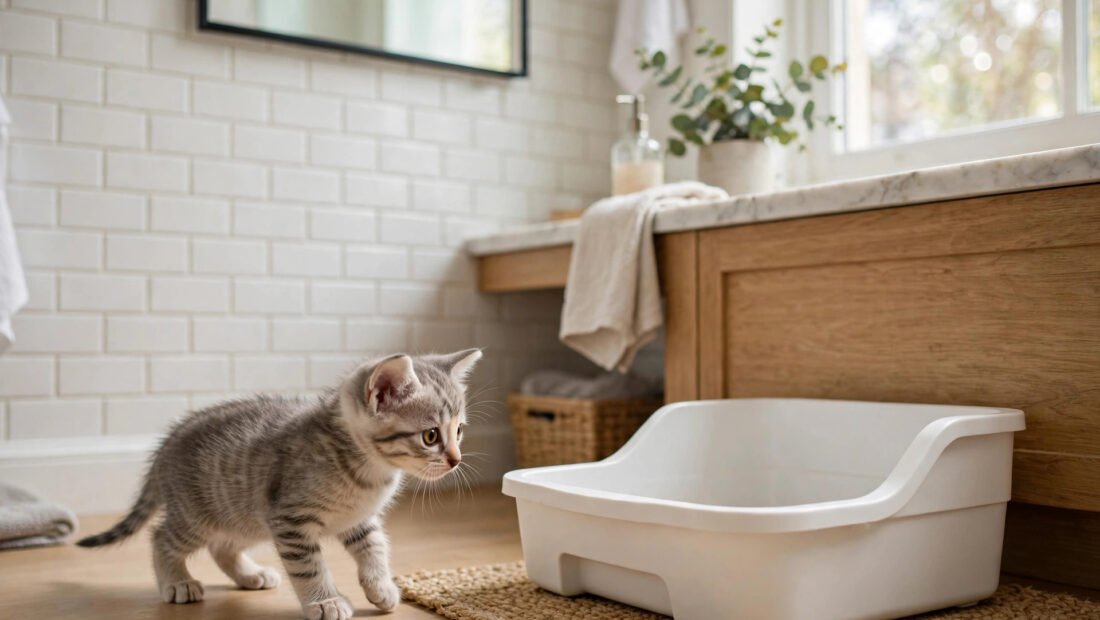
A kitten who will not use the litter box is rarely being stubborn, and almost never being spiteful. Kittens are born wanting to bury their waste. When a kitten goes on the rug, the laundry, or the corner behind a chair, something about the box setup has failed a review the kitten runs every single time: Does it hurt? Does it smell wrong? Do I feel trapped in there? Can I even get in?
So the mistakes come first here, because fixing the setup fixes most cases. Six common errors explain nearly every refusal. Work through them honestly, then run the short retraining routine at the end, and most kittens are back on track within about a week.
Mistake One: Skipping the Vet
The first error is treating a health problem as a behavior problem. A urinary infection can make peeing hurt. Worms can upset a kitten’s stomach and timing. Constipation can turn a normal trip to the box into a strain. A kitten does not reason about any of this. The kitten learns one simple lesson: the box is where it hurt. After that, the kitten avoids the box and looks for a softer, safer place, which is often your laundry pile.
Any sudden change deserves a vet visit first, training second. That order matters even more if you see straining, crying while trying to go, blood in the urine, or a kitten who keeps trying and produces almost nothing. Those signs are not a training issue at all. They are a same-day phone call. For a plain rundown of causes worth ruling out, see the ASPCA’s guidance on litter box problems before you change anything else at home.
Mistake Two: The Wrong Box
Boxes fail kittens in three plain ways. The first is size. A small travel tray gives a growing kitten no room to turn, dig, and bury without stepping in old waste. The second is a lid. Covered boxes hold smell in, which people like and cats hate, and a lid can make a small kitten feel cornered with no escape route. Many kittens flatly refuse a covered box and use an open one the same day.
The third failure is height. An adult box with tall sides is a wall to a kitten with short legs. If the kitten has to climb and drop in, or haul itself out, the box becomes hard work at the exact moment the kitten needs to go quickly. Pick a box with one low side for entry, or a kitten-sized box for the first months, and trade up as the kitten grows. A box can also simply be too far away. A tiny kitten playing at the far end of a house may not make the trip in time, which is a distance problem, not a training failure.
Mistake Three: The Wrong Litter, or a Sudden Swap
Kittens learn litter feel early, and most expect something soft, fine, and sand-like under their paws. Coarse pellets, crystals, and rough recycled litters can feel wrong enough to refuse. Heavy scent is the other common problem. Perfumed litter is made to please human noses. A kitten’s nose is far stronger, and a strong floral smell at face level, in a small box, is a good reason to go elsewhere.
Changing litter mid-training makes things worse. You find accidents, you blame the litter, you buy a new kind, and now the box smells and feels unfamiliar on the same week the kitten was meant to be learning it. Pick one soft, unscented, clumping litter and hold steady. Pour it two to three inches deep. Shallower than that and the kitten hits the box floor while digging. Much deeper and a small kitten sinks and spreads litter everywhere. If you must switch litters later, mix the new into the old a little at a time over a week or more.
Mistake Four: Too Few Boxes, in the Wrong Places
The count rule is simple: one box per cat, plus one spare. One cat needs two boxes. Two cats need three. Boxes are cheap. Carpet cleaning is not. A single box also fails on timing. If the one box is dirty, far away, or behind a closed door, the kitten has no plan B, and the floor becomes the plan B.
Place matters as much as count. Cats do not want to eat where they toilet, so keep boxes well away from food and water bowls. They also avoid noisy, startling spots. A box squeezed next to a washing machine that bangs into its spin cycle mid-visit will teach a kitten to stay away. Quiet corners with a clear view and an easy escape route work best. In a multi-story home, put a box on each floor the kitten uses. In Texas homes, think twice about the garage and the laundry room, for reasons covered below: summer heat changes how a box feels and smells, fast.
Mistake Five: A Dirty Box
From a kitten’s point of view, a dirty box is a full box. Cats are clean animals with strong noses, and a box that smells fine to you at standing height can be rank at kitten height. Scoop at least once a day. Twice a day is better in a small home or with more than one cat. Top up the litter as you scoop to hold that two-to-three-inch depth.
Wash the box on a regular cycle with plain unscented soap and water, and change the litter fully every few weeks depending on the type. Skip ammonia-based cleaners entirely. Ammonia smells like urine to a cat, so a box scrubbed with it can smell marked and wrong to the very animal you are trying to please. The same rule applies to accident spots on floors and rugs, covered in the retraining steps below. Old, scratched plastic also holds odor no washing can shift, which is why replacing a cheap box about once a year is sound practice, not waste.
Mistake Six: Punishment
Shouting, scolding, or carrying a kitten to an accident and showing it to them does not teach box use. It teaches fear of you, and fear of going in front of you. A punished kitten does not stop having accidents. The kitten gets better at hiding them, behind furniture and in quiet corners, where you find them late by smell. A problem you cannot see is a problem you cannot fix.
Rubbing a kitten’s nose in a mess is the worst version of this error. It damages trust and teaches nothing about the box. If you catch a kitten mid-accident, a calm lift and a quiet move to the box is the whole response. If you find the accident later, say nothing to the kitten at all. Clean it well and fix the setup. The kitten was reviewing your box, not defying you.
The Correct Way: A Short Retraining Routine
Once the vet has cleared the kitten and the six mistakes above are fixed, retraining is short and plain. Start by confining the kitten to one small room, a bathroom or a small bedroom, with the box in it. Put food and water at the far end of the room, as far from the box as the space allows. A small space removes hard choices. The kitten is always near the box, and success becomes the easy option.
Place the kitten gently in the box at the moments nature is most likely: right after meals, right after naps, and after play. Wait quietly. If the kitten uses the box, praise in a soft voice and offer a small treat. If the kitten hops out, let it. No chasing, no repeat placements every five minutes. A few well-timed chances a day are enough.
Clean every accident spot outside the box with an enzyme cleaner made for pet messes. Normal cleaners can leave the smell behind for a cat even when a human nose finds nothing, and that leftover scent reads as a sign saying toilet here. A proper enzyme clean breaks the smell down so the spot stops inviting a repeat visit. Keep the routine steady for several days. As clean days stack up, open one more room at a time, keeping a box within easy reach. Most kittens retrain within about a week once the setup is right. If yours takes a little longer, check the six mistakes again before you blame the kitten. A household dealing with broken sleep from a pet may also want how to stop your cat from waking you up at 4 AM, since a settled cat keeps calmer nights overall.
The Texas Layer: Heat and Humidity
Texas adds two problems other states rarely face. The first is heat. A box kept in a garage or laundry room can sit in serious summer heat, and heat does two things: it makes litter odor far stronger, and it makes the box a place no animal wants to linger. A kitten who rushes or refuses in a hot room is making a fair point. Move the box into the cooled part of the home during summer, even if the winter spot worked fine.
The second is humidity. Litter stored in a damp garage or utility space can take on moisture and start to clump before it ever reaches the box. Litter that arrives pre-clumped feels and smells used to a cat. Store the bag indoors, sealed, in a dry spot. Small changes, but in a Texas summer they can be the difference between a box a kitten accepts and one it walks past.
When Training Stops and the Vet Starts
Know the line clearly. Blood in the urine, straining, crying in the box, going very often with little result, or a kitten who still refuses the box after a full week of a correct setup and steady routine: none of that is a training problem anymore. That is a vet visit, without another week of waiting to see.
The hopeful part is how rarely cases reach that line. Most refusals trace back to one of the six setup mistakes, and most kittens, being clean animals by nature, choose the box happily once the box deserves choosing. Fix the setup first, keep the routine calm and short, and let the kitten prove what it wanted to do all along.