The house can be perfect and the price can be right, but if the neighborhood does not feel safe, you will regret the purchase every single day. Unlike square footage or school ratings, safety is something buyers tend to evaluate on gut feeling — a quick daytime drive-by and a glance at a crime map. That is not enough. Neighborhood safety in Texas varies block by block, and the data, the street-level signals, and the questions to ask locals each reveal different pieces of the picture. Here is a systematic way to check before you buy.
Start With the Data, Not the Vibe
Begin with hard numbers. The FBI’s Crime Data Explorer publishes reported offenses by agency, and most Texas police departments — Houston, Dallas, Austin, San Antonio, Fort Worth — maintain public crime-mapping dashboards where you can filter by offense type, date range, and radius around a specific address. Look at violent crime and property crime separately; a neighborhood with frequent car break-ins is a different risk profile than one with aggravated assaults.
Key data habits that separate serious research from box-checking:
- Use a tight radius. Crime maps default to wide areas that blur important boundaries. Zoom to a half-mile around the address.
- Look at trends, not snapshots. Twelve months of data shows direction. A neighborhood with declining incidents is a different bet than one trending upward.
- Separate day from night. Some dashboards let you filter by time. Commercial corridors that are fine at noon can be different at midnight.
- Check the sex offender registry. Texas DPS maintains a public registry searchable by address — a standard due-diligence step many buyers skip.
National aggregators like NeighborhoodScout and AreaVibes add context, but treat their letter grades as starting points, not verdicts — their methodologies weight factors that may not match your priorities.
Walk the Neighborhood Like a Resident
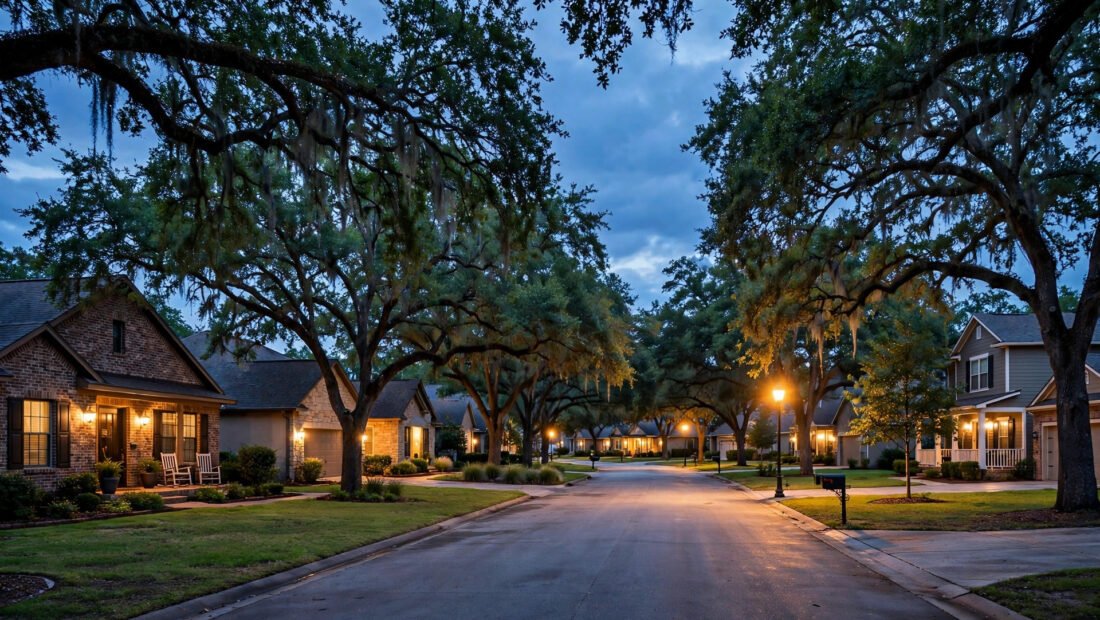
Data tells you what was reported. The street tells you what it feels like to live there. Visit at least three times: a weekday morning, a weekday evening after dark, and a weekend afternoon.
What to observe
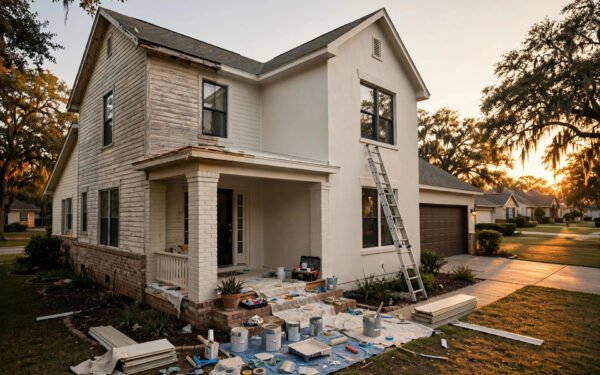
- Upkeep. Maintained lawns, intact fences, and cared-for exteriors correlate strongly with community investment. Clusters of neglected properties signal the opposite.
- Lighting. After dark, are streets and sidewalks lit? Poor lighting is both a safety issue and a sign of municipal neglect.
- Foot traffic. People walking dogs, kids playing, joggers — “eyes on the street” is the oldest crime deterrent there is.
- Commercial edges. Note what borders the neighborhood: well-kept retail is fine, but check how alleys, parking lots, and vacant lots look behind the storefronts.
- Traffic behavior. Speeding cut-through traffic makes streets dangerous for kids regardless of crime stats.
Pay attention to home security signals too. A few alarm signs and cameras are normal; a street where every house has bars on windows tells you something. For perspective on what protection actually costs, see how much a basic home security camera system costs — many buyers budget for cameras as part of the move.
Talk to People Who Actually Live There
No dataset replaces a ten-minute conversation with a neighbor. Knock on doors near the property — most people are happy to talk about their street. Ask specific questions: Have you had any break-ins on this block? Do you feel comfortable walking after dark? How is the police response time? Are there problem properties nearby?
Also talk to local business owners, mail carriers, and delivery drivers if you can — they see the neighborhood across all hours. Check Nextdoor and local Facebook groups for the area, but read them critically: these forums amplify rare dramatic incidents and can make safe neighborhoods sound dangerous. Look for patterns across many posts, not single alarming stories.
Your real estate agent can share general observations but be aware of legal limits: under the Fair Housing Act, agents cannot steer buyers based on neighborhood demographics or characterize areas in ways tied to protected classes. They can point you to objective data sources. The HUD fair housing guidance explains these boundaries.
Texas-Specific Safety Considerations
- Unincorporated areas and ETJs. Many Texas homes sit outside city limits, where sheriff’s departments rather than city police respond. Ask about actual response times — they can be significantly longer than in incorporated areas.
- Flood risk as a safety issue. In Houston and along the Gulf Coast, “safety” includes water. Check FEMA flood maps and ask neighbors about street flooding during heavy rain; evacuation routes matter.
- HOA security. Some Texas subdivisions fund private security patrols through HOA dues. Ask what the dues actually buy and whether the patrol is active or nominal.
- New construction edges. Rapidly developing areas on city outskirts can have great stats today and uncertain trajectories. Check what is zoned nearby — a future apartment complex or commercial development changes the street’s character.
School Zones and Safety Overlap
Buyers with children often conflate school quality with neighborhood safety — they correlate, but imperfectly. A highly rated school can sit in a mixed-safety area and vice versa. Evaluate them independently: use Texas Education Agency accountability ratings for schools and police data for safety, and do not let one substitute for the other. Also note school-zone traffic patterns during drop-off and pickup — some of the most dangerous streets for kids are the congested ones directly around popular schools, regardless of crime statistics.
Red Flags That Should Give You Pause
No neighborhood is perfect, but treat these as serious warnings: multiple recent violent crimes within a few blocks, visibly abandoned properties with no redevelopment activity, neighbors who tell you directly they do not feel safe, a police substation closure or reduced patrols, and listings in the area that linger for months despite fair pricing — the market is telling you something. One red flag warrants deeper investigation; three mean you should probably keep looking.
Conclusion
Checking neighborhood safety before buying in Texas means layering three kinds of evidence: reported crime data at a tight radius, your own eyes across multiple visits at different hours, and honest conversations with the people who live there. Each source covers the others’ blind spots. The buyers who regret their neighborhood almost always skipped one of the three — usually the evening visit or the neighbor conversations. Spend a weekend doing this research properly; it is the highest-return time investment in the entire homebuying process. And once you have chosen well, our guide to what every new homeowner should know in the first month will help you settle in securely.
Frequently Asked Questions
What is the most reliable crime data source for Texas neighborhoods?
The FBI Crime Data Explorer plus the local police department’s own crime-mapping dashboard. Local dashboards are usually more current and allow tighter geographic filtering than national aggregators.
Can my real estate agent tell me if a neighborhood is safe?
Only in limited, objective terms. Fair housing law prohibits agents from steering buyers or characterizing neighborhoods based on demographics. They can direct you to crime data and other objective sources.
How many times should I visit a neighborhood before buying?
At minimum three: a weekday morning, a weekday evening after dark, and a weekend afternoon. Each visit reveals different activity patterns.
Are online neighborhood safety grades accurate?
They are useful starting points but imperfect. Aggregators use different methodologies and weightings, and their data can lag. Always cross-check with local police data and in-person visits.