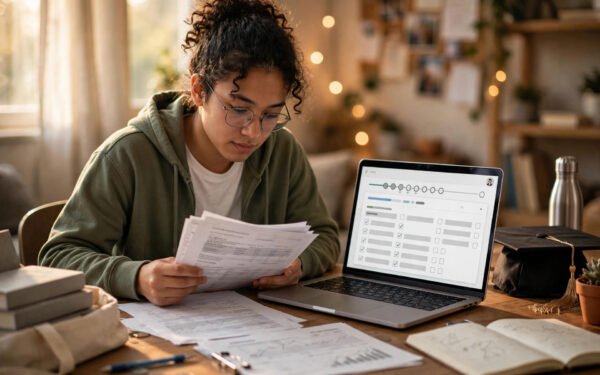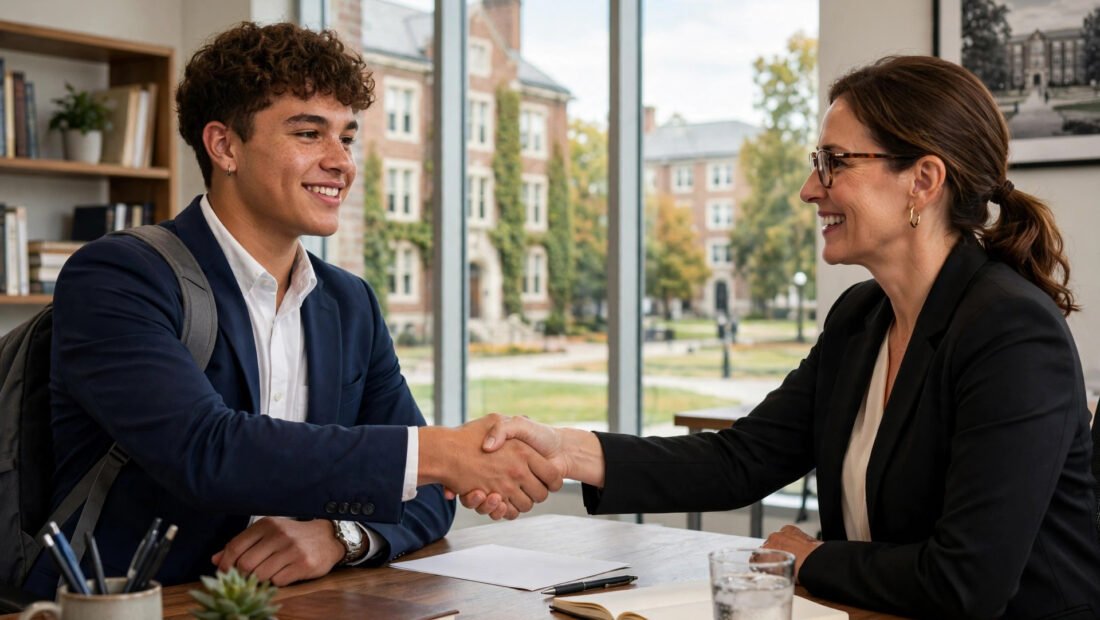
For many Texas colleges — from Rice and SMU to UT Austin’s honors programs and competitive scholarships statewide — the interview is where applications come alive. Grades and essays got you in the room; the next 30 minutes determine whether you are memorable or merely qualified. The good news: college interviews are not interrogations. They are conversations, and conversations are a trainable skill. Here is how to prepare with genuine confidence, not performed confidence.
Understand What Interviewers Actually Evaluate
Alumni interviewers and admissions officers are asking three questions: Can this student do the work? (intellectual curiosity, not just GPA), Will they contribute to campus? (energy, perspective, engagement), and Do they actually want to be here? (genuine interest, not application-spam). Notice what is missing: perfection. Interviewers expect nervous teenagers, not TED speakers. Authenticity consistently beats polish — a student who lights up talking about robotics club beats one reciting rehearsed lines about “passion for learning.”
Research: The Highest-ROI Preparation
Nothing signals interest like specifics. Before the interview, know: 2–3 specific programs, professors, or opportunities at that school and why they fit you; recent campus news or initiatives; and how the school differs from similar ones. “I’m excited about Dr. Alvarez’s water-policy research because my Eagle Scout project involved creek restoration” beats “you have a great environmental science program” by miles. This research also prepares you for the inevitable “Why this school?” — the question that sinks unprepared candidates. Generic answers (“great reputation,” “beautiful campus”) tell the interviewer you would say the same to anyone.
Master the Five Questions You Will Definitely Get
“Tell me about yourself.” Not your life story — a 90-second narrative arc: where you are now, what drives you, where you are headed. End with something forward-looking that invites follow-up questions.
“Why this college?” Specifics from your research, connected to your interests. Name programs, people, opportunities.
“What will you contribute to campus?” Think beyond academics: the club you will start, the perspective you bring, the community you will build. Colleges admit communities, not just students.
“Tell me about a challenge you overcame.” Use the STAR structure (Situation, Task, Action, Result). Choose something real — interviewers detect manufactured adversity instantly. What matters is the reflection: what you learned about yourself.
“What questions do you have for me?” Always have 3–4 ready. Ask about the interviewer’s own experience (“What surprised you most about your freshman year?”), campus culture, or specifics you could not find online. Never say “no questions” — it signals disinterest. And never ask anything Google answers in ten seconds.
Practice Out Loud (Not Just in Your Head)
Thinking through answers is not preparation; saying them is. Your mouth needs rehearsal your brain does not. Do 2–3 mock interviews with a parent, teacher, or counselor — ideally someone who will give honest feedback, not just encouragement. Record one on your phone and watch it: you will catch filler words (“like,” “um”), fidgeting, and rambling answers you never noticed. Time your “tell me about yourself” — if it runs past two minutes, cut it. The College Board’s interview resources offer additional practice frameworks worth reviewing.
Logistics: The Unsexy Details That Matter
Dress: Business casual — neat, clean, comfortable. You are a student, not a job applicant; a blazer is fine, a full suit is overkill for most undergraduate interviews. Arrive early: 10–15 minutes for in-person, logged in and tested 10 minutes early for virtual. Bring: a copy of your resume or activities list (the interviewer may not have it), a notebook with your prepared questions, and water. Virtual interviews: quiet room, neutral background, camera at eye level, good lighting on your face — and close every other tab. Treat it with full in-person seriousness; interviewers notice multitasking instantly.
Body Language and Presence
Confidence is largely physical before it is mental. Sit upright but relaxed, make natural eye contact (not a stare-down), smile genuinely when appropriate, and use your hands naturally — stillness reads as tension. Mirror the interviewer’s energy level roughly. When you do not know an answer, say so honestly and think aloud: “That’s a great question — I haven’t considered that, but my instinct is…” Interviewers respect intellectual honesty far more than bluffing. And remember the interaction starts before the first question — how you greet the receptionist, make small talk, and handle waiting all register.
After: The Follow-Up That Most Students Skip
Send a brief thank-you email within 24 hours: reference something specific from the conversation (not generic thanks), reaffirm your interest in one sentence, and keep it short. This is not just politeness — it is the professional communication skill you will use for years. Our guide to writing better professional emails covers the same principles. Also jot down notes about what went well and what did not while it is fresh — if you have multiple interviews, each one should be better than the last.
Special Texas Notes
Texas’s admissions landscape has quirks worth knowing. UT Austin’s automatic admission (top 6% rule) does not eliminate interviews for honors programs, which absolutely do interview. Texas A&M’s Corps of Cadets and competitive majors have their own processes. Private schools like Rice, SMU, and TCU weigh demonstrated interest more heavily — the interview is a prime demonstrated-interest signal. And for scholarship interviews (a different beast — more achievement-focused), prepare concrete examples of leadership and impact, not just interests.
Virtual Interview Mastery
Virtual interviews are now standard for alumni conversations and many admissions processes — and they have their own rulebook. Technical setup: test camera, microphone, and connection 24 hours ahead (not 24 minutes); position the camera at eye level using stacked books; face a window or lamp for flattering light — never sit with a bright window behind you. Environment: a clean, neutral background (a plain wall beats a messy bedroom; virtual backgrounds can glitch — use with caution), closed door, silenced phone, and a household informed not to interrupt. Energy calibration: screens flatten presence, so bring 10% more animation than in-person — sit upright, gesture naturally, smile visibly. Eye contact: look into the camera when speaking (not at the interviewer’s face on screen) — it reads as direct eye contact on their end. Materials nearby: your prepared questions, resume, a glass of water, and a pen — but no reading from scripts; glancing at notes is fine, reciting is obvious. Backup plan: have the interviewer’s phone number in case of tech failure, and know how to hotspot from your phone. One caution for the preparation phase: as you draft talking points about your application, understand where the ethical line sits on using AI in application essays — authenticity in the interview must match authenticity on paper. The National Association for College Admission Counseling offers additional interview preparation resources reflecting current admissions practices.
Conclusion
Confident interviewing is 70 percent preparation and 30 percent mindset. Research the school deeply, master the five core questions out loud, handle logistics flawlessly, and walk in viewing the interviewer as a future mentor rather than a judge. The goal is not to perform perfection — it is to have a genuine conversation that leaves them thinking, “I want this student on our campus.” Prepare well, and that outcome takes care of itself.
Frequently Asked Questions
How long do college interviews usually last?
Typically 20–45 minutes. Alumni interviews often run 30 minutes; admissions-officer interviews for competitive programs can run longer. Prepare as if for 45 minutes — running out of material is worse than having extra.
What should I wear to a college interview?
Business casual: slacks or a skirt with a neat top, or a blazer over casual clothes. Clean, comfortable, and age-appropriate. Avoid anything distracting — the focus should be on your words, not your outfit.
How do I answer “tell me about yourself”?
Give a 60–90 second narrative: who you are now (school, key interests), what drives you (1–2 genuine passions with brief evidence), and where you are headed. End forward-looking to invite follow-up questions.
Should I bring anything to the interview?
Yes: a one-page resume or activities list, a notebook with your prepared questions, and a pen. For virtual interviews, have the same materials nearby plus water. Do not bring gifts — a thank-you email afterward is the appropriate gesture.