Two friends buy the same box of copper dye on the same Saturday. On one of them it looks rich, glossy, and expensive. On the other it turns flat and oddly orange by Monday. The dye did not change. The skin underneath it did. That hidden difference is undertone, the warm, cool, or neutral cast sitting under the surface color of your skin. Pick a shade that matches it and the color looks like it grew that way. Pick one that fights it and no amount of toner quite fixes the clash, especially under hard Texas daylight that shows every off note.
The Five-Check Undertone Checklist
Run all five checks in natural daylight, near a window or outside in shade, with a clean face and no makeup. One check alone can mislead you. Three or more pointing the same way is a solid answer.
- Check 1, the veins: Look at the inside of your wrist. Veins that look greenish point to warm. Veins that look blue or purple point to cool. Veins you cannot pin down point to neutral.
- Check 2, the metals: Hold gold jewelry against one cheek and silver against the other. The metal that makes your skin look clearer and more awake is your match. Gold flattering you points to warm. Silver flattering you points to cool. Both working points to neutral.
- Check 3, white versus cream: Hold a sheet of stark white paper, then a cream or off-white cloth, up to your face. If stark white brightens you, you lean cool. If cream softens you and white looks harsh, you lean warm. If both look fine, you lean neutral.
- Check 4, the sun response: Think about unprotected time in the sun. Skin that tans to a golden brown fairly easily leans warm. Skin that burns pink or red first leans cool. A mix of burn then tan often means neutral.
- Check 5, the no-makeup mirror test: Look at the skin around your jaw and neck in daylight. A yellow, peachy, or golden cast suggests warm. A pink, rosy, or slightly blue cast suggests cool. Little clear cast either way suggests neutral.
Write down your result before you shop. Store light pushes everything cooler and hides warmth that shows up the second you step outside.
What Undertone Actually Means
Surface tone is how light or deep your skin is, and it can change with the seasons. Undertone does not change. A very fair person and a very deep person can share the same warm undertone, and both will suit the same family of hair colors, just at different depths. Copy the temperature first, then adjust the depth to suit you.
Warm undertones carry yellow, golden, and peachy notes. Cool undertones carry pink, red, and blue notes. Neutral undertones carry a balance. Olive skin deserves a note here: it often looks neutral but has a greenish cast, so muted, slightly smoky versions of a shade usually sit better than the brightest version.
Shades That Suit Warm Undertones
Warm skin glows when the hair brings its own warmth. Golden blonde, honey blonde, buttery highlights, and caramel all add light without draining the face. Warm browns such as chestnut, warm chocolate, and toffee give depth while keeping the golden note alive. Reds are a strong suit here: copper, auburn, cinnamon, and strawberry blonde tend to look natural and rich on warm skin.
The shades to handle with care are the icy ones. Ash blonde and ashy brown can make warm skin look sallow or tired, because the gray in the hair pulls out the yellow in the skin in an unkind way. Blue-black is another hard sell. Its cool edge creates a stark contrast that can leave warm skin looking dull beside it. Cool, blue-based reds such as burgundy can clash for the same reason. None of this is an absolute ban. A skilled colorist can bridge a cool dream shade with warm lowlights or a warm root melt so the color near your face stays friendly. Going straight at a cool shade with no bridge is where the trouble usually starts.
Depth still matters. If your natural hair is deep brown, a caramel balayage keeps the warmth and grows out softly, without the heavy lightening a full head of pale honey demands.
Shades That Suit Cool Undertones
Cool skin looks clearest next to cool hair. Ash blonde, platinum, icy beige, and mushroom brown all calm the pinkness in cool skin instead of fighting it. Deep cool browns such as espresso and cool dark chocolate look sharp and polished. Blue-black, which is so tricky on warm skin, can look striking here. Cool reds belong to this group too: burgundy, cherry, and true reds with a blue base suit pink-toned skin far better than orange-based reds do.
The traps for cool undertones are warmth in the wrong place. Golden yellow blonde can push cool skin toward looking red and overheated. Brassy orange and warm copper tend to clash with the pink underneath, making both the hair and the skin look off. If brass keeps creeping into lightened hair, and it does fast in Texas, a purple shampoo once a week and a toner refresh between full appointments will hold the cool tone longer.
Cool shades also need honesty about maintenance. Platinum that suits your undertone perfectly still needs salon visits every 4 to 6 weeks, plus steady bond care at home. An ashy brunette or a cool balayage gives much of the same flattering effect with a far gentler schedule. Let Allure’s hair color and undertone guides help you compare cool options side by side before you commit to the highest-upkeep version.
Shades That Suit Neutral Undertones
Neutral skin has the widest menu. Because the undertone does not pull hard in either direction, both warm and cool families can work, and the best results often mix the two. Dimensional color is your friend: balayage that blends a neutral base with slightly warm ends, or highlights that weave beige with a touch of gold, tends to look natural and expensive on neutral skin.
The one place neutrals can go wrong is at the extremes worn flat. A solid block of orange-red or a solid sheet of icy platinum can look artificial, because real hair is never one flat tone. Ask for at least two tones in the formula. From there, let eye color and wardrobe lead.
The Factors Beyond Undertone
Eye color and contrast
Hair does not sit next to skin alone. It frames your eyes too. Warm browns, golds, and coppers echo brown and hazel eyes and make them look deeper. Cool ash and icy tones make blue and green eyes stand out by contrast. Contrast level matters as well. If you naturally have high contrast, for example deep hair against fair skin, you can carry a bold change. If your natural contrast is low, with hair and skin close in depth, a small shift of one or two levels usually looks more believable than a dramatic jump.
Your natural starting point
Every box and salon formula lands on the hair you already have. Dark hair lifted to blonde passes through orange on the way, and that orange has to be toned out. Hair with old color on it lifts unevenly. Fine hair lightens faster than coarse hair and damages faster too. This is why the same shade name gives different results on different heads, and why an honest talk about your color history matters before any big change. It also helps to think about the full routine around the color. Heat styling on fresh color fades it faster, so if you love a polished finish, learning how to do salon-quality blowouts at home with proper heat protection protects the shade you just paid for.
Maintenance you will actually do
The best shade on paper fails if its upkeep does not fit your life. Roots on high-contrast color show in 3 to 4 weeks. Soft balayage can stretch to 3 or 4 months. Reds fade the fastest of any family and need color-safe washing and cooler water. Before you choose, count the salon trips, the toners, and the home care honestly. A slightly less dramatic shade you maintain well will always look better than a perfect shade left to grow out and fade.
Testing a Shade Before You Commit
Start with the least permanent test that gives you real information. Virtual try-on tools let you preview a shade on your own photo and rule out clear disasters. Wigs and clip-in pieces give a truer read, since you can wear them for a full day in real light.
When you move to actual dye, a strand test is not optional. Color a small hidden section first and check the result after it dries. That one test shows you how your porosity and your old color will shift the outcome. For permanent dye, do the patch test 48 hours ahead as the box directs, since reactions to dye ingredients can be serious. If you want a low-risk trial of a whole new temperature direction, demi-permanent color is the smart middle step. It washes out in about 4 to 6 weeks, so you can live with a warmer or cooler direction, watch it in Texas sun, and then decide whether to make it permanent.
Keeping Color True in Texas Heat and Sun
Texas sun is strong enough to rewrite a shade on its own. Ultraviolet light fades pigment and warms what is left, so cool ash tones drift brassy within weeks without protection. Use a UV-protectant spray or leave-in on exposed hair, and wear a hat for long stretches outside. It is the cheapest color insurance there is. Rinse hair after workouts too, since sweat and sun together fade color faster than either one alone.
Pool water is the second threat, especially for blondes. Chlorine can leave a green tint and a dry feel. Wet your hair with clean water before you get in, so it absorbs less pool water, and wash with a swimmers shampoo after. At home, wash in lukewarm water and use products made for color-treated hair.
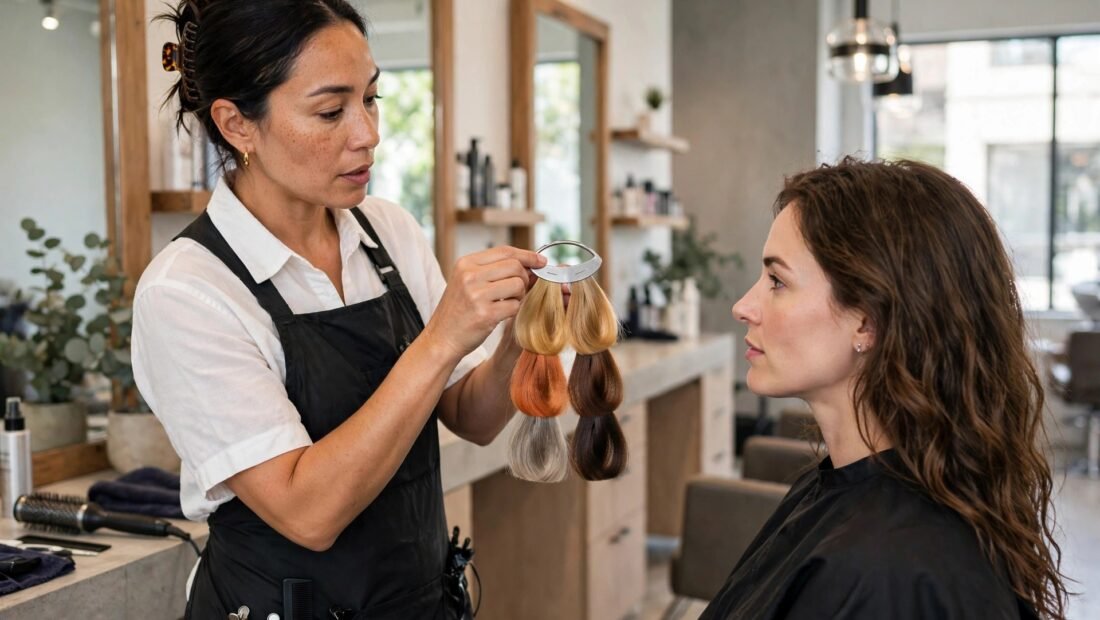
Bring your colorist photos of the shade you want on people who share your undertone. A good colorist will check your undertone in natural light and adjust the formula to your starting hair. Get the temperature right first, then the depth, then the upkeep plan, and the color stops being a gamble.