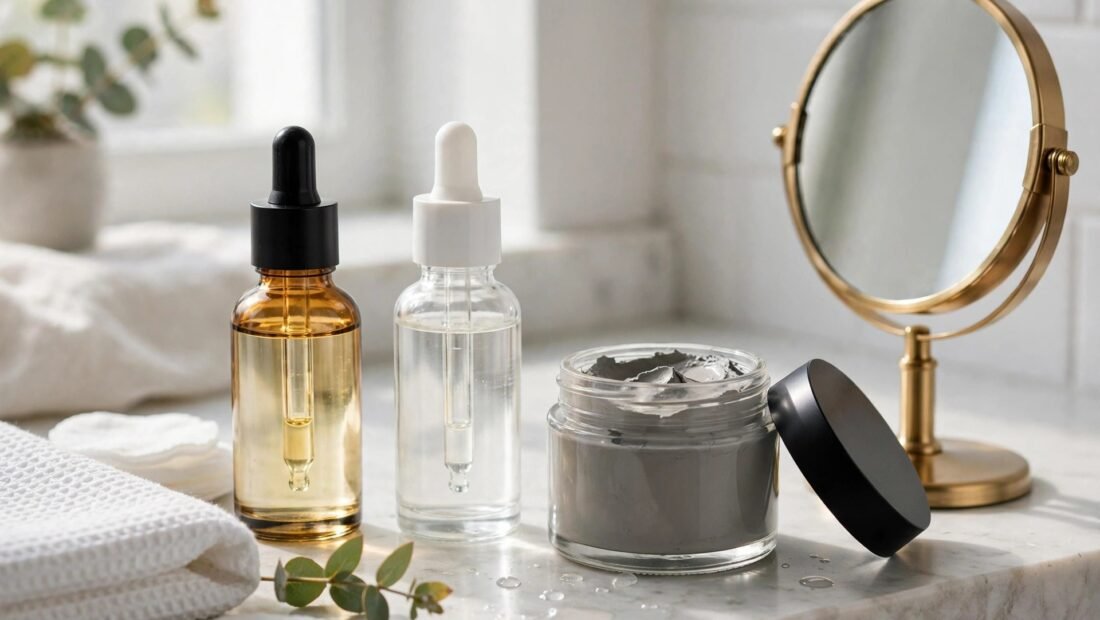
The shelf keeps growing. Strips in the bathroom drawer, a gritty scrub by the sink, an astringent that stings, a primer that promises to blur everything. Yet in every close photo, the pores across the nose look exactly the same. That is not bad luck. Most of that shelf works against the skin it claims to fix. One hard fact sits under all of it: pore size is largely genetic, and no product physically shrinks a pore. Pores are not muscles. They do not open and close. What can change is how they look, and that depends on keeping them empty, keeping oil under control, and keeping the skin around them smooth. Start by dropping the habits that make all three harder.
Mistake 1: Ripping plugs out with pore strips
Pore strips feel productive. You peel one off, see the little plugs, and assume the pore is now clean and smaller. The effect is brief and the cost is real. A strip tears out only the surface of a plug, leaves the pore wall stretched and irritated, and the plug rebuilds within days. Repeated often, that cycle of stretching and irritation can make pores look larger over time, not smaller.
The same logic applies to squeezing with fingernails at home. Nails rupture pore walls, push bacteria deeper, and leave marks and scars that outlast the blackhead by months. Professional extractions exist for a reason: trained hands, proper tools, and sterile technique. Home squeezing is the single fastest way to turn a mild pore problem into a lasting one.
Mistake 2: Scrubbing and layering acids until the skin is angry
When pores refuse to budge, the common response is more force. Daily harsh scrubs. Two or three acid products stacked in one routine. The skin answers with inflammation, and inflamed skin makes pores more visible, not less. Over-cleansing does similar damage. Strip away too much oil and the skin often rebounds by producing more, which refills the nose pores you just emptied.
Frequency is the trap here. The nose can handle steady, moderate care far better than intense, daily attacks. If your nose is red, tight, or flaky while your pores look worse, the routine is too aggressive. Pull back before you add anything new.
Mistake 3: Skipping sunscreen while chasing smaller pores
Sun damage quietly undoes pore work. Ultraviolet light breaks down the collagen that supports the walls around each pore. As that support weakens, pores look wider and less firm. A person can run a perfect cleansing routine and still lose ground every sunny Texas afternoon spent unprotected.
Daily sunscreen is pore prevention, not an optional extra. The catch is formula choice. Heavy, greasy products can clog the very pores you are clearing, so look for lightweight, non-comedogenic options and reapply in a way that suits oily skin, such as a powder sunscreen brushed over the nose for a midday refresh. For help picking one, see the best sunscreen choices for oily, acne-prone skin.
Mistake 4: Covering the problem with heavy makeup
Thick foundation settled into nose pores draws the eye straight to them. It also sits in the openings all day, mixing with oil and sweat. Lightweight, non-comedogenic formulas do less visual and physical damage, and on the nose, less product almost always looks better than more. Primer can smooth the surface for a few hours, but treat it as camouflage while the real routine works, not as the routine itself.
Texas heat exposes this mistake fast. Sweat, oil, and layered makeup form the mix most likely to clog pores. Rinse sweat off promptly when you can. During the day, press with blotting papers instead of wiping, since rubbing irritates the skin and spreads the oil around.
The routine that actually changes how nose pores look
With the damaging habits out, the working routine is short. Five parts, each with a clear job.
Cleanse properly, twice in the evening
Use an oil-based cleanser first to dissolve sebum and sunscreen, then a gentle water-based cleanser to wash everything away. That double cleanse matters for the nose, because a single pass often leaves the oily debris that becomes the next blackhead. In the morning, a gentle cleanse is enough for most people. Clean, yes. Stripped, no.
Use salicylic acid where it counts
Salicylic acid is the standout ingredient for this problem because it is oil-soluble. It can move into the pore and loosen the plug of oil and dead skin from inside, which water-soluble ingredients cannot do as well. Choose a leave-on 2 percent toner or serum rather than a wash-off cleanser, since contact time is what does the work. Apply it to the nose area 3 to 4 times a week to start. This one step usually delivers the clearest change.
Add niacinamide to steady oil output
Niacinamide at 4 to 5 percent helps regulate sebum and improves how pores look over about 8 to 12 weeks. It works through a different route than salicylic acid, so the two pair well instead of competing. For Texas skin that gets oilier as temperatures climb, that steadying effect is the reason this ingredient earns a daily spot.
Play the long game with a retinoid
Retinoids speed up and normalize cell turnover inside the pore, which reduces the dead-skin buildup that stretches pores in the first place. Results take 3 to 6 months, longer than any other step here, but they tend to last. Start with a low strength and a few nights a week. Nose skin is tougher than cheek skin, yet irritation can still stall progress, so build slowly.
Reset once a week with a clay mask
A kaolin or bentonite mask absorbs surface oil and pulls at pore contents, giving a visible short-term improvement after each use. Weekly is the right pace. Daily use dries and irritates. If the rest of your face runs normal or dry, keep the mask on the T-zone only.
For background on matching treatment to cause, the American Academy of Dermatology’s guidance on enlarged pores is a sound place to check claims before spending money.
When home care is not enough
Some noses need professional help, and knowing the options prevents wasted spending. A skilled esthetician can perform extractions that clear deep plugs without tearing pore walls, monthly or as needed. Professional chemical peels resurface the skin more strongly than home acids and can refine pore appearance over a series of visits. Microneedling prompts collagen growth around pores, improving the support that keeps them looking tight, across multiple sessions. Fractional laser treatment rebuilds dermal collagen most dramatically and costs the most, at roughly $500 to $1,500 or more per session in Texas.
Book a dermatologist visit before paying for procedures. Pores that changed suddenly or look unusual can point to conditions such as rosacea or sebaceous hyperplasia, which need diagnosis and medical care rather than cosmetic sessions. Matching the treatment to the actual cause, whether that is oil, aging, or sun damage, is what separates money well spent from an expensive guess.
A sample week on the working routine
Seeing the pieces laid across a week helps more than a list of products. On a normal morning, cleanse gently, apply niacinamide, moisturize if your skin needs it, and finish with sunscreen. On three or four evenings a week, after the double cleanse, apply the 2 percent salicylic acid to the nose and let it sit rather than rinsing it away. On two or three other evenings, once your skin has adjusted, use the retinoid instead, keeping the two strong steps on separate nights at the start so you can tell which one your skin dislikes if either causes trouble.
Pick one evening a week for the clay mask, applied to the T-zone for the time stated on the tub and no longer, since a mask left to crack and flake pulls moisture out along with oil. That same evening suits a photo check. Take one close picture of your nose in the same light each week. Daily mirror checks will fool you in both directions. A weekly photo shows the slow change honestly, and slow is the honest speed here. Pores that took years of oil, sun, and buildup to stretch will not reverse in a fortnight, and a routine you can judge fairly is a routine you will actually keep.
Two small habits support the week. Change or wash pillowcases often, since oil and product residue transfer back onto the nose overnight. And keep hands off the face during the day. Fingers carry oil and dirt to exactly the area you are trying to keep clear, and absent-minded touching undoes careful cleansing faster than most people realize.
Give the routine a fair clock
Pore appearance improves on the skin’s schedule. Judge the routine after 8 to 12 weeks of steady use, not after four days with a new bottle. In a Texas summer, you may need the summer version of the plan: salicylic acid a touch more often, blotting papers in a bag or pocket, and prompt rinsing after heavy sweating. Drop the strips, the scrubs, and the squeezing. Keep the pores empty, the oil steady, and the collagen protected. That combination will not rewrite your genetics, but it is the honest route to a nose that photographs the way you want it to.