
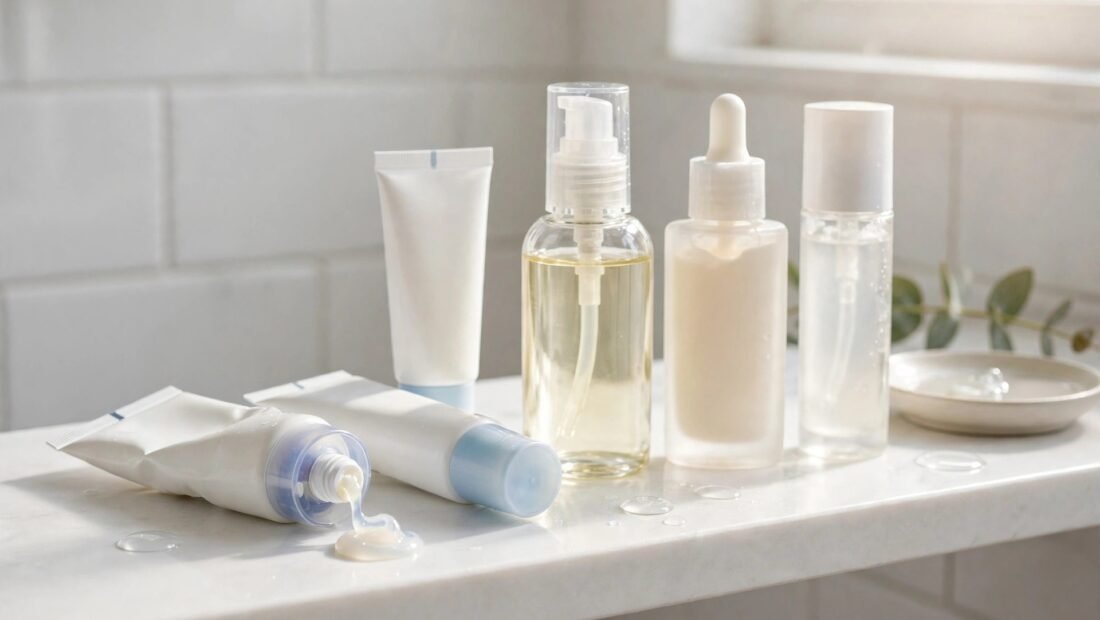
By noon the sunscreen is doing its job. The shine is up, the skin feels sealed, and the sun is blocked. By Friday a different story shows up along the jaw and forehead, small bumps that were not there on Monday. That pattern is common for oily, acne-prone skin in Texas, and it rarely means sunscreen itself is the problem. It usually means the tube was built for dry skin, applied too thin, or left on the face overnight. The fix starts with a short label check you can run in the store aisle in under a minute.
The Label Checklist to Run First
Hold the tube up and look for these points in order. A sunscreen that passes most of them is far more likely to stay on oily skin without starting breakouts.
- Oil-free on the front label, and no heavy oils high in the ingredient list
- Non-comedogenic stated on the label
- Gel, fluid, or light lotion texture, not a thick cream or balm
- Fragrance-free, with no parfum listed
- SPF 30 to 50, broad spectrum, covering both UVA and UVB
- Water-resistant for 40 or 80 minutes if you will be outdoors and sweating
- Niacinamide, silica, or another oil-absorbing ingredient if shine is a main concern
- A fresh expiration date, with at least several months left
That list does the heavy lifting. Everything after it explains why each line matters, how to apply the product so it protects at the level printed on the tube, and how to take it off at night. If a tube fails the first three lines, put it back even if the SPF number looks impressive. A high number in a heavy base you dread wearing loses to a lower number in a light base you use every day.
Why Texture Beats the SPF Number
SPF 30 blocks about 97 percent of UVB rays when it is applied at the tested amount. SPF 50 adds only a small extra margin, and SPF 100 adds less still. The gap sounds large on the label and small on skin. What changes the real result is whether you apply enough and whether the film stays even. Thick creams tend to pill, drag, and sit in patches on oily skin. They also feel hot. Fluids and gels spread thin, set faster, and leave a more even layer.
For readers whose skin reacts with redness as well as oil, the best sunscreen choices for sensitive skin cover the gentler end of the range, where mineral filters and low-irritant bases matter more. Oily and sensitive overlap often in Texas, because heat, sweat, and strong sun can make reactive skin produce more oil through the day.
Broad spectrum matters just as much as the number. UVB burns the surface. UVA goes deeper, passes through window glass, and darkens the marks that acne leaves behind. A product that blocks only UVB can prevent a burn while still letting the spots you are trying to fade get darker. Check for the words broad spectrum every time, not just a high SPF.
Mineral, Chemical, or a Mix
Both filter families can work for acne-prone skin. The choice is mostly about feel and tolerance.
Mineral filters, zinc oxide and titanium dioxide, sit on top of skin and reflect and scatter light. Zinc oxide also has a mild calming effect that some acne-prone users like. The trade-off is texture. Classic mineral creams can be thick, chalky, and hard to spread, and they can leave a white cast. Lightweight mineral fluids solve much of that, so if you prefer mineral, look for the word fluid on the label rather than cream.
Chemical filters absorb UV before it reaches deeper skin. Modern chemical fluids are often the lightest option and the easiest to wear under makeup. The downside is that a few filters irritate some people. Oxybenzone is the one named most often for sensitivity. If your skin stings with chemical sunscreens, try an avobenzone-based formula or switch to a light mineral fluid and compare how your skin feels after three days of each.
Hybrid formulas mix both families and often land in the middle on feel. Whatever the family, test a new sunscreen on one area for a few days first. A product that feels fine for an hour can still clog by day four.
Ingredients That Help Oily Skin
Niacinamide is the most useful extra to look for. It helps regulate oil, calms visible redness, and supports the skin barrier without adding grease. In a sunscreen it does double duty, protection plus oil control, which is why so many formulas aimed at acne-prone skin include it.
Silica and similar powders absorb oil on the surface and extend a matte finish. They do not stop oil production. They buy time, often two or three extra hours before shine breaks through, which matters during a Texas afternoon.
For hydration, hyaluronic acid and glycerin add water without oil. Oily skin still needs hydration. When it gets dehydrated from sun, air conditioning, or harsh cleansers, it can produce more oil to compensate. A light hydrator under sunscreen can break that cycle without the heaviness of a cream.
Ingredients and Habits That Cause Trouble
Coconut oil, cocoa butter, and wheat germ oil are highly comedogenic for many people. They appear more often in body sunscreens and in rich facial creams than in face fluids, but check the inactive list anyway. Marketing on the front can say light while the back tells a heavier story.
Fragrance is another common trigger. It adds no protection, and irritated skin breaks out more easily. If a sunscreen smells strongly perfumed, oily acne-prone skin is not the place to test it.
Heavy silicones need a balanced note. Dimethicone in normal amounts is non-comedogenic and helps a formula spread. Very silicone-heavy formulas, though, can feel like a sealed film in heat and trap sweat underneath. If a product feels like plastic wrap by midday in August, that is useful information, not a failure on your part. Switch to a thinner fluid.
How Much to Apply, and In What Order
The tested amount for the face is about one quarter teaspoon. Most people apply about half that and get far less protection than the label promises. Measure it once at home so your eye learns the amount. For face and neck together, about half a teaspoon is a practical guide. Two finger lengths of product, squeezed along the index and middle fingers, is another common way to gauge a face amount.
Order matters for both protection and makeup. Start with clean skin. Apply a light, oil-free moisturizer if you need one and let it settle for a minute. Apply sunscreen next and give it about 15 minutes before makeup. Sunscreen needs direct contact with skin and a short setting window to form an even film. Rushing makeup on top can move the film around and create thin spots.
The guidance in the American Academy of Dermatology’s sunscreen guidance lines up with this approach: use enough, cover exposed skin, and reapply on schedule rather than trusting a single morning coat to last through a full outdoor day.
Reapplying Without Piling On Cream
Outdoors, sunscreen needs reapplying every two hours, and sooner after swimming or heavy sweating. That rule can feel impossible over makeup, and layering fresh cream over oil and makeup at noon is exactly what clogs pores. Work around it instead of skipping it.
Blot first. A tissue or blotting sheet lifts surface oil without disturbing the base much. Then refresh with powder SPF or an SPF setting spray. Neither replaces a proper morning application, but both add protection without another cream layer. For long outdoor stretches with no makeup, a fresh fluid application after blotting is still the strongest option.
Water resistance helps, but read it correctly. A label that says 40 or 80 minutes means the product kept its protection for that long in water testing. It does not mean waterproof, and it does not mean one application lasts all afternoon at a Texas pool or job site. Reapply after toweling even if the clock has not hit two hours.
Taking It Off at Night
Water-resistant films are designed to resist washing off. That is the point during the day and the problem at night. A quick splash or a light cleanser alone can leave residue in pores, and that residue is a frequent hidden cause of breakouts blamed on the sunscreen itself.
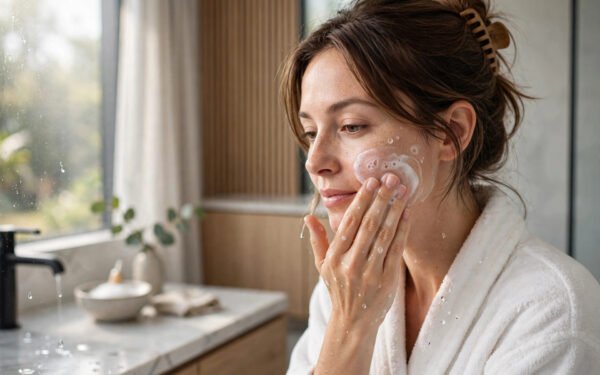
A double cleanse solves it without harsh scrubbing. Use an oil cleanser or micellar step first to dissolve the film, then a gentle water-based cleanser to wash everything away. Keep the second cleanse soft. Stripping oily skin with a harsh wash can trigger more oil and irritation. Clean, not tight and squeaky, is the target. On an indoor day with only a light, non-water-resistant sunscreen and no makeup, a single thorough gentle cleanse may be enough.
Texas Conditions That Change the Choice
Heat changes wear and storage. Sunscreen left in a hot car or beach bag degrades faster, and expired filters protect less while irritating more. Check the date at the start of summer and replace tubes that spent last summer in a glove box. Store the daily tube indoors.
Sweat and gear add friction. Helmets, caps, and sports straps trap heat against sunscreened skin and can push product into pores along the strap line. If breakouts cluster where gear sits, blot and refresh after removing the gear, and be extra careful with the evening cleanse that day.
Indoor days still count. UVA passes through windows, and Texas drivers get steady exposure through car glass on commutes. A light daily fluid on workdays keeps post-acne marks from darkening while you treat the acne itself.
A Simple Way to Test a New Tube
Give any new sunscreen a fair, short trial. Use it for five to seven days in the same routine, with the same cleanser at night, and change nothing else. If small clogged pores appear in the usual zones and fade after you stop, the formula is a poor match. If your skin stays clear and the finish holds for a few hours before shine, you have a keeper. Note what failed, heavy cream, strong fragrance, a specific oil, so the next pick avoids the same trap.


1 Comment