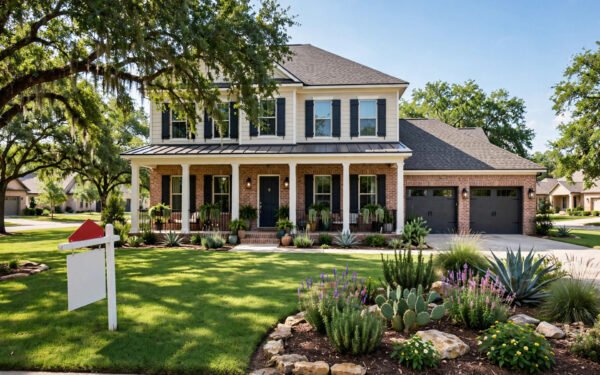
There’s a particular anxiety that hits Texas homebuyers right around the offer stage: you know the asking price has padding in it, you know every dollar you don’t negotiate is a dollar you’ll pay interest on for 30 years — and you also know that insulting the seller is the fastest way to get your offer tossed. In Texas, where sellers often have deep emotional equity in homes they’ve owned for decades, negotiation is less about hardball tactics and more about structured, respectful strategy.
The buyers who get the best prices in Texas are rarely the most aggressive. They’re the most prepared. They understand how what makes a home feel valuable before it’s even listed affects seller psychology, they speak the language of the Texas contract, and they make offers that are easy to say yes to — at a lower number. Here’s exactly how.
Why Negotiating in Texas Is Different
Texas is a non-disclosure state: sold prices aren’t public record, so you can’t just look up what the neighbor’s house sold for on a county website. Your agent pulls comparable sales through the MLS, which makes agent selection and comp analysis disproportionately important here.
Texas closings run through title companies rather than attorneys, and the standard TREC 1-4 Residential Contract has a feature buyers in other states never see — the option period. For a negotiated option fee (often $100–$500), you buy an unrestricted right to terminate for any reason within the option window, typically 7–10 days. Understanding these mechanics before you negotiate gives you leverage that costs nothing: you can offer clean, fast, low-drama terms while staying protected. For more detail on a related topic, see our article on is it better to buy commercial property or rent for a new business.
Do the Homework That Justifies Your Number
Never negotiate from a feeling. Build a one-page case for your price:
- Comparable sales (last 90–180 days): same neighborhood, similar size, age, and condition. In non-disclosure Texas, lean hard on your agent’s MLS data and ask to see the actual comp sheets.
- Days on market and price history: a home sitting 45+ days with a price cut is negotiating with you already. A home listed 6 days ago in a hot suburb is not.
- Condition-adjusted pricing: attach real contractor estimates to deferred maintenance. A 20-year-old roof in hail-prone Texas is a $12,000–$18,000 near-term cost — pricing it into your offer is business, not insult.
- Tax appraisal vs. list price: county appraisals lag the market, but a list price 25% above the tax appraisal tells you about seller expectations versus reality.
When your offer is below asking, attach a brief summary of the comps. Sellers get offended by low numbers that feel arbitrary; they get persuaded by low numbers with math attached. “Based on three comparable sales on this street averaging $212 per square foot, we’re offering $208” lands completely differently than a naked lowball.
Speak the Language of a Low-Friction Offer
In Texas, price is only one of a dozen negotiable terms — and the others are where respectful negotiators win. A seller choosing between your $385,000 and a competing $390,000 will often take yours if your terms remove their headaches:
- Earnest money: 1% is standard; 2% signals serious intent without costing extra if the deal closes.
- Option money: a meaningful option fee ($300–$500) tells the seller you’re committed enough to put non-refundable money down on day one.
- Flexible closing and possession: ask the listing agent what the seller’s ideal timeline is, then match it. A seller who needs a 10-day leaseback will remember the buyer who offered it cheerfully.
- Clean contract: fewer addenda and special provisions. Every extra page is a reason to recommend someone else.
Set your price a touch below where the comps justify, then let the package do the talking: strong terms plus a fair-but-firm price reads as a professional buyer, not a bargain hunter.
Negotiate Concessions, Not Just Price
Some of the most valuable wins never show up as a lower purchase price:
- Seller-paid rate buydown: instead of a $10,000 price cut, ask for $10,000 toward a 2-1 buydown. On a $400,000 loan that can save more monthly cash than the equivalent price reduction — and sellers prefer it because the headline price stays intact.
- Closing cost credits: reduce your cash to close without bruising the seller’s price ego.
- Credits over repairs: after inspection, ask for a credit rather than demanding the seller manage repairs. Sellers hate project-managing fixes; a credit is clean and fast.
- Included items: the riding mower, patio furniture, workshop tools — real value to you, low emotional cost to a seller who’s moving anyway.
Review the Consumer Financial Protection Bureau’s homebuying resources before finalizing concession structures, since buydowns and credits interact with loan disclosures your lender must document.
What Never to Do
Don’t open with an insult number. Offering 30% below asking on a fairly priced home doesn’t start a negotiation — it ends it. If the comps support a much lower price, let the comps deliver the news.
Don’t trash the house to justify your price. “The kitchen is dated” might be true, but the seller raised kids in that kitchen. Frame everything as market data: “comparable updated homes sell at X; this home needs approximately Y in updates.” Same math, zero insult.
Don’t nickel-and-dime the inspection response. Group legitimate issues, prioritize the big ones (roof, foundation, HVAC — the Texas big three), and let the small stuff go.
Don’t bluff about walking away unless you mean it. Decide your walk-away number before you offer, and let your agent communicate calm resolve rather than theatrics.
Conclusion
Negotiating a Texas home price without offending the seller comes down to three things: arrive with comp-backed math, make your terms so clean the seller barely notices the discount, and shift part of the negotiation into concessions — buydowns, credits, timelines — where both sides win. The buyers who master this win houses because sellers want to work with them. In a market where the listing agent’s recommendation often decides between two close offers, being the respectful buyer with the smart offer is a genuine competitive edge. For broader national context, the National Association of Realtors publishes regularly updated buyer guidance worth reading before your next offer.
Frequently Asked Questions
How much below asking should I offer on a house in Texas?
It depends on comps, days on market, and condition. On a fairly priced home in an active market, 2–5% below asking with strong terms is reasonable. On a home sitting 60+ days, 5–10% below can be justified with data. Let the comps set your number.
What is option money in a Texas real estate contract?
Option money is a fee paid to the seller for an unrestricted right to terminate during the option period (typically 7–10 days). It’s non-refundable if you walk away but applies to the purchase price if you close — giving you a risk-free inspection and due-diligence window.
Can I negotiate the price after the home inspection in Texas?
Yes — during the option period you can terminate for any reason, which gives you leverage to renegotiate if the inspection reveals significant issues. Present findings with contractor estimates and request repairs or a closing credit rather than issuing ultimatums.
Do sellers in Texas expect negotiation?
In most Texas markets, yes — listing prices typically include a buffer of a few percent, especially for homes listed more than a couple of weeks. In hyper-competitive pockets, fairly priced homes may sell at or above asking, so read local conditions.
Should I write a personal letter to the seller with my offer?
A brief, genuine note about why you love the home can help, but keep it about the house — never personal details that could raise fair-housing concerns. It won’t substitute for strong terms, but between two close offers it can break the tie.