
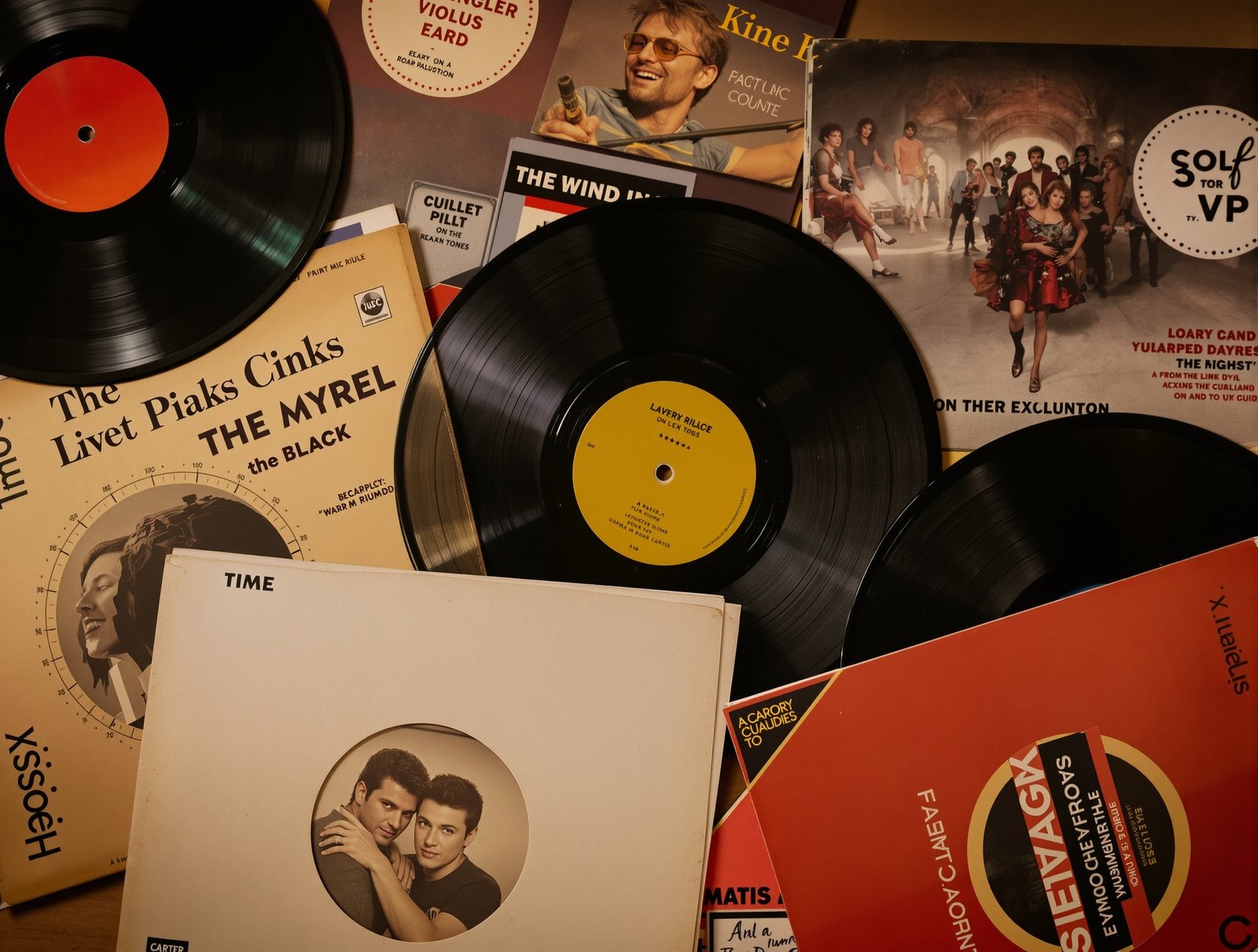
How many songs are in an album? The short answer is 10 to 12. Pick up a typical release from a major artist and that is the range you will land in most of the time, adding up to roughly 35 to 50 minutes of music. That number is not a law, and it is not random either. It comes from how the music business sorts releases into singles, EPs, and albums, from the habits of each genre, and from the limits of vinyl, CDs, and streaming, each of which pushed the count in a different direction.
What counts as an album in the first place?
Distributors and streaming platforms sort releases by track count and by total running time. The lines are not identical on every service, but the standard industry definitions are close to these:
- Single: 1 to 3 tracks, usually under 10 minutes in total. A single is built around one main song. The extra tracks, when there are any, are often a remix, an instrumental version, or a second song released as a B-side.
- EP: 4 to 6 tracks, roughly 15 to 30 minutes. EP stands for extended play. It is longer than a single and shorter than an album, and it is a common first serious release for a new artist who has good songs but not yet enough strong ones to fill a full record.
- Album, also called an LP: 7 or more tracks, typically somewhere between 30 and 80 minutes. LP stands for long play, a name carried over from vinyl. Once a release passes EP length in tracks and minutes, platforms treat it as an album.
Awards rules use their own test. For Grammy album eligibility, the Recording Academy requires at least five distinct tracks and a total playing time of more than 15 minutes, or a total playing time of more than 30 minutes with no minimum track count. You can check current rules and categories on the Recording Academy’s official Grammy site. Under that rule, a seven-track record that runs 32 minutes counts as an album without any argument. So does a four-track work if it runs long enough, though most four-track releases are still marketed as EPs.
That gap between platform rules and award rules explains some confusion. A release can be sold, filed, and judged as an album even when the counts differ a little at the edges. The shared idea is simple: an album is a complete body of work, long enough to stand on its own, rather than a teaser or a single song with extras.
Why does the typical album land at 10 to 12 tracks?
Ten to twelve tracks turns out to be a practical sweet spot. At an average of three to four minutes per song, that gives a running time of about 35 to 50 minutes. That is long enough for an artist to show range: a couple of singles, a few deeper cuts, a slower song, a closer. It is also short enough that a listener can play the whole thing in one sitting, on a drive, or during a workout, without the record wearing out its welcome.
There is a quality reason too. Most artists write far more songs than they release. Cutting a pool of 25 or 30 demos down to the best 10 or 12 produces a stronger record than keeping 16 and letting weak tracks sit in the middle. Listeners skip songs that feel like filler, and on streaming services a skip is a clear signal. A tight album where every track earns its place usually performs better, song for song, than a long album padded out to hit a bigger number.
Cost plays a part as well. Recording, mixing, and mastering are often paid track by track, so twelve finished songs cost less than twenty.
How does genre change the count?
Genre is where the averages split apart, because each style has its own song lengths and its own habits.
Pop usually sits close to the standard shape, around 10 to 14 tracks. A pop album needs room for several singles plus the slower and more personal songs that fans replay, and the total often lands near 40 minutes.
Hip-hop runs long. Counts of 12 to 20 tracks are common, and deluxe editions can push well past that. Skits, intros, and interludes count as tracks, which lifts the total. Streaming economics also reward length, since more tracks give more chances to be played.
Rock tends to keep the classic LP shape, around 10 to 14 tracks, a pattern set during the vinyl era and kept because it works. Punk sits at the other edge: songs may last only two minutes, so a punk record can fit 14 short tracks into half an hour.
Country albums usually hold 10 to 13 tracks, often arranged to tell a story across the record, with the running time close to that of a pop album.
Jazz and classical releases break the pattern completely. When one piece runs eight, ten, or fifteen minutes, five to eight tracks can fill a whole album. Here the minute count matters far more than the track count. A three-piece classical recording can be a full album by any honest measure.
Electronic music spreads widest of all. An ambient record might have six long tracks; a dance collection might have sixteen shorter ones. The format follows the listening setting rather than a shared rule.
Why did vinyl set the original limit?
The 10-track, 40-minute shape was not chosen by taste alone. A vinyl LP can hold only so much music per side before sound quality drops. The practical cap was about 22 minutes per side. Artists and engineers planned around that wall: side one, side two, each sequenced as its own small arc, with a natural pause in the middle when the listener flipped the record.
That physical limit shaped decades of habits. Songs were cut or trimmed to fit, and strong tracks were left off records because there was no room. If you are building a collection, it helps to know how to start collecting vinyl records on a budget, because older pressings show the pattern clearly: two sides, roughly twenty minutes each, and a track list edited down to what fit.
What happened when CDs removed the ceiling?
The compact disc raised the cap to about 80 minutes, and albums grew fast. Through the 1990s, 70-minute records became normal. Some were generous. Many were bloated. With no wall forcing hard choices, artists kept songs that the vinyl era would have cut, added longer intros and hidden tracks, and stretched records past the point where most listeners stayed engaged.
The CD era proved a useful point: a higher limit is not the same as a better album. Few artists have 20 tracks of equal quality ready at once, and the records from that period that hold up best are usually the ones edited as if a limit still existed.
How has streaming changed the number again?
Streaming removed the physical cap entirely and replaced it with a different pressure: payment and attention are counted per play. That pushed track counts up again for a while, especially in hip-hop, because an album with 20 tracks had more chances to rack up streams than one with 10. Deluxe editions added another round of songs weeks after release, extending the life of the same album.
Then listener behavior pushed back. Short songs built for quick replay became common, and skip rates on weak tracks hurt an album’s standing in recommendation systems. Many artists settled on a split strategy: release singles steadily, every four to eight weeks in active periods, and save the album for when there is a real body of work to present. The typical album has drifted back toward the tight 10 to 12 track shape, even though nothing physical forces it anymore.
Do interludes, intros, and skits count as songs?
For track-count purposes, yes. Every numbered track on the release counts, whether it is a four-minute song, a 40-second interlude, or a spoken skit. That is one reason some hip-hop albums show very high totals: the count includes pieces that were never meant to stand alone as songs.
For award purposes the picture is stricter, since eligibility rules speak of distinct tracks and total playing time, and a release made mostly of filler would not be treated the same as one made of full songs. When you compare albums, the honest comparison uses both numbers: how many tracks, and how many minutes. A 14-track album of two-minute songs is a shorter listen than an 8-track album of six-minute songs.
Can an album have only 7 songs?
Yes. Seven tracks sits above the EP range in the standard definitions and, as long as the running time lands somewhere near or past 30 minutes, every major platform will file it as an album. Short albums are common in jazz, metal, and singer-songwriter work, where songs run long and a smaller set still fills the record. The question to ask is not whether seven is allowed. It is whether the seven tracks feel complete, with a beginning, a middle, and an end that a listener would notice if one were removed.
How long is the average album in minutes?
Most albums run 35 to 50 minutes. That range lines up with the 10 to 12 track average at normal song lengths. EPs run about 15 to 30 minutes, and singles stay under 10 minutes in most cases. If you only remember one pairing, remember that one: count and minutes together define the format, and either number alone can mislead.
If you are making an album, how many songs should you choose?
Start with your strongest 10 tracks. Play them in order and listen for the weak one, because there usually is one, and removing it almost always improves the record. Add an eleventh or twelfth track only if it is as strong as the rest. Hold extra good songs for a deluxe edition or the next record instead of forcing them in.
Match the count to your goal. A new artist proving range may do better with a focused EP of five strong tracks than a thin album of eleven. An artist with a real statement to make, a theme that needs room, may need twelve to fourteen. Watch the running time as you decide: somewhere between 35 and 50 minutes is the zone where listeners finish albums instead of sampling them. Above all, treat every track as a promise. If a song is only there to raise the count, cut it, and let the album be the size the music actually is.



1 Comment