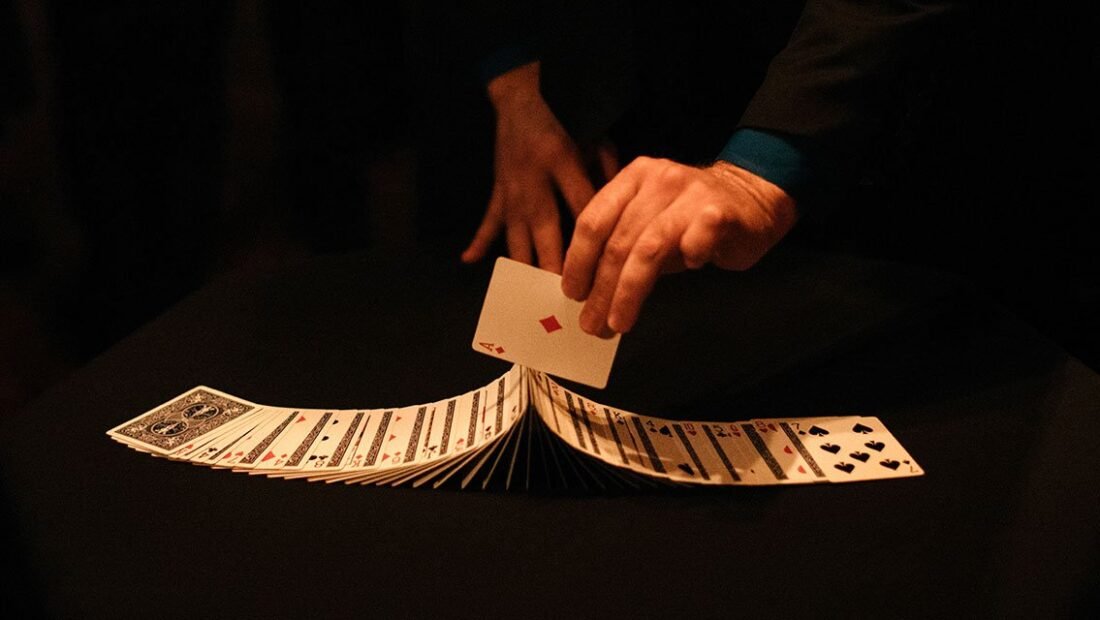
A person who can do three good magic tricks is never bored at a party — and never boring. Magic is the ultimate social superpower: it breaks ice instantly, gives you something to do with your hands, and creates the kind of amazed reactions people remember. And the barrier to entry is far lower than it looks.
The best magic tricks to learn for parties share three traits: they use ordinary objects (no suspicious props), they’re learnable in an evening, and they hit hard — the kind of tricks that make people grab your arm and demand to know how. Here are eight, plus the performance secrets that separate magicians from people who know tricks.
The Tricks: Best Magic Tricks to Learn for Parties
Start with self-working card magic — tricks that work through mathematics, not sleight of hand. The ‘impossible’ card location (a stacked arrangement or a key card you track) takes 20 minutes to learn and plays like a miracle. YouTube’s magic teachers have excellent free tutorials; learn one trick fully before moving on. The rubber-band tricks are the next tier: a band visually penetrating another, or jumping between fingers — all doable with 30 minutes of practice, all using an object everyone recognizes.
Coin magic is the party gold standard because coins are always available. The basic coin vanish and reproduction (palming fundamentals) takes an evening to make convincing, and the ‘coin through the table’ — done with a little misdirection theater — gets audible gasps. The phone tricks are the modern closer: a borrowed phone revealing a thought-of word (using a legitimate mentalism principle, not an app), or the ‘photo prediction’ that seems impossible. End with mentalism — mind-reading plays bigger than any object trick, because it feels personal.
The Performance Secrets (More Important Than the Tricks)
Here’s what beginners get wrong: they learn the method and think they’re ready. The method is 20% of magic; performance is 80%. The secrets: never repeat a trick for the same audience (the second viewing is when methods get spotted), never explain how it’s done (the mystery is the product — explaining kills it permanently), and build a little theater around each effect. ‘Watch the coin’ is a puzzle; a story about learning it from a mysterious stranger is magic.
Misdirection isn’t about fast hands — it’s about attention. People look where you look, so look where you want them to look. Speak during the secret move; silence draws eyes to your hands. And handle failure gracefully: if a trick goes wrong, smile, move on, and do the next one. Audiences forgive a failed trick instantly when the performer stays charming — they only turn on you if you get flustered and defensive. Confidence is the real sleight of hand.
Reference: Society of American Magicians.
Reference: Theory11 magic community.
8 Party Tricks to Learn First
In learning order, easiest first:
- Key-card location — a self-working card miracle. Learn it in 20 minutes, perform it forever.
- Rubber band penetration — visual, instant, uses a borrowed object. Huge reactions.
- Coin vanish and reproduction — the fundamentals; an evening of practice makes it convincing.
- Coin through table — simple method, theatrical presentation, audible gasps.
- The jumping rubber band — quick to learn, perfect as a casual ‘wait, do that again.’
- Phone mentalism — reveal a thought-of word on a borrowed phone. Feels impossible.
- The ‘which hand’ upgrade — a classic guessing game with a clever twist.
- Your closer: one strong mentalism effect — mind-reading ends the set on a high.
Practice, Ethics, and the Next Level
Practice in a mirror until the moves are boring — that’s when they’re ready. Film yourself on your phone; the camera catches flashes and awkwardness the mirror misses. Perform first for one trusted friend, then small groups, then parties. Each level up teaches you timing and audience management that no tutorial covers. And learn the magician’s code: don’t reveal methods publicly, don’t spoil other performers’ shows by shouting solutions, and credit your teachers.
When you’re hooked (you will be), the rabbit hole is deep and wonderful: local magic shops (the staff will teach you with any purchase), magic clubs (the Society of American Magicians has local assemblies everywhere — welcoming to beginners), and the classic texts. But you don’t need any of that to be the person who does magic at parties. Three solid tricks, performed with confidence and charm, put you ahead of 99% of party guests. The deck of cards in your pocket is a superpower — learn to use it.
Frequently Asked Questions
How long does it take to learn a magic trick?
A self-working trick: 20 minutes to learn, an evening to perform confidently. Sleight-of-hand basics (coin vanish, card controls): a few evenings of mirror practice. The real timeline is performance polish — tricks become magic after 10–20 performances for real audiences. Start with the easy ones, perform early and often, and let audiences teach you the rest.
Is it okay to learn magic from YouTube?
Yes — with etiquette. Learn from creators who teach with permission and credit origins; avoid ‘exposure’ videos that reveal professionals’ signature material without consent. Support the teachers (buy their downloads, join their Patreons). The community’s rule: learn freely, perform respectfully, never reveal another magician’s secrets publicly.
What’s the easiest trick that still amazes people?
The key-card location — a self-working card trick learnable in 20 minutes that plays like genuine mind-reading to lay audiences. Or the rubber-band penetration: visual, instant, uses a borrowed object. Both prove the central truth of party magic: the audience’s amazement depends on presentation, not difficulty. Simple methods, performed with confidence, destroy.
More from Daily USA Post
- Also see: how do I keep bananas fresh for two weeks
- Our complete guide: what are the best budget-friendly dinner party menus
- how do I host a movie night at home like a theater — what you need to know
The best magic tricks to learn for parties — self-working card locations, rubber-band visuals, coin vanishes, phone mentalism — are learnable in an evening each and hit hard with ordinary objects. But performance beats method: never repeat for the same audience, never reveal secrets, direct attention with your eyes, and stay charming when things go wrong. Three confident tricks make you the most interesting person at any party. The cards are waiting.