Quick answer: Let the oil cool completely, pour it into a sealable, non-breakable container (like a jar, can, or its original bottle), close the lid tightly, and put it in your household trash. Better still, take it to a local recycling or drop-off point. Never pour cooking oil down the sink, toilet, or outside on the ground.
Whether you just deep-fried chicken or roasted vegetables, you end up with the same question: what do I do with all this oil? Pouring it down the sink is the easy answer, but it is also the wrong one. This guide shows you how to dispose of cooking oil safely, how to recycle it, and how to handle different oils like olive, vegetable, and frying oil.
Why You Should Never Pour Cooking Oil Down the Drain
Hot oil looks like water, but it cools and turns thick and sticky inside your pipes. Here is what happens:
- It clogs your pipes. Oil coats the inside of pipes and builds up over time, especially when mixed with food scraps.
- It causes sewer blockages. In cities, fats and grease can combine with wipes and other waste into large blockages in the sewer system.
- It costs money. Plumbing repairs are expensive, and blocked sewers cost cities and utilities a lot to clean.
- It harms the environment. Oil that reaches rivers or soil can harm wildlife and pollute water.
- It attracts pests like rats and cockroaches.
Hot water and dish soap do not fix this. They only push the oil further down the pipe, where it cools and sticks again. The same applies to the toilet and to storm drains outside.
Can You Pour Oil Down the Sink?
No, not in any real amount. A small amount of grease on a pan should be wiped off with a paper towel first, then washed. Never pour a cup or more of oil down the sink.
Can Vegetable Oil or Olive Oil Go Down the Drain?
No. Vegetable oil and olive oil are liquid at room temperature, but they still cool and thicken in your pipes and mix with other waste. The type of oil does not matter. All cooking oils should stay out of the drain.
Before You Start: Cool It Down
Hot oil can cause serious burns. Before you touch, move, or pour used oil:
- Turn off the heat and leave the pan where it is
- Let it cool completely. This usually takes a few hours for a full pan or fryer. It should feel cool to the touch
- Keep kids and pets away while the oil is hot
- Never add water to hot oil, since it can spatter violently
How to Dispose of Hot Oil Safely
If you must move it while it is warm, keep the pan on a stable surface and wait. Do not pour hot oil into plastic bags, thin plastic bottles, or foam containers, since they can melt or leak.
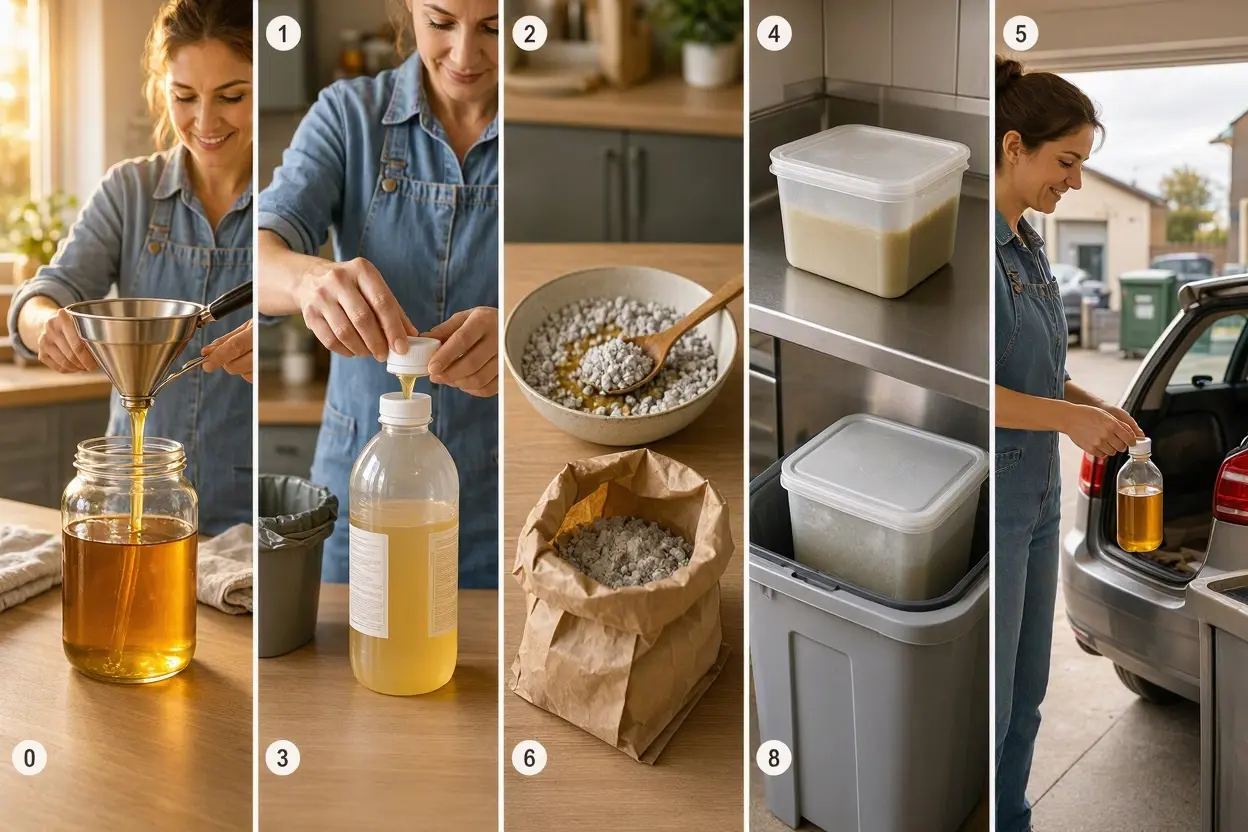
Method 1: Seal It and Put It in the Trash (Easiest)
This is the simplest way to get rid of cooking oil at home.
- Cool the oil completely.
- Choose a container with a tight lid. Good options: a glass jar, a metal can, a sturdy plastic tub, or the oil’s original bottle.
- Pour the oil in. A funnel helps avoid spills. Strain out food bits first if you like.
- Seal the lid tightly.
- Put the container in your household trash. Do not put it in the recycling bin unless your local rules say so.
Tip: Keep a “used oil jar” under the sink, and add cooled oil to it until it is full. That way you throw it away only once in a while.
Method 2: Solidify It Before Throwing It Away
If you do not have a container to spare, you can turn the oil into a solid.
- Freeze it. Pour cooled oil into a container and put it in the freezer. Some oils, like coconut oil or animal fats, harden at cooler temperatures.
- Use a fat solidifier. Some stores sell powders you stir into warm oil that turn it into a solid.
- Mix with an absorbent. Stir the oil into cat litter, sawdust, sand, or used coffee grounds until it is soaked up. Then bag it and put it in the trash.
This works well for small to medium amounts and avoids leaks in the bin.
Method 3: Wipe Small Amounts With Paper Towels
For a tablespoon or two of oil, or a greasy pan:
- Let the pan cool.
- Wipe it with paper towels.
- Throw the towels in the trash.
- Then wash the pan as usual.
Do not put oil-soaked paper towels in the compost or recycling bin.
Method 4: Take It to a Recycling or Drop-Off Point
The greenest way to deal with used oil is to recycle it. Used cooking oil can be turned into biodiesel and other products instead of going to landfill.
Where to Dispose of Cooking Oil
Options depend on where you live. Try:
- Local recycling centers or household waste sites
- Municipal drop-off points or collection events (many cities run these, especially after big holidays)
- Biodiesel recyclers or community collection programs
- Some supermarkets or partner sites that offer collection bins
To find one near you, check your city or council website, or use a recycling locator like Earth911. Call ahead, since many sites only take oil in a sealed container, and some do not accept mixed or spoiled oil.
How to Prepare Used Cooking Oil for Recycling
- Cool it completely
- Strain out food particles
- Pour it into a clean, sealed container (the original bottle works well)
- Do not mix it with water, motor oil, or other liquids
- Label it if the site asks
Cooking Oil Donation
Some biodiesel makers, farms, and community groups accept used oil from households. Rules vary, so contact them first to check what they take.
Method 5: Reuse It (When It Is Still Good)
Before you throw oil away, ask if it can be used again.
Can you reuse vegetable oil? Yes, often a few times, especially for shallow or deep frying at moderate heat.
- Let the oil cool.
- Strain it through a fine mesh sieve or coffee filter to remove crumbs.
- Store it in a sealed container in a cool, dark place.
- Use it again for similar foods.
Do not reuse oil that:
- Smells rancid, sour, or “off”
- Looks dark, cloudy, or foamy
- Smokes at low heat
- Feels thick or sticky
- Was used for strong-smelling foods like fish, unless you keep it for that use only
Can Cooking Oil Go Bad?
Yes. Cooking oil goes rancid over time, especially when exposed to heat, light, and air. Unopened bottles usually last many months to a couple of years, while opened bottles are best used within roughly six months to a year, depending on the oil. Store oil in a cool, dark cupboard with the lid closed. If it smells or tastes bad, throw it out following the steps above.
How to Dispose of Different Types of Oil
| Type | How to dispose of it |
|---|---|
| Vegetable oil | Cool, seal in a container, trash or recycle. Never the drain. |
| Olive oil | Same as vegetable oil. Small leftovers can be wiped with paper towels. |
| Canola oil | Cool, seal, then trash or recycle. |
| Peanut oil | Same method. Keep it sealed, and label it if others in the house have nut allergies. |
| Frying oil (deep fryer) | Cool fully, strain, pour into the original bottle or a sealed container, then recycle or trash. |
| Bacon fat and cooking grease | Let it cool and solidify, scrape into a can or jar, then trash. Never the sink. |
How to Dispose of Frying Oil After Frying
Deep frying leaves a lot of oil. After cooking:
- Turn off the heat and wait until the oil is fully cool.
- Strain it through a filter or sieve.
- Use a funnel to pour it back into the original bottle, or a sturdy sealed container.
- Recycle it, or place it in the trash.
For big amounts, like after frying a turkey, recycling drop-off is the best choice.
How to Dispose of Cooking Grease
Bacon fat and meat drippings solidify as they cool. Scrape them into a can, jar, or a paper-lined container, seal, and throw them away. Wipe the pan with a paper towel before washing.
Can You Compost Cooking Oil?
Usually, it is not recommended. Large amounts of oil slow down composting, cause bad smells, and attract pests. Some home composters add tiny amounts of plant-based oil, but many green-bin programs do not accept oil at all. Check your local rules before adding any.
What About Motor Oil?
Used motor oil is a different thing. It is not cooking oil, and should never be mixed with it. Take motor oil to an auto shop, recycling center, or hazardous waste site that accepts it.
Best Containers for Used Cooking Oil
Look for a used cooking oil container that is:
- Leak-proof with a tight lid
- Rigid and non-breakable (metal, thick plastic, or sturdy glass)
- Heat-safe if the oil is still warm
- Easy to pour into and out of (a wide neck or a funnel helps)
- Clearly labeled so no one mistakes it for edible oil
Good household options: the original oil bottle, a large jar with a screw lid, a coffee can with a plastic lid, or a container sold for fryer oil storage.
For Restaurants and Food Businesses
Restaurants and cafes use larger amounts of oil and usually have stricter rules. Common steps include:
- Store used oil in a dedicated, covered container
- Hire a licensed collector to pick it up and recycle it
- Keep records or receipts of collections, since some areas require them
- Maintain and clean grease traps regularly
- Follow your local sewer authority’s rules for fats, oils, and grease
Check with your local authority for the exact requirements in your area.
Common Mistakes to Avoid
- Pouring oil down the sink, toilet, or storm drain
- Pouring oil onto soil, grass, or outdoors
- Putting hot oil into plastic bags or thin containers
- Mixing oil with water or other liquids before disposal
- Putting large amounts of oil into the compost
- Throwing oil away in an open or leaky container
- Keeping old, rancid oil in the cupboard for too long
Quick Checklist
- Let the oil cool completely
- Strain out food bits
- Use a sealable, non-breakable container
- Trash it, recycle it, or reuse it
- Wipe greasy pans before washing
- Never use the drain
Conclusion
Learning how to dispose of cooking oil takes just a few minutes and protects your pipes, your neighborhood’s sewer system, and the environment. Cool the oil, strain it, seal it in a container, and either recycle it or put it in the trash. Keep it out of the sink, and remember that a small “used oil jar” in your kitchen makes it easy.
Disclaimer: Rules for waste and recycling vary by location. Check your local council or waste authority for the exact guidance in your area.
FAQs
1. What is the best way to dispose of cooking oil?
Let it cool, pour it into a sealed, non-breakable container, and either take it to a local recycling drop-off or put it in the household trash. Never pour it down the drain.
2. Can you pour oil down the sink?
No. Oil cools and thickens inside pipes, causing clogs and sewer blockages. Even with hot water and dish soap, it can build up further down the pipe.
3. Can vegetable oil or olive oil go down the drain?
No. All cooking oils, including vegetable, olive, canola, and peanut oil, should stay out of the drain and be disposed of in a container instead.
4. How do I dispose of used cooking oil at home?
Cool it, strain it, pour it into a sealed container, and throw it in the trash. You can also freeze it or mix it with an absorbent like cat litter first.
5. Where can I dispose of cooking oil?
Take it to a local recycling center, household waste site, or municipal drop-off point. Check your council website or a recycling locator for the closest option.
6. How do I dispose of frying oil after deep frying?
Let it cool fully, strain out food bits, pour it into the original bottle or a sealed container, and take it to a recycling point or put it in the trash.
7. How do I dispose of hot oil?
Wait until it is completely cool before moving or pouring it. Never pour hot oil into plastic bags or thin plastic, and never add water to it.
8. Can you reuse cooking oil?
Yes, often a few times. Strain it after it cools, store it sealed in a cool, dark place, and throw it out if it smells bad, looks dark or foamy, or smokes at low heat.
9. Can cooking oil go bad?
Yes. It turns rancid over time, especially with heat, light, and air. Store it in a cool, dark place, and discard it if it smells or tastes off.
10. Can you recycle used cooking oil?
Yes. Many areas have drop-off points that collect it and turn it into biodiesel and other products. Check with your local council or a recycling locator.
11. How do I get rid of cooking grease?
Let bacon fat and drippings cool and harden, scrape them into a can or jar, seal it, and put it in the trash. Do not wash grease down the sink.
12. Can I put cooking oil in the compost?
It is usually not recommended. Oil slows composting, causes odors, and attracts pests. Check your local green-bin rules before adding any.