
Two cafés on the same street each hand $800 a month to online ads. One’s lunch queue now reaches the door and its catering inbox is full; the other has a shoebox of analytics screenshots and a firm belief that “ads don’t work for businesses like ours.” The difference is rarely the budget. It is a handful of structural decisions — which channel, which geography, which offer, measured how — made before the first dollar moved. This deep dive takes the cost question apart properly: what local businesses actually spend, what a dollar buys on each platform, and the mechanics that separate the first café from the second.
The budget landscape: what local businesses actually spend
Most local businesses run online ads on $500 to $2,000 a month. Below $500 a month is not pointless, but it is a learning budget — enough to test one channel, one offer, one small geography — and owners should treat its output as information first and customers second. Frame it honestly to yourself before it starts: you are spending $400 to find out what a customer costs in your market, and if the answer justifies scaling, the tuition was the bargain of the year. Within the typical band, the spread matters less than the focus: $800 concentrated on one platform and one neighborhood will teach you more, and usually sell more, than $200 scattered across four platforms and a whole metro area. Advertising rewards density. A local business wins by being unavoidable inside a small radius, not faintly present across a large one.
Google Ads: buying people mid-search
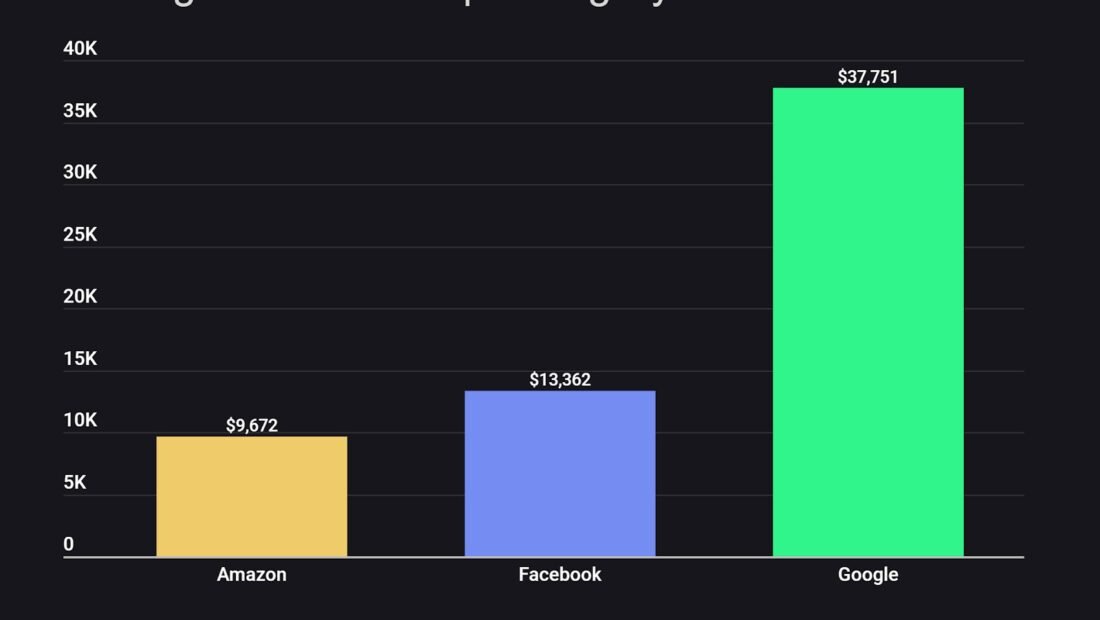
Google search ads typically run $20 to $50 a day for a local campaign, with clicks in competitive categories costing $5 to $30 each — the high end belonging to high-value intent: the lawyer, the emergency plumber, the roofer after a storm, where one customer is worth thousands. The economics are visible in that sentence: Google sells you people who are searching for the thing right now, the warmest traffic that exists, priced accordingly. The platform’s own guidance on how keyword costs and ad auctions work is worth an evening for any owner spending real money here. The beginner failures are consistent: keywords too broad (“shoes” instead of “running shoe fitting Denver”), a landing experience that sends ad clicks to a homepage instead of the exact service searched, and a geo-target left at the default radius that includes people who will never drive to you. Fixed, a Google campaign for a single service in a tight radius is the most accountable money in local marketing — you can name the cost of the customer it produced.
Meta ads: buying attention by the neighborhood
Facebook and Instagram ads cost less per day to run — $10 to $30 a day is the working local range — and they sell something different: not existing intent, but targeted interruption. You target by location radius, age, interests and life events, and put an offer in front of people who were not looking for you until your ad made them want to be. That makes Meta the natural home of visual, impulse-friendly and offer-led businesses: restaurants, salons, fitness, events, seasonal services. Its cost per result swings wildly with creative quality — the photo and the first line do the selling — which is why two businesses in the same category can pay threefold different prices for a customer. Meta is also where budgets quietly burn: broad targeting “to let the algorithm learn” with $15 a day teaches the algorithm almost nothing, slowly. Narrow the geography until it feels too small; for a local business, it almost never is. Your next hundred customers live within a few specific miles of your door, and every dollar spent reaching people outside those miles is a dollar your competitor on the same street just spent better.
The channels beyond the big two
For specific categories, the supporting channels outperform. Nextdoor reaches verified neighbors and performs strongly for home services, trades and local retail — its users arrived specifically to find local recommendations. Yelp’s ads matter in categories where Yelp is the research layer (restaurants, services in many metros). TikTok earns a place for businesses whose product demos beautifully to a younger audience. None of these replace the primary channel; each is a second instrument added after the first one is producing measurable results, not a substitute for choosing.
What a dollar is really buying: the unit economics underneath
The mature way to judge spend ignores cost per click entirely and works in customer arithmetic. If a click costs $8, and one in twenty clicks becomes a customer, a customer costs $160. Whether that is brilliant or ruinous depends on one number: what a customer is worth across their relationship with you — the first purchase plus the repeats plus the referrals, not the first ticket alone. The café paying $25 to acquire a regular who spends $60 a month for two years is printing money; the one-off service paying $160 for a $120 job is financing Google’s quarter. Owners who know their customer’s lifetime value set budgets calmly; owners who only know the first transaction flinch at the very costs that would have grown them. This is also where your tracking must be honest: calls and direction requests count as conversions for local businesses, and a campaign judged only on website purchases will look worse than it is — while a campaign judged on “impressions” will look better. Pick up the phone log before you judge either café.
The management question: DIY, freelancer, or agency
The media spend is not the whole cost; someone must run the campaigns, and their time is a line item whether it appears on an invoice or not. Doing it yourself costs evenings and a real learning curve, and is the right start for budgets under roughly $1,000 a month — the tuition is small and the literacy you gain supervises every later hire. A freelance ads manager typically charges a few hundred dollars a month at local scale; an agency commonly charges a monthly retainer or 10 to 20 percent of spend, with minimums that make them uneconomic below a certain budget. The trap to refuse at every level is the opaque bundle — “we’ll handle everything for $1,500” with no split between spend and fee — because you cannot judge a channel you cannot see. Insist on owning your ad accounts and your data whoever runs them; businesses that let an agency hold the account hostage discover the arrangement’s true price on the day they try to leave.
Set up the measurement before the money
One sequence rule governs everything above: install the tracking before the first campaign, never after. That means the conversion actions defined — calls from ads, direction requests, form submissions, purchases — the phone number on the landing page being one the business can attribute, and someone reviewing results weekly against cost per customer, not daily against clicks. Campaigns launched unmeasured cannot be improved, only argued about, and the first month of every failed local campaign in the shoebox-of-screenshots story was spent buying data nobody captured. Two evenings of setup is the cheapest line in the entire advertising budget, and the one most often skipped.
The spend nobody budgets for: the page the ad lands on
Both cafés send their clicks somewhere, and that somewhere quietly sets the price of everything. Ad platforms charge less per click to ads whose destination matches the promise and serves the visitor well — and regardless of the discount, a landing page that answers the ad’s exact offer, loads fast on a phone and makes the next step obvious converts several times better than a generic homepage doing none of those things. This is why advertising cost questions cannot be fully separated from your website: the same $800 buys a different number of customers depending on what it lands on. If your site is the weak layer, the honest sequence is fix the page first — the cost questions around that live in how much a small business website costs in 2026 — then spend on traffic to fill it.
The ninety-day ramp both cafés should have run
Month one is testing: one channel, one offer, tight geography, and success defined as learning the true cost of a lead in your category. Month two doubles down on whatever produced customers at an acceptable price and kills the rest without sentimentality. Month three adds the second channel or widens the radius — from strength, with numbers. The first café in the opening paragraph is simply the one whose budget travelled this road, while the second spread the same money everywhere, learned nothing conclusively, and concluded the tool was broken. Online ads do cost real money. For a local business that concentrates them, measures customers rather than clicks, and sends the traffic to a page worth landing on, they remain the most legible $500 to $2,000 in the entire marketing budget — the rare spend that tells you, to the dollar, what a customer costs.




1 Comment