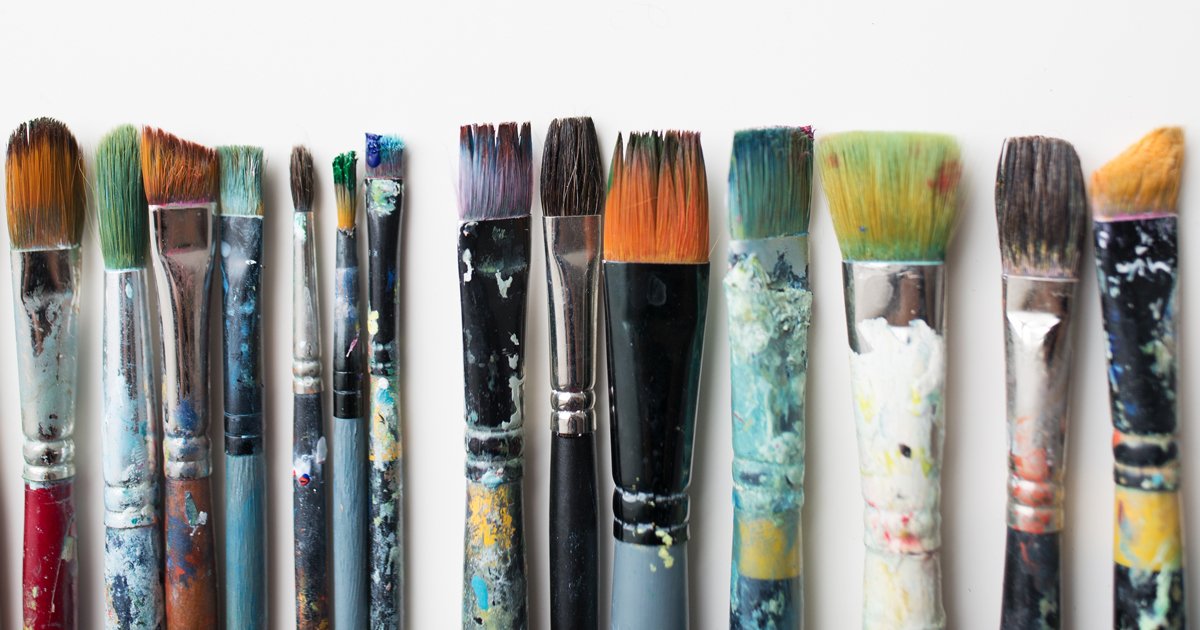
Left your brushes sitting in acrylic paint a little too long? Don’t throw them out just yet. Acrylic paint dries into what’s essentially a thin plastic film, which is why plain water won’t touch it once it’s hardened — but the right solvent can dissolve that film and bring even crusty brushes back to life. Here’s exactly how to clean paint brushes from acrylic paint, whether the paint is still wet or already rock-hard.
First, the Golden Rule: Never Let Acrylic Dry on Your Brushes
The easiest brush to clean is one that never got dirty in the first place. Acrylic paint starts setting within minutes and can fully cure in under an hour, so build these habits:
- Rinse between colors. Swish the brush in a jar of clean water every time you switch paints, even mid-session.
- Never leave a brush sitting in water. It bends the bristles permanently and loosens the glue inside the ferrule.
- Keep paint out of the ferrule. That metal band where bristles meet the handle is where dried paint turns to concrete. Load only the bottom two-thirds of the bristles.
- Wash fully at the end of every session. Five minutes of cleaning now saves a $15 brush later.
How to Clean Wet Acrylic Paint Off Brushes
If the paint is still wet, you’re in luck — this takes two minutes:
- Wipe off excess paint on a paper towel or rag, gently squeezing from ferrule to tip.
- Swish in lukewarm water with a drop of liquid dish soap. Work the bristles with your fingers — never mash them against the bottom of the jar.
- Rinse under running water with the bristles pointing down, so water flows away from the ferrule instead of into it.
- Reshape and dry flat. Gently squeeze out excess water, reshape the bristles with your fingers, and lay the brush flat (or hang it bristle-down) to dry. Never stand a wet brush bristle-up — water seeps into the ferrule and rots the handle from the inside.
How to Clean Dried Acrylic Paint Off Brushes
This is where most people give up — and where you don’t have to. Dried acrylic is a plastic polymer, so you need a solvent that melts plastic. The two best household options, confirmed by working artists and paint guides alike:
Method 1: Isopropyl Alcohol (Fastest)
Rubbing alcohol in the 70% to 90% range is the best household solvent for dried acrylic. It breaks down the hardened polymer in minutes, and you probably already have it in your bathroom cabinet.
- Pour the alcohol into a small glass jar — just enough to cover the bristles, not the ferrule. Alcohol can dissolve the glue inside the ferrule if it sits too long.
- Stand the brush bristle-down in the jar and soak for about 5 minutes. Don’t over-soak — it strips moisture and makes bristles brittle.
- Remove the brush and gently comb out the softened paint with your fingers, an old toothbrush, or a stiff comb, working from ferrule to tip.
- Wash in warm water with dish soap to remove the residue, rinse bristles-down, reshape, and dry flat.
- Stubborn spots? Repeat the soak once more. Two short soaks beat one long one every time.
Method 2: Hot White Vinegar (Gentlest)
If you’d rather avoid harsh chemicals, hot white vinegar works beautifully. The acetic acid swells and softens the dried paint film, and heat helps the moisture travel deep into the bristle bundle — right up to the ferrule, where the worst buildup hides.
- Simmer equal parts white vinegar and water (don’t boil).
- Soak the bristles for up to 30 minutes. The longer window is fine here because vinegar is far gentler than alcohol.
- Tap the bristles on a piece of wood to knock clumps loose, then comb through with your fingers.
- Wash with warm water and a drop of dish soap, rinse, reshape, and dry flat.
Method 3: Acetone (Nuclear Option)
Acetone — the stuff in nail polish remover — dissolves dried acrylic fast. But it’s harsh: it can damage synthetic bristles, smells awful, and irritates skin. Use it only on natural-hair brushes, only in a well-ventilated area with gloves, and only for 3–5 minutes. Honestly, try alcohol or vinegar first; most brushes don’t need the nuclear option.
What NOT to Do
- Don’t soak overnight. Every guide agrees on this: extended soaking — in anything — destroys the glue in the ferrule. Your brush will literally fall apart.
- Don’t use boiling water. It can warp synthetic bristles and soften the ferrule adhesive.
- Don’t yank or scrape dried paint with a knife. You’ll split the bristles and ruin the brush’s edge.
- Don’t dry with a hairdryer. Heat damages bristles; air-dry flat or hanging.
Conditioning Your Brushes After a Rescue
Solvents are drying by nature, so rescued brushes deserve a little aftercare. A dedicated brush conditioner (Master’s Brush Cleaner and Preserver is the industry standard) cleans and conditions in one step. In a pinch, a drop of hair conditioner or olive oil worked through the bristles restores flexibility. Reshape while damp and let the brush dry completely before storing.
Dispose of Paint Water Responsibly
One thing most cleaning guides skip: don’t pour acrylic rinse water down the sink. Acrylic particles are microplastics, and they go straight into the water system. Instead, wipe excess paint off with paper towels first, let your rinse jar sit until the paint settles, pour off the clearer water, and let the sludge dry out — then toss the dried residue in the trash. Many artists pour waste water into cat litter and bin it.
FAQs
Can you really save a brush with fully dried acrylic paint?
Usually, yes — unless the paint has cured deep inside the ferrule for weeks. Isopropyl alcohol rescues most brushes in under 10 minutes. If the bristles are still stiff after two soaks, the brush is probably done, but it’s always worth one attempt before buying a replacement.
Is rubbing alcohol safe for all paint brushes?
It’s safe for both natural and synthetic bristles in short soaks (around 5 minutes). The risk isn’t to the bristles — it’s to the ferrule glue. Keep the liquid level below the ferrule and keep soaks short.
Can I use hand sanitizer instead of rubbing alcohol?
In a pinch, yes — most hand sanitizers are 60–70% alcohol and will soften dried acrylic. But they also contain gels and moisturizers that leave residue, so rinse thoroughly afterward. Plain isopropyl alcohol works better.
How do I keep paint from drying in the ferrule?
Two habits: never load paint past the bottom two-thirds of the bristles, and rinse the brush every 10–15 minutes during a session. Paint that reaches the ferrule and dries there is the number one brush killer.
What’s the difference between cleaning acrylic and oil brushes?
Acrylics are water-based until they dry (then they’re plastic); oils never truly dry without solvents and clean up with odorless mineral spirits instead. If you work in both mediums, keep separate brush sets — and note that oil paintings take dramatically longer to dry than acrylics, which changes your whole cleanup rhythm.
The Bottom Line
Cleaning acrylic paint off brushes comes down to timing and the right solvent. Wet paint? Soap and lukewarm water, two minutes, done. Dried paint? A 5-minute soak in 70–90% isopropyl alcohol (or 30 minutes in hot vinegar), a gentle comb-through, and a proper reshape-and-dry. Treat the ferrule like the fragile part it is, never soak overnight, and your brushes will survive years of painting instead of months.