
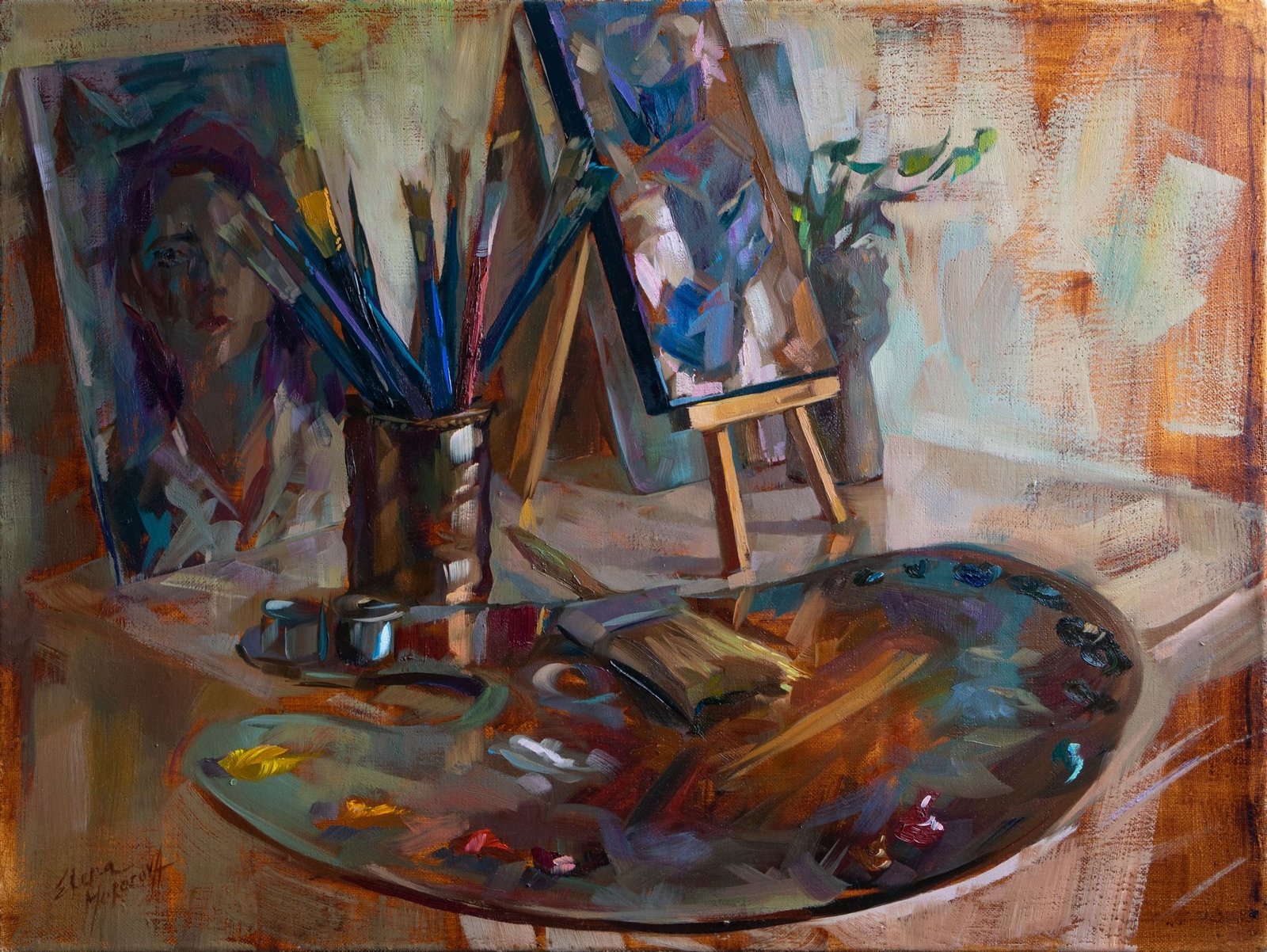
Ask when an oil painting is dry and you will hear two answers that seem to contradict each other. One painter says a few days. Another says most of a year. Both are telling the truth. They are talking about two different events that share one word. A painting can feel dry to a light touch in days while the paint film underneath is still changing, soft, and far from finished. Until you separate those two events, every other drying rule will seem confusing.
Oil paint does not dry by losing water or solvent the way a wall paint does. The oil reacts with oxygen in the air and slowly hardens into a solid film. That process is called curing, and it works from the outside in. The surface forms a skin first. Deeper paint stays soft longer, sometimes much longer. How long the whole process takes depends on three things working together: how thick the paint is, which pigments you used, and the room the painting sits in while it cures.
Touch-Dry Is Not Cured
Touch-dry means the surface no longer feels sticky and will not lift onto a fingertip pressed lightly in an out-of-the-way spot. At that point you can usually lay the next layer of paint over it, move the work with care, and hang it where it will not be bumped or pressed.
Cured means the film has hardened through its full depth. Only then is the painting stable enough for a final varnish, for framing tight behind glass, or for storage where another surface might press against it. The gap between the two stages is wide. A thin painting may be touch-dry in two days and fully cured in three to six months. A painting with normal brushwork often needs six to twelve months to cure. Heavy texture can need twelve to eighteen months. That long tail surprises new painters, but it is normal for this medium and it is the reason old paintings can last for centuries once they do harden.
Thickness Rules Everything Else
If one factor predicts drying time, it is thickness. Oxygen has to reach the paint to harden it. A thin layer gives oxygen a short path. A thick ridge gives it a long, slow one, and the inside of that ridge can stay soft weeks after the outside feels firm.
A thin glaze or wash, where the paint is spread so fine that the texture of the canvas still shows, will often be touch-dry in one to two days. A standard layer laid with a brush, with clear brush marks but no built-up ridges, usually needs three to seven days to reach the same point. Thick impasto, laid with a palette knife or squeezed and shaped so it stands off the surface, can take two to four weeks just to lose its tack.
Cure times stretch in the same pattern. The thin glaze may finish curing in about three to six months. Normal brushwork needs six to twelve months. Thick impasto needs twelve to eighteen months, longer in a cold room. This is why two paintings finished on the same day can be on very different schedules. The one with the sculpted highlights will still be soft underneath long after the flat one is ready to varnish.
Thickness also explains the old workshop rule of fat over lean. Each new layer should have the same amount of oil or a little more than the layer below it. A lean, fast-drying layer on top of a fat, slow layer sets up trouble. The top hardens and shrinks while the layer beneath is still moving. Cracks follow. Painting thin, lean layers first and saving thicker, richer layers for later keeps the whole stack drying in the right order. Learning how to clean paint brushes properly matters here too, since a brush loaded with old, half-set oil will lay paint unevenly and make thickness hard to control.
Why One Color Dries in Days and Another Takes Weeks
Pigment chemistry is the second driver, and it can matter as much as thickness. Some pigments contain metals that help oil harden. Others slow the reaction down. Two colors laid side by side at the same thickness on the same day can be days apart in drying.
The earth colors are the fast group. Raw umber and burnt umber are famously quick, often touch-dry in about two days. Their iron and manganese content acts as a natural accelerator, which is why so many painters use umber for underpainting and for blocking in a composition. Cobalt blues and Prussian blue also dry fast, in that same short window.
A middle group firms up in around five days. That group includes cadmium colors, yellow ochres, burnt sienna, ultramarine, and most blacks, including ivory black. Ivory black is a good example of why you cannot guess from a color’s look alone. It feels like it should be an earthy, fast pigment, yet its carbon base makes it a slow, steady drier that needs patience, especially in thicker passages and dark mixtures where little else speeds it along.
The slow group needs five days or more and sometimes much longer. Titanium white and zinc white sit here, along with quinacridone colors and alizarin crimson. Titanium white deserves special attention because painters mix it into so many other colors to lighten them. A sky, a skin tone, or a pale wall built with a lot of titanium white will lag behind the earth-color passages around it, even if every layer is the same thickness. Zinc white is slower still and forms a more brittle film, which is one reason many painters use it sparingly. You can check the grouping for a specific tube against Winsor & Newton’s oil colour drying data, since brands list their own colors and the rates vary a little by maker.
Mediums change this balance on purpose. An alkyd medium such as Liquin or Galkyd can bring a layer to touch-dry in twelve to twenty-four hours. Extra linseed oil does the opposite: it makes paint richer and slower. The safest speed lever stays the simplest one: lay the paint thinner.
The Room the Painting Lives In
The third driver is the studio itself. The hardening reaction runs faster when it is warm, when the air is moving, and when the air is not saturated with moisture.
A steady room near 70 degrees Fahrenheit, with humidity around 40 to 50 percent and gentle air movement, gives a painting its best chance to cure on schedule. Move that same painting to a cold garage in winter and the reaction slows sharply. Cold does not just add a day or two. It can nearly pause curing for lower layers. High humidity hurts as well. At humidity above 80 percent, touch-dry times can roughly double, and a painting that should have firmed in a week can still be tacky.
Keep the work in the warmest room you regularly heat, off the floor, with space around it so air can reach the surface. A fan moving air nearby, not blasting straight at the canvas, helps.
Do not force the surface with direct heat. A hair dryer or heater skins the top while the paint below stays wet, which can lead to wrinkling and cracking. If a painting is still tacky after a week, the usual causes are a thicker layer than you realized, a mix heavy in titanium white, or a cold, still room. Warm the room, improve airflow, and give it more time.
Water-mixable oils still harden by the same reaction with oxygen, so their full cure window stays broadly the same. You can hang a touch-dry painting on an open wall, but do not press it behind glass, seal it against a solid backing, lean another canvas against it, or wrap it for shipping until it is cured.
The Strict Rule for Varnishing
Varnishing is where impatience does the most lasting damage, so the rule here is firm. Wait a minimum of six months before varnishing a thin painting. Wait twelve months or more for anything with real texture, heavy white mixtures, or thick impasto. When in doubt, wait longer. Varnish will still be there next month. A painting varnished too early may not forgive you.
The reason is straightforward. Varnish seals the surface. If the paint below has not finished reacting with oxygen, the seal slows or traps that process. The results show up as cloudiness in the varnish, poor bonding, softness that never quite resolves, or cracking as the lower paint keeps moving under a harder coat. None of those problems is easy to reverse, and removing varnish from a soft film risks lifting paint with it.
There is a simple check before you commit. Press a knuckle firmly into a corner where a frame will cover the spot. If the paint gives at all, it is not ready. Leave it another month and test again. If you need the work to look finished for a show before the cure is done, a thin retouch varnish can restore sunken colors for now. It is a bridge, not a substitute for waiting.
In the end, drying in oil painting is not a delay to work around. It is part of how the medium builds a film strong enough to outlast its maker. Paint thin where you can, use fast earth colors low in the stack, keep the room warm with air moving, and give the final coat the months it asks for. A few days will get you a surface you can touch. Most of a year will get you a painting you can safely call finished.

2 Comments