
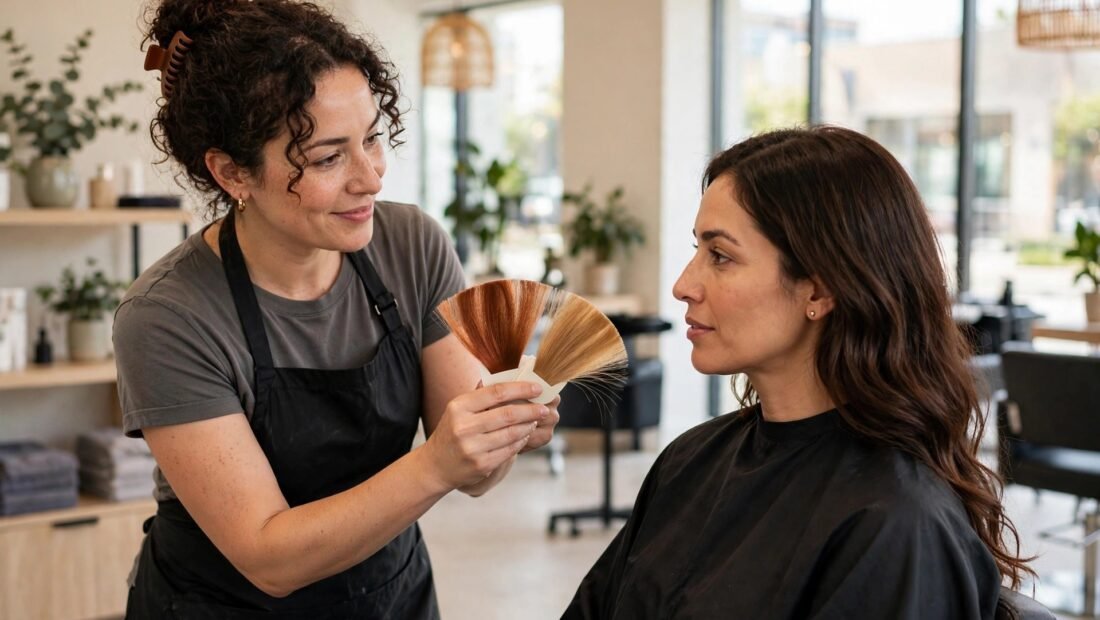
Warm or cool? Here is the short answer first: check your wrist veins in daylight, see whether gold or silver looks better on your skin, and notice whether the sun tans you easily or burns you first. Greenish veins, gold that flatters, and an easy tan point warm. Blue or purple veins, silver that flatters, and skin that burns point cool. If the tests split, you are likely neutral. Two minutes with those three checks settles your undertone, and your undertone settles which hair color family will look natural on you and which will fight your face.
Undertone is the color under the surface of your skin. It stays the same even when your surface color gets lighter in winter or deeper in summer. Skin depth and undertone are separate things. You can have deep skin with a cool undertone or fair skin with a warm one. Hair color works when it echoes your undertone. It looks off, even when the shade itself is pretty, when it clashes with it. That is why the same copper can glow on one person and look harsh on another, and why a costly color can still look wrong. The fix starts before any dye is mixed.
Three Tests That Give You a Reliable Answer
The vein test. Stand near a window in the middle of the day and look at the inside of your wrist. If the veins look green or olive, warmth is likely. If they look blue or purple, coolness is likely. If you cannot tell, or you see both, note it as a neutral sign and let the other tests decide.
The jewelry test. Hold gold jewelry against one side of your face or neck and silver against the other, with no makeup on. Warm skin tends to look brighter and more even next to gold. Cool skin tends to look clearer next to silver. If both metals look fine, that is useful information too. It points to neutral.
The sun test. Think about unprotected time in strong sun. Warm undertones often tan to a golden brown with little burning. Cool undertones often burn, turn pink, and tan slowly if at all. This test is about your pattern over years, not one bad beach day. Use it as a tiebreaker, not the sole judge, since sunscreen habits and medication can change how skin reacts.
Use at least two tests and trust the result they share. If all three disagree, ask a colorist to drape warm and cool fabrics or color swatches near your face. Fresh eyes in good light often settle it fast.
If You Are Warm: Colors That Echo Your Skin
Warm undertones pair well with hair that carries gold, copper, or rich warm brown in it. Think golden blonde, honey, buttery blonde, caramel, copper, auburn, warm chocolate, and espresso with a warm shine. These shades pick up the golden or peachy cast in the skin and make the face look healthy without extra makeup.
Depth still matters. Fair warm skin often suits honey and light caramel, which add warmth without strong contrast. Medium warm skin can carry copper and rich caramel with ease. Deep warm skin looks striking with warm espresso, dark auburn, and copper highlights placed where light hits.
Be careful with icy platinum and heavily ashed tones. Ash can pull the warmth out of your face and leave skin looking flat or tired. If you want a lighter, cooler feel, ask for a warm blonde with a soft root that keeps some gold near the face, rather than going fully ash from root to end.
If You Are Cool: Colors That Keep the Face Clear
Cool undertones, with a pink, rosy, or slightly blue cast, suit hair colors that lean ash, beige, or blue-based. Good options include ash blonde, platinum, cool beige blonde, ash brown, mushroom brown, burgundy with a blue base, and blue-black. These shades calm redness instead of highlighting it and give the face a clean, polished look.
Fair cool skin often shines with platinum or cool beige, as long as brows and makeup keep enough definition. Medium cool skin handles ash brown and cool dark blonde well. Deep cool skin can carry blue-black and cool espresso with real impact, because the contrast stays crisp rather than muddy.
Watch out for strong orange and heavy gold. Those tones can make cool skin look flushed or blotchy, even when the color work itself is skilled. If you like warmth, keep it muted. A neutral brown with a slight cool lean will give you softness without the clash.
If You Are Neutral: The Widest Menu, With One Rule
Neutral undertones sit between warm and cool, so most families are open to you. Golden shades work. Ash shades work. The deciding factors become your skin depth, your eye color, and how much upkeep you want.
A dimensional neutral brown, often called expensive brunette, is a safe and flattering place to start because it mixes warm and cool pieces without leaning hard either way. From there you can shift a step warmer in summer or a step cooler in winter without a full change. The one rule for neutral skin is to avoid extremes at both ends at once. Very icy lengths with a very warm root, for example, can look disjointed. Keep the whole head in one general direction.
The Eye-Color Layer
Undertone picks the family. Eye color helps pick the exact shade inside it.
Brown eyes gain depth next to caramel, copper, and golden brown, which bring out amber flecks that are easy to miss. Green and hazel eyes stand out against red, auburn, and warm copper, because the contrast makes the green read stronger. Blue and gray eyes look sharp against cool ash, platinum, and dark cool brown, where the contrast is clean and the eyes hold the attention.
Treat these as starting points for a talk with your colorist, not as limits. Bring photos of the shade you want on people whose skin depth is close to yours, not just close-ups of hair alone. A color that works on a deep skin tone will read very differently on fair skin, even with the same undertone.
Texas Sun and Hard Water Change the Upkeep
A shade that would hold well in a mild climate fades faster in Texas. Strong sun lifts and dulls color, and reds and coppers go first. They can lose their richness within weeks, faster after beach days or daily time outdoors without a hat. Browns and natural blondes hold longer, but no shade is immune.
Plan upkeep before you choose. If you pick a high-maintenance color, budget for a gloss or toner every 4 to 6 weeks to restore tone. Wear a hat for long sun exposure and use a UV protectant spray on hair the way you would use sunscreen on skin. Small habits extend a color by weeks.
Hard water adds a second problem across much of Texas. Minerals in the water build up on hair, dull shine, and push blonde toward brass. A shower filter helps. So does a chelating shampoo used now and then to clear buildup, and a purple shampoo for blondes to counter yellow tones. Do not use either daily unless your stylist advises it, since overuse can dry hair or deposit too much tone.
Pools matter too. Wet hair with clean water and smooth in leave-in conditioner before you swim. Hair that is already wet absorbs less chlorinated water. Rinse soon after you get out. And if heat styling is part of your routine, use heat protectant every time. If you style often, learning how to do a salon-quality blowout at home with proper heat control can protect color while you get the finish you want.
Before any full color, follow patch test directions for box dye and salon products alike. Allergies to dye ingredients can be serious, and the FDA’s hair dye safety guidance lays out the precautions to follow, including testing and timing.
How to Talk to Your Colorist So You Get the Shade You Pictured
Share your undertone result and ask if the colorist agrees. A good colorist will check your skin in natural light and say so plainly if your tests misled you. Show two or three photos, explain what you like in each, and name what you want to avoid. Then ask the upkeep question directly: how will this look in six weeks, and what will it need to stay right?
Talk about your real routine, not your ideal one. If you swim twice a week, spend workdays outside, or will not come in for toners, say so at the start. The best shade is the best shade you can maintain. A slightly less dramatic color that still looks good at week six beats a perfect color that fades by week two.
Small seasonal shifts can work well within your family. Warm undertones might choose a deeper auburn for winter and a lighter golden copper for summer. Cool undertones might move from deep ash brown to cool beige blonde. Stay inside your undertone family and change the depth, rather than jumping families each season. The grow-out is softer, the cost is lower, and your hair takes less stress.
Frequently Asked Questions
Can warm undertones wear ash blonde at all?
It is a risk. Ash often makes warm skin look flat. A colorist can sometimes make cooler ends work with a warmer, deeper root, but golden or honey blonde is the safer light option for warm skin.
Which hair color fades fastest in Texas sun?
Reds and coppers fade first, then vivid fashion shades. Natural browns and blondes hold longer. Hats, UV spray, and regular glosses slow the fade for any color.
Does hard water really change hair color?
Yes. Mineral buildup dulls color and can turn blonde brassy. A shower filter, an occasional chelating wash, and the right toning shampoo keep the shade closer to true.
Should eye color change my choice?
Only within your undertone family. Use eye color to fine-tune the shade once the warm, cool, or neutral direction is set. Undertone stays the main guide.

3 Comments