
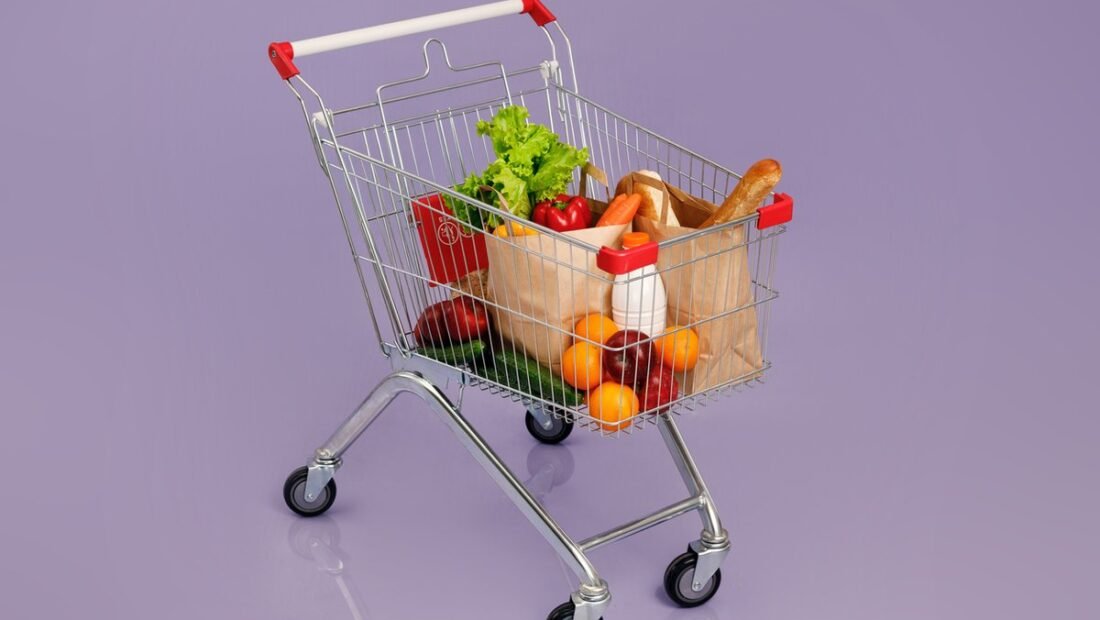
I’m not a coupon person. I don’t have the patience for apps, clipping, or timing my shopping around sales cycles — and I know I’m not alone. The good news: you can save serious money on groceries without using coupons at all. My household cut about $240 a month with zero clipping. If your goal is to “save money on groceries without using coupons,” the biggest lever isn’t a trick — it’s treating your kitchen like inventory instead of a black hole.
The math is simple. The average American family spends over $1,000 a month on food, and roughly a third of purchased food gets wasted. That means the biggest savings don’t come from paying less per item — they come from buying less stuff you throw away. Everything below targets that waste first.
These are the strategies that actually moved the needle for us, in order of impact.
Plan Meals Around What You Already Have
This is the number-one money saver, and it’s not close. Before you shop, look in the fridge, freezer, and pantry, and plan three or four dinners around what’s already there. I do this every Sunday with a coffee in hand, and it takes fifteen minutes. The USDA’s MyPlate Kitchen resources are handy if you need balanced meal ideas on a budget.
The ‘shop your kitchen first’ habit kills the most expensive grocery behavior: buying duplicates of things you already own. How many half-used jars of pasta sauce are in your fridge right now? Be honest. I once found three. Now I keep a short running list on the fridge of what needs using up, and it genuinely changed how I shop.
Plan for the week you actually live, not the week you aspire to. If you know Thursday is always takeout night, don’t buy Thursday groceries. If the kids won’t eat lentils no matter what the blog says, stop buying lentils. Meal planning only saves money when it’s honest.
Change How You Shop, Not Just What You Buy
Shop with a list and eat before you go — the two oldest tips because they work. But here are the ones people skip: shop the perimeter first (produce, dairy, meat, bakery), where the less-processed food lives, and treat the center aisles as a targeted raid for your list items only. That’s where the expensive impulse buys hide.
Buy store brands for staples. Blind taste tests consistently show store-brand basics — canned tomatoes, pasta, oats, frozen vegetables — match or beat name brands, often at 20 to 30 percent less. I switched everything except three items (my coffee, my hot sauce, my partner’s cereal — some things are sacred) and saved about $60 a month.
Check unit prices, not sticker prices. The bigger box isn’t always cheaper per ounce, and the sale price isn’t always a sale. Your phone calculator takes ten seconds. Also consider one bulk warehouse trip a month for non-perishables you always use — but only for things you’ll actually finish before they expire. A gallon of ranch dressing is not a deal if half gets tossed.
Cut Food Waste and the Savings Follow
Americans waste about 30 to 40 percent of the food supply, according to the USDA. For a family spending $1,000 a month on food, that’s potentially $300 in the trash. The fixes are unglamorous: store produce properly (berries in a dry container with a paper towel, herbs in water like flowers), freeze bread and meat you won’t use in three days, and learn which ‘expired’ dates actually matter.
‘Best by’ dates are about quality, not safety — the USDA FoodKeeper app tells you how long things really last. Eggs are good weeks past the carton date; milk is usually fine a few days past if it smells normal. Trust your senses over the stamp.
Designate one dinner a week as ‘use-it-up night’ — fridge-cleanout stir fry, frittata, soup, or nachos. Ours is Friday. It’s the kids’ favorite dinner and it zeroes out the week’s leftovers. Pair this habit with a solid family budget and you’ll see exactly how much the grocery line shrinks.
Save Money on Groceries Without Using Coupons: The Mindset Shift
Here’s the mindset shift that changed everything for us: your pantry is a store you’ve already paid for. Most families sit on $200–$400 of perfectly good food while buying more — the ‘pantry paradox.’ Once a month, we do a ‘pantry challenge week’ where we buy only perishables (milk, eggs, fresh produce) and cook exclusively from what we have. It feels like a game, it clears out the weird cans, and it routinely saves us $150 in a week. The first time is revelatory; by the third time it’s just a habit.
The second shift: stop shopping hungry for variety and start shopping for the week you actually live. I used to buy ingredients for six ambitious dinners and end up ordering takeout three nights — the groceries rotted while the delivery apps thrived. Now I plan four real dinners, keep two ’emergency meals’ (frozen pizza, pasta + jarred sauce) for chaotic nights, and assume one night out. Honest planning beats aspirational planning by about $200 a month. Fold the savings into your bigger picture with our family budget guide — watching the grocery line shrink on an actual budget is deeply satisfying.
15 Coupon-Free Ways to Cut Your Grocery Bill
- Meal-plan from your pantry before making a list
- Eat before shopping and stick to the list
- Buy store brands for all staples
- Compare unit prices, not sticker prices
- Shop the perimeter; raid center aisles with purpose
- Buy seasonal produce — it’s cheaper and better
- Freeze anything you won’t use in three days
- Run a weekly ‘use-it-up’ fridge-cleanout dinner
- Cut back on meat with two vegetarian dinners a week
- Buy whole chickens and learn basic cuts — cheaper per pound
- Grow herbs on a windowsill (basil, mint, chives)
- Skip pre-cut produce; the markup is enormous
- Buy frozen fruits and vegetables — same nutrition, less waste
- Drink water instead of soda and juice at home
- Do one big weekly shop instead of daily top-ups
Track It for One Month
Here’s my challenge: track every grocery dollar for one month — receipts in an envelope, that’s it. Most people are shocked. The daily $12 top-up trips, the delivery fees, the ‘just grabbing milk’ runs that cost $47. Awareness alone usually cuts 10 percent.
Then pick three strategies from this list and run them for a month. Don’t try all fifteen at once; that’s how people burn out by week two. The meal planning, the store brands, and the use-it-up dinner are the highest-impact trio — start there.
We’ve held our savings for over a year now, and honestly the food is better. We waste less, cook more, and the grocery run feels controlled instead of chaotic. No coupons required.



