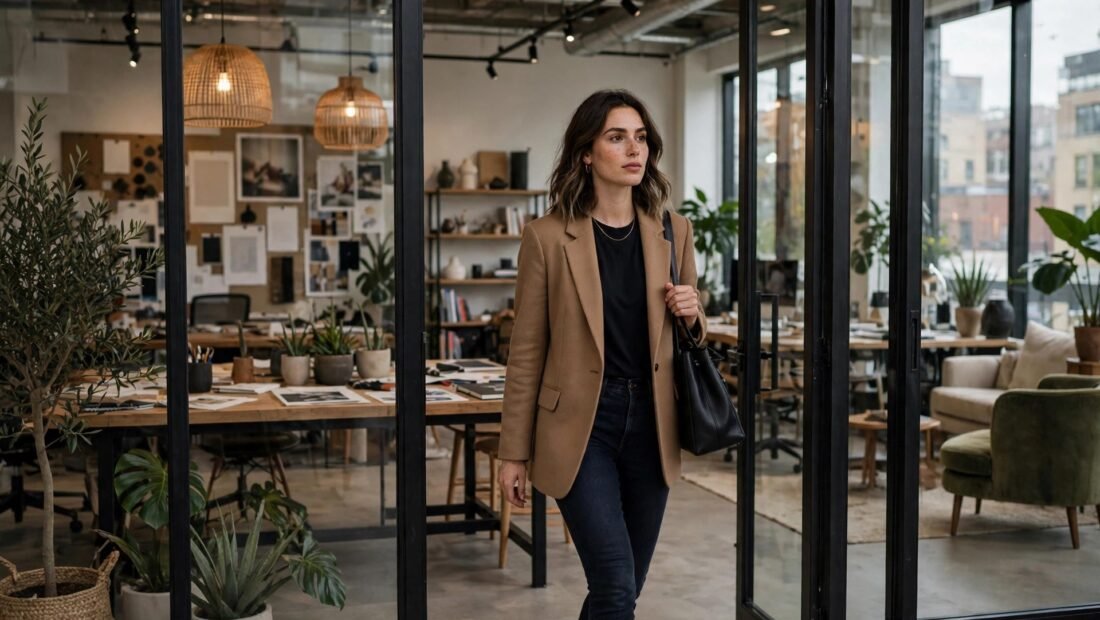
“Dress for the job you want” gets complicated when the job is at a design studio, ad agency, or media company where the creative director interviews in sneakers and the CEO wears a vintage band tee. Show up in a full suit and you look like you don’t understand the culture; show up too casual and you look like you don’t respect the opportunity. Creative-industry interview attire in Texas — spanning Austin’s tech-creative scene, Dallas agencies, and Houston media — has its own unwritten code.
Here’s how to decode it and dress with confidence for any creative interview.
The Core Principle: Polished, Not Corporate
Creative interview dress code lives between two failures: the bank-interview suit (signals you don’t get the culture) and the weekend casual (signals you don’t care). The target is elevated intentional — every piece deliberate, nothing sloppy, personality visible but edited. Think: the best version of how their team actually dresses, plus one notch of polish.
The universal formula: one interesting piece + clean basics + impeccable grooming. The interesting piece shows creativity (a textured blazer, distinctive glasses, quality boots, a bold-but-tasteful accessory); the basics show judgment (well-fitting dark jeans or chinos, clean minimal sneakers or loafers, a crisp shirt or elevated tee). Grooming does quiet heavy lifting — neat hair, trimmed nails, subtle fragrance or none.
Decode the Specific Company First
Research like a designer. Study the company’s Instagram, team page, and office photos — not the careers page (which shows aspirational stock). Look at what people wear in candid shots. Check LinkedIn photos of your interviewers. Austin game studios, Dallas ad agencies, and Houston architecture firms each have distinct uniforms; match the genus, not the species.
Ask the recruiter. “What’s the typical dress code for the team?” is a completely normal question, and recruiters answer it daily. Their answer calibrates you precisely — “we’re pretty casual” means elevate casual; “creative professional” means blazer territory.
Consider the role’s client exposure. Client-facing creative roles (account directors, agency producers) skew more polished than pure makers (illustrators, developers). When in doubt, dress for the most senior person you’ll meet.
Outfit Formulas That Work
The safe creative standard (most roles): dark well-fitting jeans or chinos, a button-down or quality knit polo/tee, an unstructured blazer or sharp overshirt, clean leather sneakers or loafers. This works for 80% of creative interviews — polished enough for agencies, relaxed enough for studios.
Elevated (senior roles, traditional agencies, media companies): tailored trousers, a crisp shirt, a textured or patterned blazer, leather shoes or refined boots. Skip the tie — in creative Texas, a tie often reads as costume unless the company is genuinely formal.
Relaxed (startups, game studios, very casual shops): premium dark jeans, an elevated tee or henley under an open overshirt or casual blazer, clean minimal sneakers. The key word is premium — no distressing, no gym shoes, no wrinkles. Relaxed is a precision instrument, not an excuse.
For women and nonbinary candidates, the same principles translate: a midi dress with a blazer, tailored jumpsuit, or dark jeans with a silk blouse and structured jacket all hit the mark. Fit and fabric quality matter more than formality level. And if you’re also thinking about what to wear to a startup interview, the logic overlaps heavily — creative and startup codes are cousins.
Texas-Specific Considerations
Heat is a wardrobe factor. A wool blazer in August Houston is a sweat disaster that undermines the whole effect. Choose breathable fabrics — cotton, linen blends, unlined blazers — and keep a backup shirt in the car. Arrive early, cool down in the lobby, and do a bathroom mirror check before you’re called in.
Boots are Texas business-casual. Clean, quality boots (not work-worn) are perfectly acceptable creative-interview footwear across Texas — they read as intentional here in a way they might not in New York. Make them polished and modern, not costume-y.
Regional culture varies. Austin creative leans casual-experimental; Dallas agency leans polished-fashionable; Houston corporate-creative leans conservative-professional. When interviewing across metros, calibrate to the city, not just the industry.
Details That Make or Break It
Fit beats brand. A $40 shirt tailored to fit beats a $200 shirt swimming on you. If buying for the interview, get one key piece altered — it’s the cheapest upgrade in menswear and womenswear alike.
Your portfolio is part of your outfit. For designers, writers, and producers: the work you carry (or screen-share) should look as intentional as your clothes. A polished portfolio in a chaotic outfit — or vice versa — creates dissonance. Curate both.
Minimal, intentional accessories. One or two pieces that show taste: a good watch, simple jewelry, interesting glasses. Avoid anything noisy, flashy, or distracting — the interviewer should remember you, not your accessories.
Grooming specifics: hair neat and intentional (creative industries tolerate expressive hair — just make it deliberate), nails clean, teeth brushed, breath fresh, fragrance minimal. Visible tattoos and piercings are widely accepted in Texas creative fields — keep them tasteful and you’re fine.
What to Avoid
The full corporate suit (unless specifically indicated), anything wrinkled or stained, strong cologne/perfume, athletic wear of any kind, flip-flops, shorts, graphic tees with slogans, and — the most common failure — dressing more casually than the role warrants because “it’s a creative place.” When uncertain between two options, choose the slightly more polished one; overdressed-by-half-a-notch is forgiven, underdressed is remembered. Building a versatile capsule wardrobe on a budget makes interview dressing dramatically easier over a long job search.
Virtual Interview Adjustments
For video interviews: dress fully (not just the top half — you’ll stand up eventually), choose solid colors over busy patterns (which moiré on camera), ensure good lighting on your face, and keep the background tidy and intentional. A bookshelf or clean wall beats a messy room; a deliberately styled background can even showcase personality.
Conclusion
Creative-industry interview attire is a design problem: communicate “I understand your culture” and “I take this seriously” simultaneously. Research the company’s actual dress code, aim for elevated intentional over corporate or sloppy, account for Texas heat, and sweat the details of fit and grooming. Get it right and your clothes disappear — leaving the interviewer focused on the only thing that matters: your work and your thinking.
For industry context on creative occupations, BLS occupational outlook data has the employment projections.
And SHRM workplace research tracks evolving dress-code norms.
Frequently Asked Questions
Should I wear a suit to a creative industry interview?
Usually no — a full suit often signals you misunderstand creative culture. Opt for elevated intentional instead: blazer with dark jeans or tailored trousers. Only suit up if the company is genuinely formal or the recruiter advises it.
Are jeans okay for a creative job interview?
Yes — dark, well-fitting, non-distressed jeans are standard creative-interview attire in Texas. Pair them with polished pieces (blazer, quality shoes) so the overall effect is intentional, not casual.
How should I dress for an interview in Austin’s tech scene?
Austin leans casual-experimental: premium dark jeans, an elevated top, and a casual blazer or sharp overshirt with clean sneakers works well. Personality in one piece is welcome; sloppiness is not.
What if I overdress for a creative interview?
Being slightly overdressed is forgiven and easily fixed — remove the blazer, roll the sleeves. Being underdressed is remembered negatively. When in doubt, choose the marginally more polished option.
Do tattoos and piercings matter in creative interviews?
In Texas creative industries, they’re widely accepted. Keep them tasteful and intentional as part of your overall polished presentation, and they’ll be a non-issue at the vast majority of companies.