Standing in front of the bathroom mirror at 6 a.m., mascara wand in one hand and a coffee in the other, plenty of Texas women ask the same question: is there a way to wake up with dark, curled, wide-awake lashes without the daily ritual? Two salon treatments promise exactly that — the lash lift and lash extensions — but they work in completely different ways, cost very different amounts, and suit very different lifestyles. If you live in Texas, where humidity, heat, and pool season test every beauty treatment, the choice matters even more.
This guide breaks down what a lash lift actually is, how it compares to extensions on cost, maintenance, and damage risk, and which option makes sense for your lashes, your budget, and your Texas routine.
What a Lash Lift Actually Does
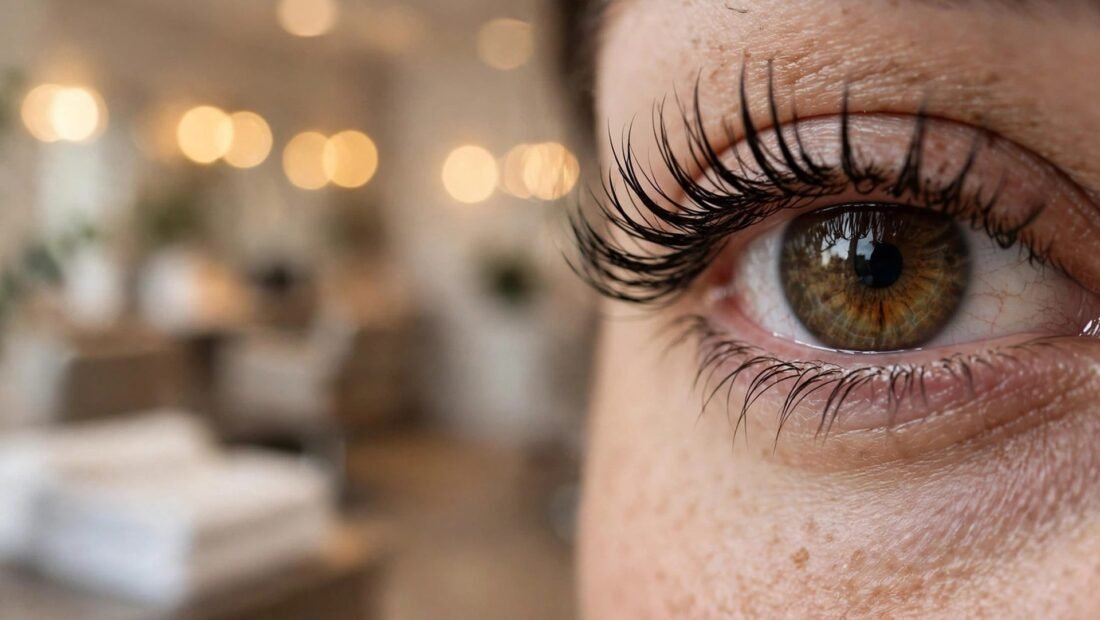
A lash lift is a semi-permanent curling treatment for your natural lashes. A technician places a silicone shield on your eyelid, brushes your lashes upward onto it, and applies a lifting lotion — usually containing thioglycolic acid or a cysteamine-based formula — that breaks and reforms the disulfide bonds in the hair. A setting lotion locks the curl in place, and most services finish with a lash tint that darkens the lashes from root to tip.
The result is sometimes called a “keratin lash lift,” though true keratin is only one possible conditioning ingredient. What you get is your own lashes, lifted and darkened, so they look longer and your eyes look more open. No fibers are glued on, and nothing is added to the lash line.
How long it lasts and what it costs in Texas
A lift typically lasts six to eight weeks, following your natural lash growth cycle. In Texas metro areas, prices generally run from $75 to $150 for the lift alone, with tint adding $20 to $35. Houston, Dallas, and Austin salons at the premium end charge more, while smaller cities like Lubbock or Waco often sit at the lower end of the range.
What Lash Extensions Involve
Lash extensions are individual synthetic, silk, or mink-style fibers attached one by one to your natural lashes with a cyanoacrylate-based adhesive. A full set takes 90 minutes to two hours. The look is customizable — classic (one extension per lash), hybrid, or volume (fans of multiple ultra-fine fibers per lash) — and a skilled artist can tailor length, curl, and density to your eye shape.
Extensions fall out with your natural lash cycle, so fills are needed every two to three weeks, typically costing $50 to $90 in Texas. A full set ranges from $120 to $300 depending on the style and the city.
The maintenance reality
Extensions demand more daily care: no oil-based products near the eyes, careful cleansing with a lash-safe cleanser, sleeping on your back when possible, and avoiding rubbing. Texas heat and humidity can shorten retention, because sweat and sunscreen migrating toward the lash line break down adhesive bonds faster — many Gulf Coast clients report fills creeping closer to the two-week mark in August.
Lash Lift vs Extensions: Side-by-Side Comparison
Appearance: Extensions add length, thickness, and drama that a lift cannot match. A lift enhances what you already have — if your natural lashes are short or sparse, the lift’s effect is subtle. Women who want a bold, “done” look usually prefer extensions; women who want a natural, mascara-free look usually prefer the lift.
Damage risk: Both treatments carry risks, but extensions carry more. Improper isolation or overly heavy fans can cause traction alopecia — lashes pulled out at the root. The American Academy of Dermatology notes that lash extensions can lead to irritation, infection, and lash loss when applied or maintained poorly. Lifts are gentler because nothing is glued to the lash, but the chemical lotions can over-process lashes if left on too long, leaving them dry or frizzy.
Cost over a year: A lift every two months at $100 runs about $600 a year. Extensions at $175 for a full set plus $65 fills every three weeks run well over $1,200 a year. The lift wins on budget clearly — it’s roughly half the annual cost for a still-polished result.
Lifestyle fit: Swimmers, runners, contact lens wearers, and anyone who rubs their eyes do better with a lift. Extensions suit people who want consistent glamour and don’t mind the upkeep appointments. New moms and shift workers often land on lifts purely for the time savings.
The Texas Factor: Heat, Humidity, and Allergies
Texas weather is the hidden variable. Adhesive bonds weaken with heat, humidity, and oil — all abundant from May through September. If you spend weekends at Schlitterbahn, Barton Springs, or Galveston beaches, extensions will shed faster and a lift (which has nothing to shed) holds its own better.
Allergy season is the other Texas-specific concern. Cedar fever and spring pollen make eyes water and itch; rubbing irritated eyes is the fastest way to lose extensions prematurely. If your eyes water every March, a lift is the lower-maintenance bet. For guidance on choosing eye-safe cosmetics generally, the FDA’s cosmetics safety resources explain how eye-area products are regulated.
Who Should Choose Which?
Choose a lash lift if: you want a natural look, have reasonably long natural lashes, swim or work out daily, have sensitive eyes that water, wear contacts, or want the lowest-maintenance option.
Choose extensions if: your natural lashes are short or sparse, you want dramatic volume, you have a big event like a wedding, or you enjoy the glam routine and can commit to fills.
Safety Tips Before You Book
Whatever you choose, the technician matters more than the treatment. Look for a licensed esthetician or cosmetologist in Texas — the state requires proper licensing for lash services — and ask to see a portfolio of healed results, not just fresh photos. A patch test 24 to 48 hours before your appointment screens for adhesive or lotion allergies. And if a deal seems too cheap, walk away: discount adhesive is a common source of fumes and reactions,.
Aftercare matters too: keep lifts dry for 24 hours, avoid waterproof mascara on extensions, cleanse the lash line daily. If you are deciding between treatments while also rethinking your broader routine, it helps to know what colors look best on warm skin tones so your makeup complements your enhanced lashes, and what the best sunscreen for sensitive skin is, since the eye area needs protection that won’t migrate into your lashes on hot Texas days.
Conclusion
A lash lift is not universally “better” than extensions — it is better for a specific kind of person. If you want natural, low-maintenance, budget-friendly lashes that survive Texas heat and pool season, the lift wins. If you want drama, fullness, and a red-carpet look every day, extensions deliver what a lift cannot. Match the treatment to your natural lashes, your lifestyle, and your tolerance for upkeep, choose a licensed Texas technician, and either way you will spend a lot less time in front of that 6 a.m. mirror.
Frequently Asked Questions
Does a lash lift damage your natural lashes?
When performed correctly by a licensed technician with proper timing, a lash lift causes minimal damage. Over-processing — leaving the lifting lotion on too long — can dry out or frizz lashes, which is why technician skill matters. It is generally considered gentler than extensions because no adhesive or added weight is involved.
Can you wear mascara with a lash lift?
Yes, after the first 24 to 48 hours. Most people find they don’t need it, since the tint darkens lashes. If you do wear mascara, choose a water-based formula and avoid waterproof versions, which require harsh rubbing to remove.
How much does a lash lift cost in Texas?
Expect $75 to $150 for the lift, plus $20 to $35 for tint, with higher prices in Houston, Dallas, and Austin and lower prices in smaller Texas cities. That compares to $120 to $300 for a full set of extensions plus fills every two to three weeks.
Are lash extensions safe for sensitive eyes?
They can be, but sensitive eyes face higher risk of irritation from adhesive fumes. A patch test is essential, and many people with watery or allergy-prone eyes find lash lifts more comfortable. The American Academy of Dermatology advises seeing a professional promptly if you develop redness, swelling, or pain.
Can I get a lash lift if I have short lashes?
You can, but manage expectations — a lift only curls what you have, so very short lashes show a subtle change. A lash growth serum used for several weeks beforehand can improve results, or extensions may be the better choice for dramatic length.