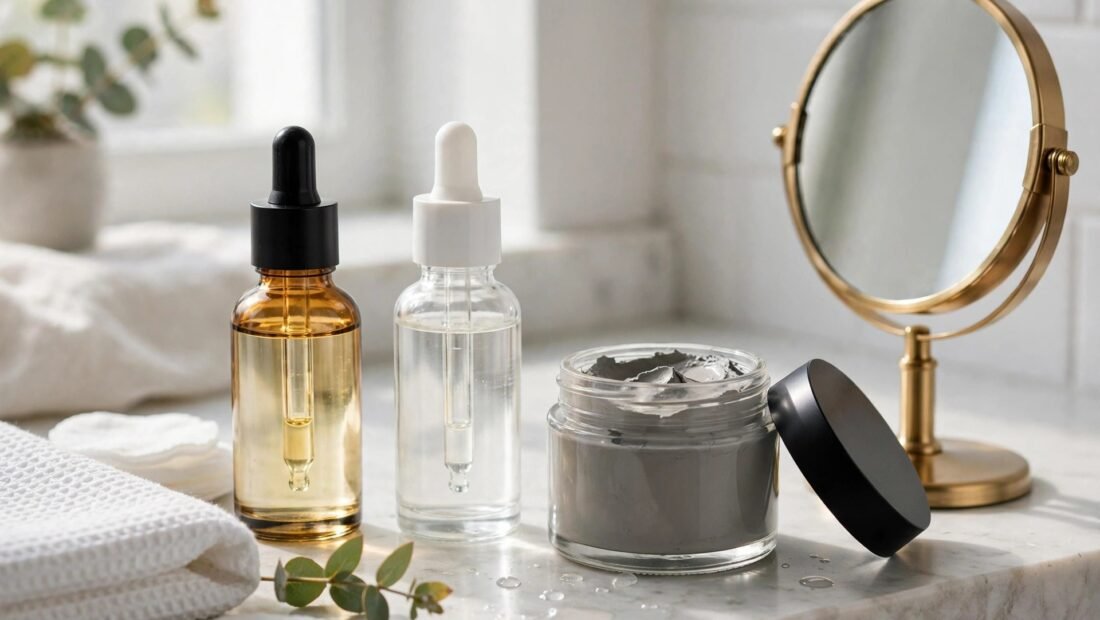
The nose is pore ground zero: larger oil glands, more visible openings, and blackheads that seem to refill overnight no matter what you do. If your nose looks like a strawberry in every close-up photo, you’re dealing with the most pore-dense real estate on the face — and Texas heat, which ramps up oil production, makes it worse. Here’s the truth about large nose pores: what actually shrinks their appearance, what’s a waste of money, and the routine that keeps them clear.
First: You Can’t Shrink Pores (But You Can Make Them Look Smaller)
The essential fact the beauty industry obscures: pore size is genetic. No product physically shrinks pores — they’re not muscles; they don’t open and close. What products can do:
- Clear the contents: pores look larger when stretched by trapped oil and dead skin. Empty, clean pores look smaller. This is the entire game.
- Reduce surrounding oil: less surface oil = less visible pore openings.
- Improve skin texture: smoother surrounding skin makes pores less noticeable by contrast.
- Temporarily tighten: some ingredients cause mild temporary tightening — cosmetic, not structural, but visible.
Anyone selling “pore-shrinking” as a permanent structural change is selling fiction. Everything below works within the honest mechanism: keep pores empty, oil controlled, and skin smooth.
The Nose-Pore Routine That Works
1. Proper cleansing (the foundation)
Oil-based cleanser first (dissolves sebum and sunscreen), then a gentle water-based cleanser. The double cleanse matters enormously for nose pores — a single cleanse leaves the oil-based debris that becomes tomorrow’s blackheads. But don’t over-cleanse: stripping skin triggers rebound oil production that worsens the problem.
2. Salicylic acid (the single best pore ingredient)
Salicylic acid (BHA) is oil-soluble — it penetrates into the pore itself and dissolves the oil/dead-skin plugs. No other common ingredient does this as effectively. Use a 2% salicylic acid product (leave-on toner or serum beats wash-off cleansers for contact time) 3–4 times weekly on the nose area. This is the highest-impact step in the entire routine.
3. Niacinamide (the oil regulator)
4–5% niacinamide regulates sebum production and improves pore appearance over 8–12 weeks. It pairs perfectly with salicylic acid (different mechanisms, complementary results) and suits Texas’s oil-amplifying heat.
4. Retinoids (the long game)
Retinoids normalize cell turnover inside the pore, preventing the dead-skin buildup that stretches pores. Results take 3–6 months but are the most durable of any topical approach. Start low, go slow — nose skin is tougher than cheeks but irritation still undermines progress.
5. Clay masks (the weekly reset)
Kaolin or bentonite masks absorb surface oil and draw out pore contents — visible temporary improvement after each use. Weekly, not daily; overuse dries and irritates. Apply to the T-zone only if the rest of your face is normal/dry.
What to Stop Doing
- Pore strips: they rip out surface plugs (satisfying) but leave pore walls stretched and irritated — and the plugs return in days. Long-term, strips can enlarge pore appearance through repeated trauma. Dermatologists nearly universally advise against them.
- Physical squeezing/extraction at home: fingernail extractions rupture pore walls, spread bacteria, and scar. Professional extractions use proper technique and sterile tools — home squeezing is pore enemy #1.
- Over-exfoliating: daily harsh scrubs or layered acids inflame skin, and inflamed pores look larger. More is not better; consistent and moderate wins.
- Skipping sunscreen: UV breaks down the collagen supporting pore walls — sun damage literally makes pores look bigger over time. Daily SPF is pore prevention. Our sensitive-skin sunscreen guide covers non-clogging options that won’t undo your pore work.
- Heavy, comedogenic makeup: thick foundations settle into pores and stretch them visually. Lightweight, non-comedogenic formulas — or nothing — on the nose.
Professional Options (When Topicals Aren’t Enough)
- Professional extractions: a skilled esthetician clears what home care can’t — safely, without pore-wall damage. Monthly or as needed.
- Chemical peels: professional-strength peels resurface more aggressively than home acids — visible pore refinement over a series.
- Microneedling: stimulates collagen around pores, improving the structural support that keeps them tight-looking. Multiple sessions needed.
- Laser treatments: fractional lasers rebuild dermal collagen — the most dramatic pore-appearance improvement available, and the most expensive ($500–$1,500+ per session in Texas).
See a dermatologist before investing in procedures — AAD guidance emphasizes matching the intervention to the actual cause (oil, aging, sun damage) rather than buying procedures blindly. Cleveland Clinic’s dermatology resources add a useful caution: enlarged-looking pores sometimes signal conditions like rosacea or sebaceous hyperplasia that need diagnosis, not just cosmetic treatment — if your pores changed suddenly or look unusual, get checked before spending on procedures.
Texas-Specific Factors
- Heat = more oil: Texas summers measurably increase sebum production — your winter pore routine may need summer reinforcement (more frequent salicylic acid, blotting papers midday).
- Sunscreen reapplication: non-negotiable in Texas intensity, but reapply with non-comedogenic formulas — heavy reapplication layers clog the pores you’re trying to clear. Powder SPF over the nose is the pore-friendly refresh.
- Sweat management: rinse sweat promptly; dried sweat + oil + sunscreen is the pore-clogging trifecta. Blotting papers, not wiping (friction irritates).
And the routine-building context: pore care is a system, not a product — a dedicated self-care day is ideal for the weekly clay mask + exfoliation reset without rushing.
Makeup Camouflage (While the Routine Works)
- Primer: silicone-based pore-filling primers blur pore appearance instantly — cosmetic, but effective for events and photos.
- Application: press (don’t swipe) foundation over the nose — swiping drags product into pores; pressing sits it on top.
- Powder: a light translucent powder over the nose controls the oil shine that makes pores prominent.
Conclusion
Large nose pores are managed, not cured: salicylic acid to keep them clear, niacinamide to regulate oil, retinoids for the long game, weekly clay masks for resets, daily non-comedogenic sunscreen to prevent UV-enlargement — and no pore strips, no home squeezing, no over-exfoliation. Texas heat raises the difficulty, which makes the routine more necessary, not less. Give it 8–12 weeks of consistency; pore appearance improves on the skin’s timeline, not the product’s marketing timeline.
Frequently Asked Questions
How do I get rid of large pores on my nose?
You can’t permanently shrink pores (size is genetic), but you can minimize their appearance: salicylic acid to keep them clear, niacinamide to regulate oil, retinoids long-term, weekly clay masks, and daily non-comedogenic sunscreen. Consistency over 8–12 weeks shows real improvement.
Do pore strips work for blackheads?
They remove surface plugs temporarily, but the plugs return within days — and repeated use can stretch and irritate pores, worsening their appearance long-term. Salicylic acid dissolves the same plugs more safely and durably.
What is the best ingredient for large pores?
Salicylic acid (BHA) — it’s oil-soluble, penetrates into the pore, and dissolves the oil/dead-skin plugs that stretch pores open. Niacinamide (oil regulation) and retinoids (long-term turnover) are the ideal companions.
Can sunscreen make pores look bigger?
Heavy, comedogenic sunscreens can clog pores — but skipping sunscreen is worse, since UV breaks down the collagen supporting pore walls, enlarging pore appearance over time. Use lightweight non-comedogenic SPF daily.
Do professional treatments help with large pores?
Yes — professional extractions, chemical peels, microneedling, and fractional laser all improve pore appearance beyond what topicals achieve, by clearing deeply or rebuilding collagen support. Consult a dermatologist to match the treatment to your cause.