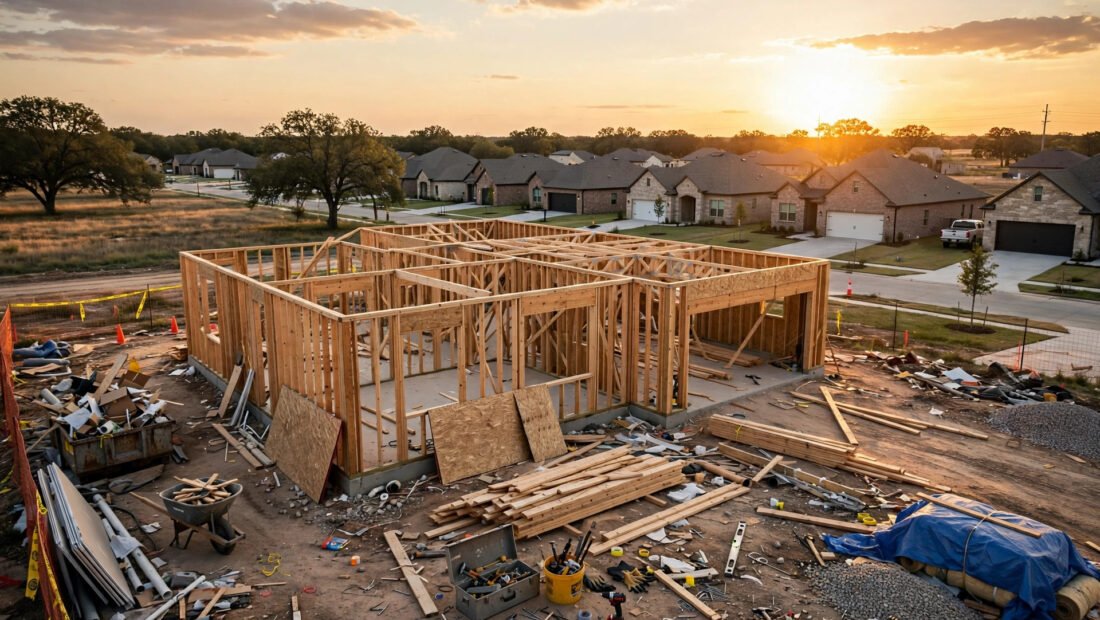
Drive through any growing Texas suburb — Frisco, Katy, New Braunfels, the outskirts of Austin — and the skyline is cranes and framed walls. Builders are selling the dream hard: brand-new everything, modern floor plans, energy efficiency, and a warranty. The catch is the new-construction premium: buyers routinely pay 10 to 20 percent more than comparable resale homes nearby. Is that premium worth it? The honest answer depends on what you value, how long you will stay, and whether you understand what the premium actually buys — and what it quietly costs.
What the Premium Buys You
New construction’s advantages are real and tangible. Everything is new: roof, HVAC, plumbing, electrical, appliances — all with years of life ahead, which means minimal maintenance spending in the early years. Builder warranties typically cover one year on workmanship, two years on mechanical systems, and up to ten years on structural elements, a safety net no resale offers. Modern floor plans reflect how people actually live now: open kitchens, home offices, larger primary suites, mudrooms. Energy efficiency is meaningfully better — current Texas energy code requirements, better insulation, and efficient HVAC can cut utility bills 20 to 30 percent versus a 1990s resale. And there is the intangible: no one else’s wear, no mystery stains, no inherited repair backlog.
For buyers relocating on a timeline or buying from out of state, new construction also simplifies the transaction. No bidding war against fifteen other buyers, no inspection surprises from a 40-year-old foundation — the process is closer to buying a product than negotiating a used asset.
What the Premium Costs You
The premium is only the beginning. New construction carries costs resale buyers never face:
- Lot premiums and upgrades. The advertised base price is a starting point. Premium lots (corner, cul-de-sac, greenbelt) add $10,000 to $50,000. Design-center upgrades — flooring, countertops, fixtures — routinely add 10 to 20 percent to the base price, and builder upgrade pricing runs well above retail.
- MUD taxes. Many new Texas developments sit in Municipal Utility Districts that financed the infrastructure. Total tax rates above 2.5 to 3 percent are common — on a $450,000 home, that is $11,000+ annually.
- HOA dues from day one. New communities charge full HOA dues while amenities are still under construction.
- Landscaping and finishing. Builders deliver minimal landscaping; finishing the yard, adding fences, and installing window coverings easily runs $10,000 to $25,000.
- Immediate depreciation risk. Your premium evaporates the moment you become a resale competing with the builder’s next phase — often priced aggressively to keep volume moving.
Texas buyers should also understand that builder contracts favor the builder: earnest money terms, closing timelines, and dispute provisions are written by the builder’s attorneys. Have your own real estate attorney review before signing, and compare the true all-in cost against resales using energy upgrade costs as a benchmark — a resale plus targeted efficiency improvements sometimes beats new construction on total economics, especially when paired with upgrades like the best energy-saving upgrades for an older home.
The Appraisal Gap Problem
New construction’s most dangerous trap is the appraisal. Lenders appraise based on comparable closed sales — and in a brand-new development, the only comps are the builder’s own recent sales, which reflect the same premium you are paying. If the broader market will not support the price, the appraisal comes in low, and the buyer must cover the gap in cash or walk away. Builders know this; their contracts often require buyers to waive appraisal contingencies or commit to covering gaps up to a stated amount. Never agree to an unlimited gap commitment. Cap it at a number you can actually pay without raiding emergency reserves.
Builder Reputation: Your Most Important Due Diligence
With resale, you inspect the house. With new construction, you must inspect the builder. Research: how long they have operated in Texas, their warranty claim responsiveness, reviews from past buyers (not testimonials on their site), any TREC complaints or litigation, and the financial stability that determines whether they will be around to honor a ten-year structural warranty. Visit their older communities — five-year-old homes reveal construction quality far better than model homes do. Talk to residents about warranty service. A reputable builder delivering on warranty claims is worth a genuine premium; a volume builder with a claims-denial reputation is not worth any premium at all. The Texas Real Estate Commission licenses and disciplines industry participants, and the National Association of Home Builders publishes builder standards worth knowing.
When New Construction Is Worth It
The premium makes sense when: you will stay 7+ years (long enough for the premium to amortize and appreciation to compound), you value warranties and low early maintenance over maximum square footage per dollar, energy efficiency matters to your monthly budget, you are buying in a market where quality resales are scarce or overbid, and you have verified the builder’s reputation. It makes less sense when: you might move in 3 years (the resale competition with the builder will punish you), the MUD tax rate destroys the monthly payment math, or a comparable resale plus $40,000 in renovations gets you the same home for less.
Negotiating With Builders
Builders negotiate differently than resale sellers. They protect base prices (to preserve comps for future appraisals) but deal freely on upgrades, closing-cost contributions, rate buydowns, and lot premiums — especially near quarter-end or when standing inventory accumulates. A $15,000 design credit costs the builder far less than a $15,000 price cut and helps you more if you wanted those upgrades anyway. Always ask what incentives exist before falling in love with a floor plan; the published price is rarely the final one.
The Resale Reality Check
Before committing, model your exit. Look at resales in the builder’s older phases nearby — not the builder’s current prices, but what owners who bought 3–5 years ago sell for today. In many Texas master-planned communities, early-phase buyers who paid the new premium sell at or below their all-in cost once competing with the builder’s newer phases, especially when the builder is offering buyer incentives that undercut resales. Your home is worth what the next buyer will pay with the builder’s current incentives as the alternative — not what you paid plus appreciation hopes. If the resale comps in older phases look soft, negotiate harder on your way in or choose an established neighborhood instead.
Conclusion
New construction in Texas is worth the premium when you buy it for the right reasons: warranties, efficiency, modern layouts, and a long holding period that lets the premium fade into appreciation. It is not worth it when MUD taxes, upgrade spirals, and appraisal gaps turn the “brand new” dream into the most expensive way to buy the neighborhood. Price the all-in cost honestly, investigate the builder like your money depends on it — because it does — and negotiate the incentives builders would rather give than advertise. The premium is only justified if you know exactly what you are paying for.
Frequently Asked Questions
How much more does new construction cost than resale in Texas?
Typically 10 to 20 percent above comparable resale homes, before lot premiums, design upgrades, and higher MUD tax rates that are common in new developments.
Do new construction homes in Texas come with warranties?
Yes — typically one year on workmanship, two years on mechanical systems, and up to ten years on structural elements. Get the warranty terms in writing and research the builder’s claim-handling reputation.
Can I negotiate the price of a new construction home?
Base prices are sticky, but builders routinely negotiate upgrades, closing-cost credits, rate buydowns, and lot premiums — especially on standing inventory or near quarter-end.
What are MUD taxes on new Texas homes?
Municipal Utility District taxes repay the bonds that financed new-development infrastructure. They stack on top of other property taxes, pushing total rates to 2.5 percent or more in many new suburbs.