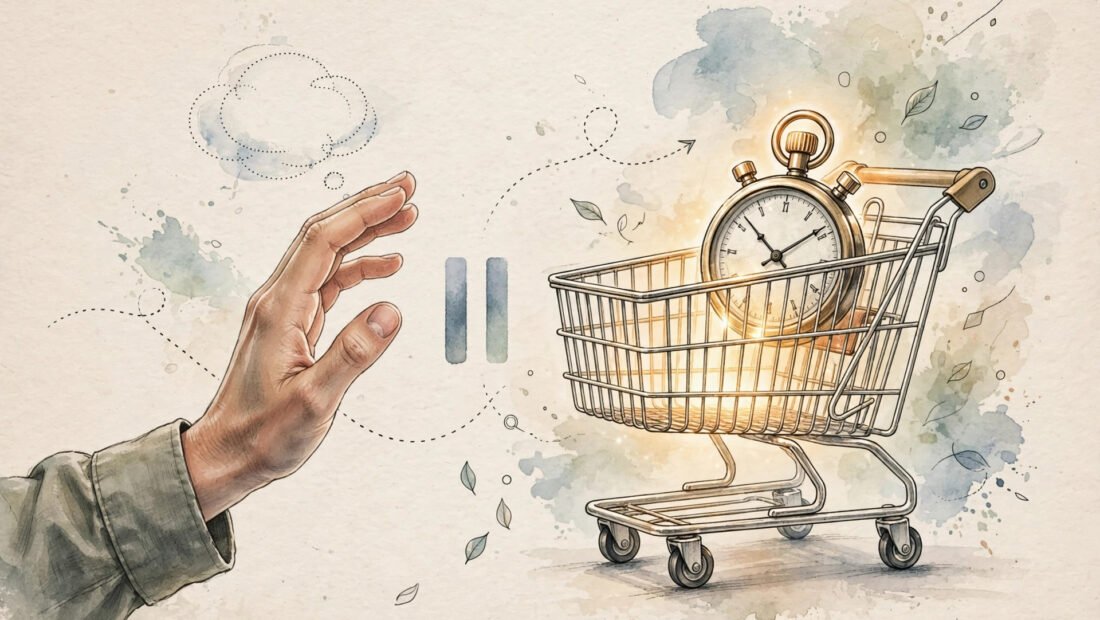
The short answer: impulse spending is not a willpower problem, and shaming yourself will not fix it. The modern shop is engineered to remove every pause between wanting a thing and owning it. One-click checkout, cards saved on every site, and ads that follow you around the internet all exist for one reason: a purchase made in eight seconds is a purchase you never stop to question. So the fix that actually works is friction. You rebuild the pause the shops removed, and you let the urge expire on its own, which it usually does. Discipline is still welcome, but it should be the backup system, not the whole plan.
Why willpower keeps losing this fight
Willpower behaves like a battery. You spend it all day on other decisions: what to eat, when to answer the message, whether to say the honest thing in a meeting. By evening, when the targeted ads arrive and you are tired on the couch, the battery is near empty, and you are facing an opponent that never gets tired at all. Retailers test their checkout pages the way engineers test bridges. They measure exactly which button color, which countdown timer, and which “only three left” message produces the most completed orders, and they keep the winner. Expecting an exhausted person’s self-control to beat that system head-on, night after night, is not a plan. It is a hope, and hope is why the same purchase regrets keep repeating.
That framing matters because it changes what you fix. If the problem were character, the fix would be trying harder, and most people have already tried harder for years. If the problem is design, the fix is redesigning your own side of the transaction: fewer triggers reaching you, more steps between urge and payment, and rules decided in advance while you are calm. The rest of this page is that redesign, in the order it pays off.
The 72-hour rule: the first line of defence
Pick a threshold, an amount above which a purchase counts as non-essential and has to wait. Fifty dollars is a common starting point, though the right number is one that catches your real problem purchases without making ordinary life absurd. Anything non-essential above that line waits 72 hours. You write the item down, with the date, on a list you can see. Then you do nothing.
What happens next is the whole trick. Most urges do not survive their third day. The jacket that felt essential on Tuesday evening reads as a shrug by Friday. The gadget that seemed to solve a problem turns out to solve a problem you do not actually have. The small share of items you still want after three days are usually genuine wants, and buying those slowly, on purpose, is not the behavior that wrecks budgets. The rule does not forbid spending. It separates wanting, which is cheap and constant, from deciding, which is where your money should be spent.
Five friction tactics that do the heavy lifting
1. Delete your saved payment methods everywhere. Remove stored cards from shopping sites, browsers, and apps, so every purchase costs you the effort of standing up, finding your wallet, and typing sixteen digits. That effort sounds trivial, and it is, right up until it talks you out of a purchase at midnight. A surprising number of impulse buys only exist because they cost eight seconds.
2. Unsubscribe and mute, ruthlessly. Get off marketing email lists and mute or delete the shopping apps that send you sale alerts. Every “back in stock” and “your favorites are 30 percent off today” message is a manufactured urge arriving on schedule. Removing the trigger entirely is far easier than resisting it fifty times, and it costs you nothing you will miss, because anything you genuinely need, you will go looking for.
3. Abandon the cart on purpose. When you do shop, fill the basket, then close the tab and walk away. This does two things. It applies the waiting rule without willpower, and it often triggers a follow-up email within 24 to 48 hours offering a discount code to lure you back. Read that email for what it reveals: the urgent sale, the expiring price, the deal you had to grab immediately was theatre. A retailer who can offer 15 percent off tomorrow was never selling you a once-only chance today.
4. Use cash for your problem categories. If clothes, eating out, or hobby gear is where the money leaks, take that category back to physical cash for a month. Handing over notes and watching the envelope thin makes spending register at the moment it happens, instead of at the end of the month when the statement arrives. Physical money hurts at the right time, which is exactly the sensation one-click checkout was designed to delete.
5. Price things in hours of your life. A $120 gadget is not $120. At an ordinary wage, after tax, it can be something like nine hours of your working life: a full day of mornings, meetings, and commutes, traded for an object. Run that conversion before any large impulse purchase. Some things survive it easily and are worth every hour. Many purchases look very different when they are priced in time instead of money, because time is the one currency you feel in your body.
Redesign the environment, not just the moment
Friction works best when it is built into the surroundings rather than summoned in a weak moment. Take shopping apps off your phone’s home screen, or off the phone entirely, and shop from a computer you have to sit down at. Replace the cart habit with a wishlist habit: items you want go on a dated list, and the list, not the ad, is where future purchases come from. For the categories that cause the most damage, a one-in-one-out rule adds a useful cost: a new pair of shoes means an old pair leaves, which forces the question of whether the new one is actually better than what you own. Households that want a fuller framework to hang these habits on often start with the 50/30/20 budget rule and whether it works in Texas, and then layer friction on top of it. General grounding in the basics is also available through the CFPB’s consumer guidance on budgeting and spending, which covers spending plans in plain terms.
When you slip, because everyone slips
The most dangerous moment in this whole process is not the first impulse buy. It is the hour after it. Psychologists have a name for the pattern: once people feel they have already blown the goal, they stop restraining themselves entirely, on the logic that the day, or the month, is ruined anyway. One unplanned purchase becomes three, because “I already failed” is a strangely persuasive argument. That follow-on splurge, not the original slip, is where the real budget damage happens.
Handle a slip like a mechanic, not a judge. Name what happened, plainly. Return what can still be returned, because a large share of impulse purchases can go straight back and many people never bother. Log the trigger honestly: were you tired, stressed, bored, celebrating, scrolling after an argument? The trigger log is the most valuable data in the whole system, because after a month it shows you your actual pattern instead of your theory about it. Then restart the same day. Not Monday, not next month. The 72-hour rule applies again at the very next urge, and one returned purchase plus an honest log entry is a good week wearing a disguise.
One habit ties the system together: a short monthly review of the waiting list itself. Go through the items that expired unpurchased and add up what they would have cost. That total is the clearest proof the friction is working, and it usually runs into hundreds of dollars within the first couple of months. Then look at the few items you did buy after waiting, and check honestly whether they still feel worth it. They usually do, which is the point: the system is not blocking good purchases, it is filtering out the ones that were never really wanted.
The honest timeline, the partner version, and a careful note
Expect meaningful change within about four to eight weeks of applying friction consistently. The first two weeks feel artificial, because typing card numbers and checking a waiting list are new behaviors. By the second month, the urges themselves get quieter, partly because fewer triggers reach you and partly because you have watched so many of them die on the list that new ones carry less force. The bank balance usually notices before you do.
For couples, run it like adults rather than like an audit. Agree on a shared threshold above which either person waits and mentions the purchase, keep the threshold the same in both directions, and hold an occasional no-blame debrief where slips get logged as data instead of prosecuted as crimes. Policing a partner’s spending corrodes trust faster than the spending itself, and a system both people built will outlast one that one person enforces.
One careful note to finish. Sometimes spending is being driven by anxiety or low mood, with shopping doing the job of a mood repair tool. If that description fits, treat it as the health matter it is and get real support for the underlying problem. A budget app is not the right instrument for that job, and no amount of friction tactics should be expected to substitute for help aimed at the actual cause.