
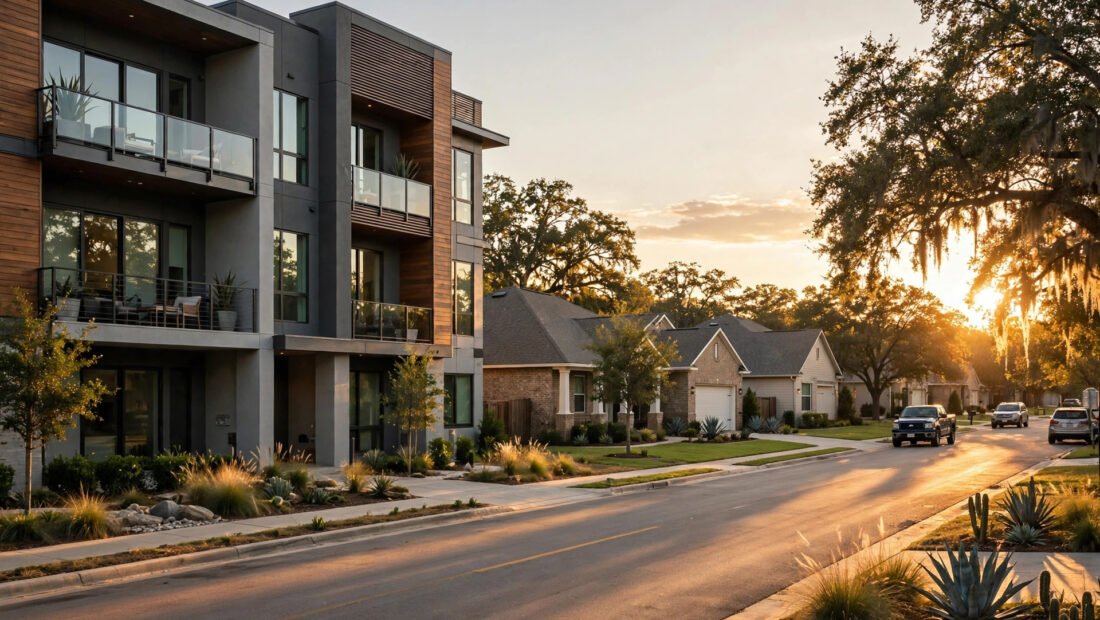
For first-time buyers in Texas, the condo-versus-house debate isn’t really about square footage — it’s about what kind of life you want and what kind of money headaches you prefer. Condos promise low maintenance and lower prices; houses promise land, freedom, and no HOA telling you what color your door can be. Both can be smart. Both can be traps. The right answer depends on your finances, your timeline, and how honestly you assess the trade-offs nobody puts in the listing.
The Real Price Comparison (Beyond the Listing)
Condos look cheaper — and the purchase price usually is, often 20–40% less than comparable houses in the same Texas metro. But the monthly math tells a fuller story. A $220,000 condo with a $350/month HOA fee at 7% interest can cost more monthly than a $280,000 house with no HOA. HOA fees in Texas range from $200/month in basic complexes to $600+ in amenity-rich high-rises, and they rise — sometimes sharply — when buildings need major repairs. Always calculate the all-in monthly cost: mortgage, taxes, insurance, HOA, and estimated maintenance. Then compare honestly.
Houses flip the equation: higher purchase price, but you control maintenance spending and there’s no HOA fee (unless it’s an HOA-governed subdivision — many Texas suburbs are, so check). Budget 1–2% of the home’s value annually for maintenance; a $300,000 house means $3,000–$6,000/year in expected upkeep, lumpy and unpredictable. Our guide on what every new homeowner should know in the first month covers the surprise costs that ambush first-timers regardless of property type.
Lifestyle: The Deciding Factor Most Buyers Underweight
Money matters, but you’ll live in the lifestyle daily. Condos suit: busy professionals who travel, people who hate yard work, first-timers wanting a low-maintenance entry into ownership, and buyers prioritizing location (a condo in central Austin versus a house 45 minutes out). Houses suit: dog owners needing yards, hobbyists wanting workshops and gardens, families planning to grow, and anyone who chafes at rules — HOAs regulate pets, rentals, renovations, parking, and sometimes even curtain colors.
Be brutally honest about the HOA question. Some buyers love the maintained common areas and amenities (pools, gyms, security). Others discover that a poorly run HOA — special assessments, petty enforcement, underfunded reserves — is the worst landlord they’ve ever had, except they can’t move without selling. Before buying any condo: read the last 12 months of HOA meeting minutes, review the reserve study, check for pending litigation or special assessments, and confirm the rental policy (some HOAs restrict renting, which matters if life changes). This due diligence takes an afternoon and prevents years of regret.
Investment and Appreciation: The Uncomfortable Truth
Houses generally appreciate better than condos, for a structural reason: land appreciates, buildings depreciate, and condo owners share the land. In Texas metros, single-family homes have historically outpaced condos in appreciation — sometimes dramatically in hot markets. Condos also face supply risk: developers can build hundreds of new units nearby, capping your resale value, while no one can manufacture more land in an established neighborhood.
That said, “worse appreciation” isn’t “bad investment.” A condo bought well in a strong location still builds equity, and the alternative for most beginners isn’t a house — it’s renting. Buying a condo that fits your life beats waiting five years to afford a house while paying rent. Just go in with eyes open: the condo is a home first and a wealth-builder second.
Texas-Specific Considerations
Texas adds wrinkles. Property taxes are high (no state income tax means property taxes carry the load) — factor 1.6–2.2% of assessed value annually into your math for either property type. Insurance differs: condo owners need HO-6 policies (cheaper, covering interior and liability) while the HOA master policy covers the structure — verify what the master policy actually covers before assuming. Flood risk matters enormously in Houston and coastal areas; check flood maps for any property, condo or house, because flood insurance costs can swing the monthly math. New construction condos in Austin and Dallas sometimes come with tax abatements or developer incentives — ask, because listing agents don’t always volunteer them.
Market dynamics are shifting too — browsing how AI is changing real estate listings and home searches helps you use modern search tools to compare true monthly costs across property types rather than just listing prices.
The Decision Framework
Answer these five questions honestly:
- How long will you stay? Under 5 years: lean condo (lower transaction costs relative to price, easier resale in urban cores). 7+ years: the house’s appreciation edge compounds.
- What’s the all-in monthly cost of each option? Calculate it fully — the “cheaper” condo often isn’t.
- How do you feel about HOAs? If the thought of permission slips for renovations enrages you, that’s data.
- What does your life need? Yard, workshop, and freedom versus lock-and-leave convenience and amenities.
- What’s the HOA’s financial health? For condos, this question can override all others — a broke HOA means special assessments that destroy the value proposition.
For objective homebuying guidance, the Consumer Financial Protection Bureau’s Owning a Home toolkit walks through the full buying process, and HUD’s homebuying resources cover programs for first-time buyers.
First-Time Buyer Programs Worth Checking
Before finalizing your budget, investigate assistance programs — Texas offers several. The Texas State Affordable Housing Corporation (TSAHC) and local housing finance agencies provide down-payment assistance and mortgage credit certificates for qualifying first-time buyers, applicable to condos and houses alike. FHA loans allow down payments as low as 3.5%, though condo buildings must meet FHA approval requirements — verify early, as this derails some condo purchases late in the game. VA loans (for eligible veterans and service members) offer zero down payment with no PMI. A good local lender familiar with Texas programs is worth more than an extra half-point of rate shopping.
Conclusion
For Texas beginners, condos win on lower entry price, low maintenance, and prime locations — but demand ruthless HOA due diligence and honest all-in monthly math. Houses win on freedom, land appreciation, and control — but cost more upfront and in ongoing maintenance. There’s no universally right answer, only the right answer for your budget, timeline, and temperament. Run the full monthly numbers, read the HOA documents like a detective, and buy the home that fits the life you actually live — not the one that photographs best.
Frequently Asked Questions
Are condos harder to sell than houses?
Generally yes — condos typically stay on the market longer and appreciate more slowly, especially in buildings with high HOA fees or many competing units. Location and HOA health are the biggest resale factors.
What is a good HOA fee for a condo?
There’s no universal “good” number — evaluate what the fee covers versus comparable rentals of the amenities, check the reserve fund health, and compare fees across similar buildings. Rising fees with depleted reserves are the red flag.
Can I rent out my condo if I move?
Maybe — many HOAs restrict rentals (caps, waiting periods, or outright bans). Verify the rental policy in the HOA documents before buying, not after your plans change.
Do condos qualify for the same mortgages as houses?
Mostly, but some loan programs have stricter requirements for condos (e.g., FHA approval lists, owner-occupancy ratios). Confirm your loan type works with the specific building early in the process.
House with HOA vs. condo — what’s the difference?
A house in an HOA subdivision still gives you private land and structure control, with the HOA governing exteriors and common areas for a (usually smaller) fee. A condo HOA governs far more — often including the building envelope itself — with correspondingly higher fees and rules.
