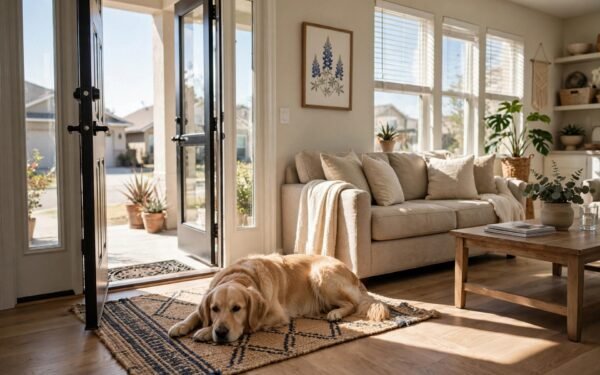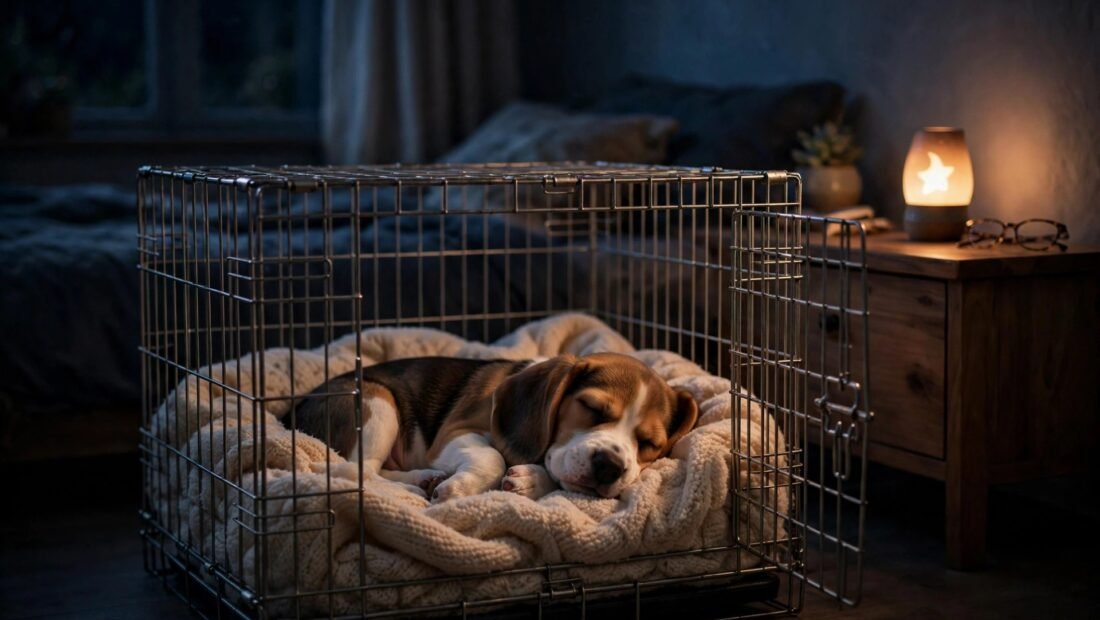
It is 2 a.m. on the third night. The puppy has been crying for twenty minutes, and every choice made in the next five minutes teaches her something about the crate. A response that brings play and cuddles teaches that crying opens the door to a party. Silence after a genuine need has been ruled out teaches that night is quiet and safe. One full night, handled in order, shows how to tell the difference.
Picture a common Texas setup. A puppy of nine weeks has been home for three days. Her crate sits in the bedroom, close enough for her to hear breathing and know she is not alone. The evening goes well, lights-out goes less well, and the night tests every part of the plan. Each stage calls for a different response, and the clock matters as much as the crying itself.
The Evening Setup: The Night Is Won Before Lights-Out
The last hour of the evening sets the terms for everything that follows. Dinner ends early enough that water and a final meal do not fill a tiny bladder right at bedtime. Play stays calm in the final stretch. A wild game at 10 p.m. leaves a puppy wound up in the crate, while a gentle wind-down leaves her ready to sleep.
The crate itself has been prepared during the day, not introduced at night as a strange box. It holds a washable bed, one safe chew, and a worn t-shirt that carries the owner’s scent. A cover draped over the top makes it feel like a den and blocks visual stimulation. Some puppies settle better with a ticking clock nearby or a heartbeat toy, small sounds that recall sleeping against littermates. Guidance on the wider daytime routine sits alongside how to crate train a puppy fast, and the night routine builds directly on those same crate-positive habits.
The location matters for the first 1 to 2 weeks. A crate in the bedroom lets the puppy hear and smell the family, which directly addresses the loneliness that drives much of the early crying. A puppy shut alone in a distant room has to learn two hard lessons at once: the crate, and total isolation. One lesson at a time is fairer and faster.
Texas homes add two local traps. A garage or laundry room may feel convenient, but in summer heat those spaces can stay dangerously warm at night, and a hot puppy cries for good reason. Storm season brings thunder and heavy rain on metal roofs, sounds that can frighten a puppy who was settling well. The bedroom crate avoids the heat problem and puts a calming voice within reach when a storm rolls through at midnight.
Lights-Out: The Last Potty Trip and a Boring Goodnight
The final step before bed is a potty trip, taken right before lights-out, not twenty minutes earlier. A puppy under 12 weeks can need to urinate every 2 to 3 hours overnight, so the clock on that need starts at the last trip. Praise the success quietly, then carry her straight to the crate. No extended play session follows. The message is plain: the day is over.
The goodnight itself should be short and dull. A calm word, the crate door closed, lights off. Long speeches, repeated peeking, and emotional farewells keep the puppy alert and hopeful that interaction will continue. A few minutes of soft whimpering at this stage is normal. Most puppies who have been fed, emptied, and exercised properly will test the silence briefly, then curl up if nothing interesting happens.
The owner gets into bed and stays there. Getting up to hover by the crate resets the puppy’s expectation that crying brings company.
The 11 p.m. Whimper: A Short Test That Usually Ends on Its Own
About an hour after lights-out, a soft whimper rises from the crate. It stops, starts again, then fades. This early stirring often means nothing more than a sleep cycle shifting or a brief moment of waking in a still-new place. The last potty trip was recent, so a full bladder is unlikely.
The right move is stillness. Wait 2 to 3 minutes before doing anything at all, unless the sound is frantic or panicked. Most minor whimpering burns itself out inside that window once the puppy learns that the room stays dark and quiet. A soft, brief shush from the bed, without opening the crate, can reassure a puppy who mainly needs to know the family is still there.
What does not happen matters. The crate does not open. No light comes on. No treat appears. The puppy drifts back to sleep having learned a small, useful fact: waking at night is boring, and sleep is the better option.
The 2 a.m. Crying: The Decision That Teaches the Biggest Lesson
Now the clock reads 2 a.m., roughly three hours since the last potty trip, and the crying is different. It is urgent, high-pitched, and continuous, the classic sound of a genuine need. Need-crying often starts 2 to 3 hours after the last break, and its timing is the clue. This is not a protest. A nine-week-old bladder is full.
The response is a silent, boring potty trip. No bright lights, no cheerful talk, no play, no treat party in the yard. Carry the puppy out, give her a minute or two on the grass, offer quiet praise when she goes, and carry her straight back to the crate. The whole trip should feel like a dull errand. She learns that crying for a real need works, and that crying buys nothing else. Both lessons matter.
Suppose instead that the crying starts only forty minutes after a successful potty trip, at a pitch that sounds more like complaint than urgency. That pattern points to the second and third causes: loneliness, and learned behavior, where past crying was rewarded with attention. The sequence then runs differently. Wait the full 2 to 3 minutes. Listen for gaps. If the sound settles at all when the room stays quiet, hold the line. Earplugs, once needs are ruled out, are a legitimate tool for the owner at this point, because a single surrender at minute twenty teaches that persistence pays.
The hardest version is crying that stopped being rewarded and then gets louder for a night or two. That surge usually means the old lesson is fading, not that the method failed. Holding steady through it, while still answering genuine need-crying on schedule, is what ends it. The ASPCA’s wider advice, collected at the ASPCA’s puppy care and crate guidance, draws the same line between meeting needs promptly and keeping night attention dull.
The Crying That Means Something Is Wrong
Some sounds break every rule above and call for the crate to open at once. Frantic, non-stop crying paired with drooling, panting, or digging at the door suggests panic or pain, not protest. Crying alongside diarrhea or vomiting means a sick puppy who needs cleaning, care, and possibly a vet call. A puppy who was settling for nights and suddenly screams without pause has given new information, and it should be believed.
Panic deserves a special note. A puppy in true panic is not learning anything except fear of the crate. Forcing her to endure it can build a lasting crate phobia that takes weeks to undo. In that case the crate door opens, the puppy is calmed, and training steps back to shorter daytime crate sessions with the door open and treats inside. Night crating resumes only when daytime practice is calm again.
The 5 a.m. Wake: An Early Start Handled Without a Party
At 5 a.m. the puppy wakes bright, rested by puppy standards, and ready to start the day an hour before the household wants to. This wake-up is part need and part habit forming in real time. Take the quiet potty trip first, since five or six hours is a long hold for a young puppy. Then comes the judgment call.
If the house rises at 6 a.m., returning her to the crate with a safe chew for the final stretch protects the future schedule. If she is returned with fuss and breakfast, 5 a.m. becomes the new official morning within days. Puppies set their clocks by what pays off. A dull final hour in the crate, followed by a normal cheerful morning at the regular time, gradually pulls the wake-up later as her bladder capacity grows.
By the end of the first week, most puppies handled this way sleep in stretches of 3 to 4 hours. The 2 a.m. trip moves to 3 a.m., then fades. The owner protecting personal sleep helps the process hold. Partners can split the night into shifts, one taking the early trip and one the late one, so neither person loses every night. Broken sleep makes owners inconsistent, and inconsistency is what stretches the crying phase longest.
The Nights That Follow: A Timeline That Rewards Patience
The first 3 to 7 nights are the hardest, and knowing that in advance makes them bearable. Most puppies settle within 1 to 2 weeks when the routine stays steady: bedroom crate, last trip at lights-out, dull answers to real needs, and no reward for protest. By week 3 to 4, most sleep through the night for 6 to 8 hours in the bedroom crate. Only then does it make sense to think about moving the crate gradually, a few feet at a time, toward its long-term spot.
Setbacks happen. A thunderstorm, a stomach upset, or a weekend trip can restart a night or two of crying. The response is to return to the same sequence rather than inventing a new one at 2 a.m. The puppy who learned the pattern once relearns it quickly.
The pattern across the night is simple. The evening setup removed avoidable causes. Lights-out started the bladder clock at the right moment. The 11 p.m. whimper was allowed to fade. The 2 a.m. need was answered in the dullest way possible, and protest crying earned nothing. The 5 a.m. wake did not become a festival. Together, those choices teach the lesson that ends crate crying: nights are safe, needs are met, and sleep is what happens in the crate after dark.