A violin can cost $100 or $100,000, and the strange part is that either price can be a poor deal. A $100 instrument with a warped bridge and slipping pegs can cost more to fix than it cost to buy, and it can make a beginner sound bad no matter how hard practice goes. A very expensive instrument can also be wasted money if the buyer pays for collector value that has nothing to do with learning to play. What separates a fair price from a rip-off is not the number alone. Setup, wood, construction, and whose hands made the instrument decide what the money actually buys.
The price landscape from $100 to the millions
At the lowest end, toy-grade violins sell for $100 to $300. Quality in this band varies wildly. Some are closer to display objects than instruments. Bridges may be poorly cut, pegs may slip within minutes, fingerboards may buzz, and the sound can be thin and harsh even in skilled hands. A small number are playable after a proper setup, but many are barely playable at all. The low sticker price hides the real problem: a shop would often charge more to correct the setup than the instrument cost new.
The beginner and student band sits at $300 to $800 for a complete outfit. Two separate sources land in nearly the same place. ThePricer’s cost survey puts properly set up beginner outfits in the $300 to $800 range, and Shar Music’s buying guide puts quality student violins at $299 to $800. That agreement marks the band as a realistic floor for an instrument with a fitted bridge, working pegs, and a setup that lets a new player produce a decent sound and stay in tune.
Intermediate instruments run from $1,000 to $3,000 and beyond. Reputable outfits from makers such as Snow, Eastman, and Jay Haide can run up to about $3,500 once a higher-quality bow and case are included. Advanced instruments occupy $3,000 to $10,000 and above. Professional and fine instruments start around $10,000 and climb steeply. Soloist instruments pass $100,000, and antique Italian violins sell into the millions. Those top numbers belong to collector territory as much as to music. Age, maker reputation, provenance, and rarity drive them, not just sound. A buyer shopping for lessons and orchestra playing should read the top end as context, not as a target.
What outfit pricing really includes
The most common pricing trap for beginners is comparing an outfit price with an instrument-only price as if they were the same thing. An outfit includes the violin, a bow, a case, and rosin. It is ready to play out of the box. An instrument-only price covers the violin alone. A $400 outfit and a $400 violin are very different deals, even though the numbers match.
Run the instrument-only math in full. A $400 violin alone still needs a bow, which typically costs $100 to $300 or more, and a case, which typically costs $50 to $150. The real total lands between $550 and $850 before strings or any setup adjustment. The $400 outfit, by contrast, already includes serviceable versions of all of those items. For a beginner, the outfit is almost always the better value, and it removes the risk of pairing an instrument with a bow that is badly balanced or a case that does not protect it.
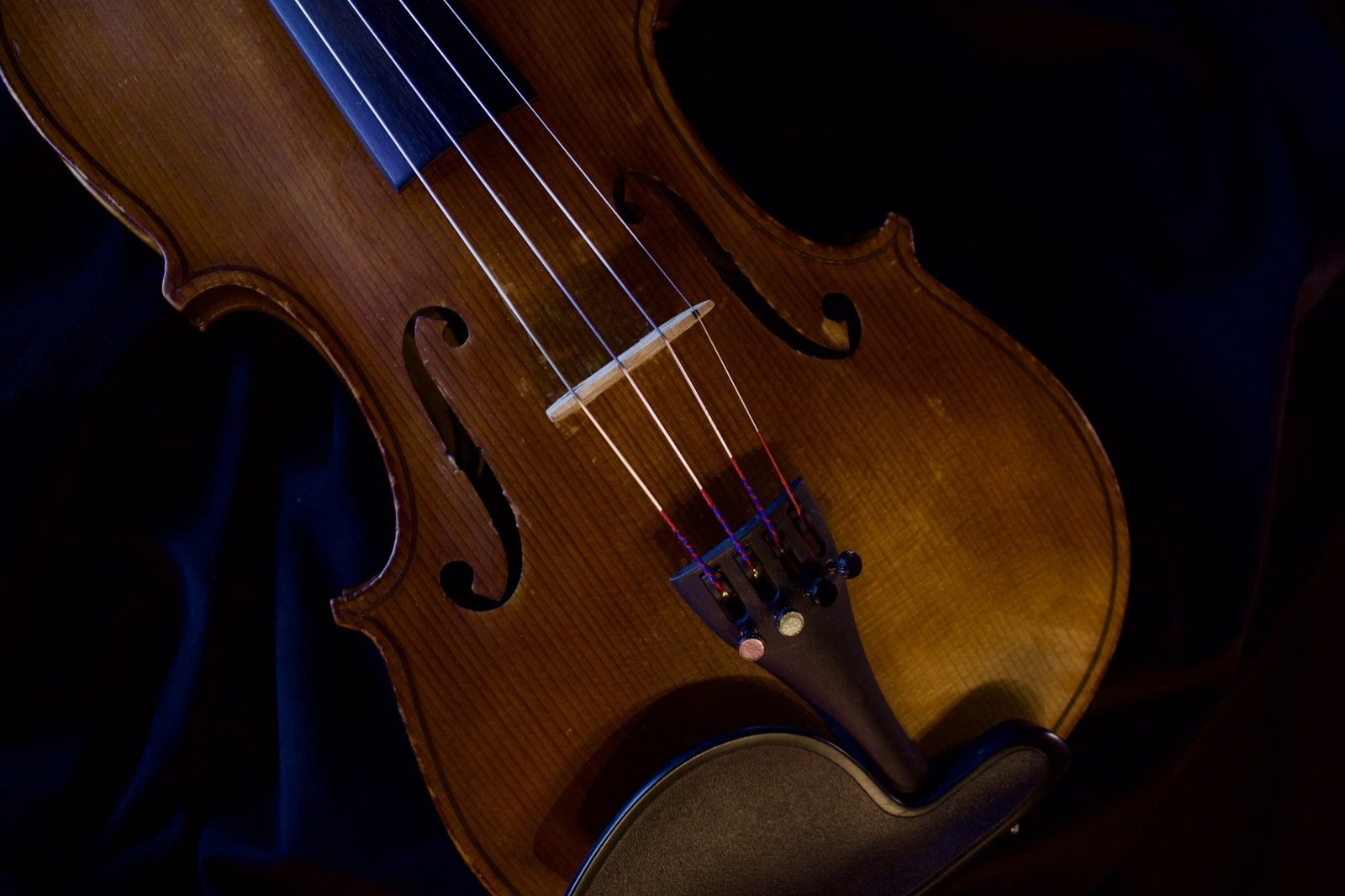
Setup is the other half of what a good outfit price includes, and it is easy to miss because it cannot be seen in a product photo. A proper setup covers bridge carving and placement, soundpost position, peg fitting, and string height. That work decides whether the instrument sings or fights the player. Reputable shops include setup in the price. Large general marketplaces and warehouse sellers often do not, which is part of why a cheaper listing can end up costing more. Guidance collected at Shar Music’s violin buying guides and outfit pricing is a useful check on this point, because established string shops price the setup into the outfit instead of treating it as an extra.
Fractional sizing belongs in this section too. Children do not start on full-size instruments. Violins come in fractional sizes such as 1/4, 1/2, and 3/4 before the full 4/4 size. A growing child may need to size up every couple of years. That fact changes the buying decision completely for families, and it is the main reason rental, covered below, often wins for young players even when the outfit price looks reasonable.
Beginner and student instruments in depth
A good student outfit in the $300 to $800 band is factory made, and there is nothing wrong with that. At this level, consistency and durability matter more than individual character. Look for a solid spruce top and a maple back rather than laminated wood, a properly fitted bridge, and pegs that turn smoothly and hold. A well-set-up student violin will not win tone competitions, but it sounds pleasant, stays in tune, and survives school orchestra, home practice, and transport in a case without constant repairs.
The decision point at this level is where to buy, not just how much to spend. A real violin shop checks the setup before the sale and adjusts it if problems appear. That support is part of the price. A very cheap online listing shifts all of that risk to the buyer. Teachers notice the difference quickly. Many teachers dislike working with instruments under about $150 to $200 because setup and construction problems make learning harder: notes will not speak cleanly, tuning will not hold long enough for a lesson, and the student gets blamed for a sound the instrument cannot produce. Skipping anything under $150 is the simplest protective rule in the whole market.
Students who are also starting to read music fluently often progress faster on a responsive instrument, because the instrument rewards small improvements in bow control. Pairing the purchase with steady reading practice helps too, and a structured start on how to read sheet music from scratch gives new players a way to use the practice time that a good setup makes possible.
Intermediate, advanced, and professional instruments in depth
The intermediate band, $1,000 to $3,000 and up to about $3,500 for strong outfits from Snow, Eastman, and Jay Haide, is where tone starts to change in ways a developing player can use. Tonewood quality improves. Carving and varnish get more careful attention. Setup is more refined. The practical result is better projection and a faster, clearer response. Advanced technique becomes easier to learn because the instrument gives clearer feedback. A cleaner shift, a lighter bow stroke, and better intonation all become audible instead of being buried by the instrument’s limits.
Advanced instruments from $3,000 to $10,000 and above are typically handmade or bench-made by individual luthiers or small workshops, with carefully aged tonewoods and detailed acoustic tuning. Serious students, conservatory players, and working professionals shop here. The purchase process changes at this level too. Players trial instruments, compare them side by side, and involve teachers in the decision. Price reflects the maker’s time and reputation as much as materials.
Above $10,000, the professional and fine market blends performance value with scarcity. Soloist instruments over $100,000 and antique Italian violins in the millions are real, but they answer a different question from the one a student or advancing player is asking. Collector demand, historical importance, and investment interest all feed those prices. Sound matters there, but sound alone does not explain them.
Rent or buy, worked out honestly
Rentals run $20 to $40 per month for a quality student violin. Most shop rentals include maintenance, and most apply some or all of the rental payments as credit toward a future purchase. Rental also solves the sizing problem for children. When a child outgrows a fractional size, the shop swaps the instrument for the next size instead of the family buying a second and then a third violin in a few years.
Do the yearly math before deciding. At $20 to $40 a month, a year of renting costs $240 to $480. Two years costs $480 to $960. For a committed adult beginner, buying a $400 to $800 outfit usually beats renting within the first year or two, and the buyer owns an instrument that can be resold later. Adult beginners also stay on one full size, so the swap advantage of rental matters less. For a child whose commitment is still uncertain, or who will change sizes soon, rental protects against the two most common family losses: buying an instrument that gets abandoned after three months, and buying the right instrument in the wrong size.
Ownership costs and saving without buying junk
The purchase price is not the full cost of owning a violin. Strings cost $30 to $80 a set and need replacing every 6 to 12 months, sooner if the sound dulls or tuning becomes unstable. A yearly luthier checkup runs $50 to $100 and covers soundpost position, bridge alignment, peg function, and early cracks before they become expensive repairs. Budget roughly $80 to $180 a year for strings and the annual check combined. That small, predictable cost protects a much larger purchase.
The bow deserves the same calm approach. Beginners cannot feel the difference between a $60 bow and a $300 bow, because bow control takes time to develop. Overspending on the bow at the start buys sensitivity the player cannot use yet. The sensible sequence is a serviceable bow in the outfit first, then a bow upgrade at the same time as the instrument upgrade, when the player can actually judge balance and response.
The strongest legitimate saving is a used student violin bought through a shop and checked by a luthier. That route can save 30 to 40 percent compared with buying new. The shop and luthier checks are what make the saving real. A random used violin from a general auction listing can carry a warped bridge, a badly placed soundpost, open seams, or peg problems that erase the discount in repair bills. Used is smart when an expert has inspected the instrument. Used is a gamble when nobody has.
Upgrading follows one clear signal. When a teacher hears the instrument’s ceiling — when the player’s technique has improved past what the violin can express — the upgrade conversation starts. That typically happens after the first year or two of steady playing. Until then, money is better spent on lessons, strings, and the yearly checkup.