
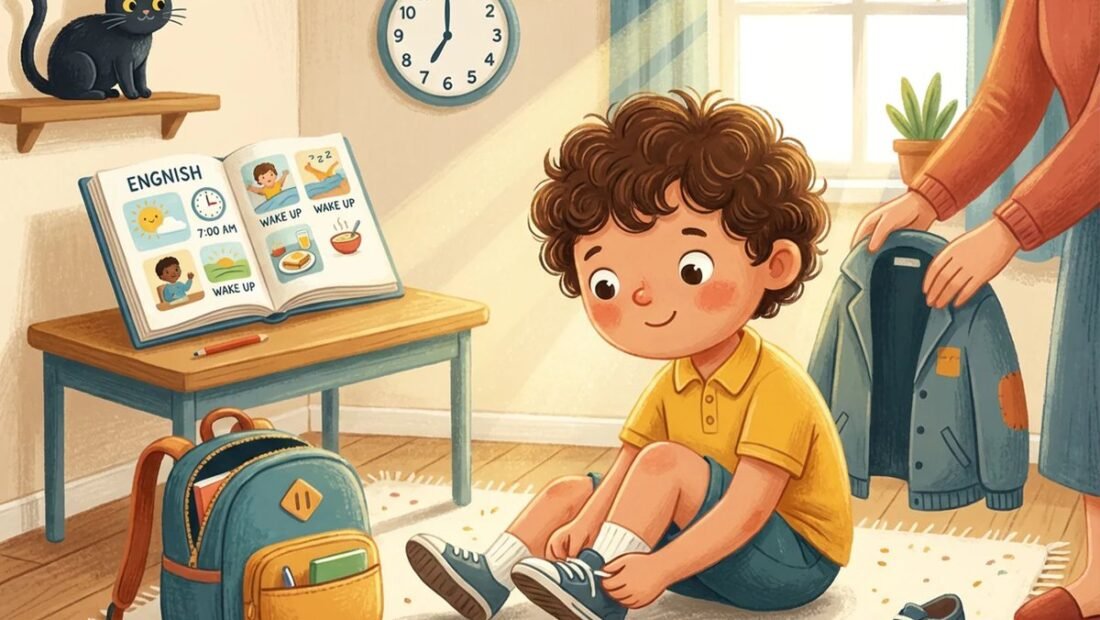
Our mornings used to be a daily episode of a disaster show: missing shoes, spilled cereal, a permission slip discovered at 8:04. I tried yelling louder (didn’t work), waking up earlier (helped me, not them), and color-coded charts (ignored). What finally fixed it was treating the morning like a system instead of a hope.
Making mornings less chaotic with kids comes down to three shifts: move decisions to the night before, give kids ownership instead of orders, and build in buffer time for the inevitable shoe crisis. None of this requires perfect children — mine are gloriously imperfect and it still works.
Here are the 15 fixes that tamed our mornings, roughly in order of impact.
Move Everything Possible to the Night Before
The night-before launch pad is the highest-leverage change, full stop. Backpacks packed and by the door, outfits chosen (let kids pick from two parent-approved options to avoid the morning fashion show), lunches made, shoes paired by the door, and your own stuff ready too. Fifteen minutes at night saves forty in the morning — the math never lies.
I also recommend the ‘launch pad zone’ — one spot by the door where everything lives: backpacks, shoes, jackets, keys, library books, the signed forms. When the rule is ‘if it’s not in the launch pad, it doesn’t exist,’ the house-wide scavenger hunt ends. Everything has a home, and the home is by the door.
Check tomorrow’s weather and schedule before bed. The surprise rain, the field trip, the wacky-hair day — all defused with a 30-second evening check. This pairs with the full morning routine for busy parents if you want the complete system.
Give Kids Jobs, Not Nagging
Nagging is a terrible management system — for employees or kids. Replace your ten reminders with a visual checklist they own: wake up, bathroom, get dressed, eat, brush teeth, shoes, backpack, out. For pre-readers, use pictures. Laminate it, put it at kid height, and let them check things off with a dry-erase marker. Kids who ‘run their list’ feel competent instead of bossed around.
Assign real jobs: one kid feeds the pet, another wipes the table, the oldest starts the car in winter. Ownership beats obedience — a kid with a job is a teammate, not a obstacle. And use a visual timer for transitions: ‘when the red is gone, it’s shoes time.’ The timer becomes the enforcer so you don’t have to be.
Natural consequences teach faster than lectures. Forgot your library book? The library will still be there tomorrow. (Rescue them sometimes — you’re a parent, not a warden — but let small, safe consequences do the teaching.) Praise the process specifically: ‘you got dressed without being asked — that’s responsible’ beats ‘good job’ every time.
Build Buffer Time and Simplify Ruthlessly
Most morning chaos is a math problem: too many tasks, too little time. Add a 15-minute buffer by shifting wake-up earlier — not to do more, but to absorb the inevitable. The spilled milk, the lost shoe, the last-minute bathroom trip: these aren’t exceptions, they’re the schedule. Plan for them and they stop feeling like emergencies.
Simplify breakfast to a boring rotation: two or three options, same each week. Oatmeal, eggs and toast, yogurt and fruit — done. Save variety for weekends. Same with the ‘morning bin’ by the door: hairbrush, sunscreen, the stuff that’s always missing. Boring systems are reliable systems.
And protect your own calm — kids co-regulate with you. If you’re frantic, they’re frantic. The 20-minute head start (up before the kids, dressed, coffee in hand) is as much for them as for you. A calm parent is the best morning routine technology ever invented. For your own fuel, our 10-minute stress reducers include a perfect pre-kids reset.
Mornings Less Chaotic With Kids: The Teenage Years
Everything in this guide works for little kids — but teenagers need a different approach, because the chaos just changes shape. With teens, the battles are about wake-up time (their circadian rhythms genuinely shift later in adolescence — it’s biology, not laziness), bathroom hogging, and the phone. The systems that work: a real alarm clock instead of a phone (removes the ‘I was up but on my phone’ problem), a bathroom schedule if you’re sharing one, and breakfast they can grab without you — overnight oats, breakfast burritos made Sunday, or just cereal they actually like. Pick your battles; the mismatched outfit isn’t one.
The American Academy of Pediatrics notes that teens need 8–10 hours of sleep and that early school start times fight their biology — which means a teen who’s groggy at 7 a.m. isn’t necessarily doing anything wrong. Work with the biology: shift bedtime earlier rather than demanding cheerful 6 a.m. risings, keep mornings low-demand (no big conversations before coffee — theirs or yours), and save the lectures for the evening. The goal with teens is a functional morning, not a picturesque one. If everyone’s out the door mostly dressed and nobody’s crying, that’s a win — adjust your standards to the developmental stage.
15 Morning Chaos Fixes
- Night-before launch pad: packs, outfits, lunches by the door
- Create one ‘launch pad zone’ by the exit
- Check weather and tomorrow’s schedule each evening
- Visual checklist at kid height (pictures for pre-readers)
- Assign each kid a real morning job
- Use a visual timer for transitions
- Let natural consequences teach (small, safe ones)
- Praise specifically: name the responsible behavior
- Add a 15-minute buffer — plan for the shoe crisis
- Rotate 2–3 boring breakfasts on weekdays
- Keep a ‘morning bin’ of always-missing items by the door
- Wake 20 minutes before the kids for your own calm
- One calm reminder, then let the checklist work
- Keep shoes paired and in the launch pad, always
- Celebrate streaks: 5 smooth mornings = a reward
Progress, Not Perfection
You’ll still have chaotic mornings. Someone will be sick, the car won’t start, a shoe will achieve sentience and hide. The goal was never perfection — it’s making smooth mornings the default and chaotic ones the exception.
Start with the launch pad tonight. Add the kid checklist this weekend. Give it two weeks. Then enjoy the strangest sensation: a Tuesday morning where everyone got out the door on time and nobody cried — including you.



