
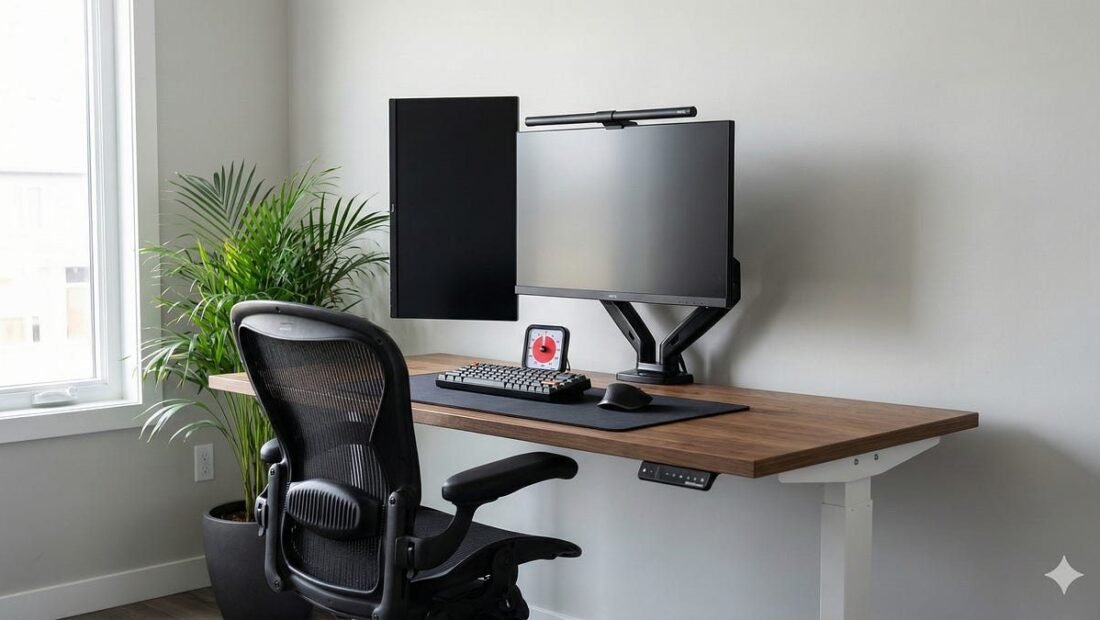
My ‘office’ was a couch for the first year of remote work, and my spine filed a formal complaint. Rebuilding my posture took tweaks, not a total life overhaul.
Most advice on this topic falls into two camps: vague wellness platitudes or scary worst-case scenarios. Neither helps when you’re trying to make a real decision. So here’s the middle ground — grounded in actual evidence, focused on what you can do this week, and honest about where the limits are.
Improve posture working from home: What the Evidence Shows
Let’s get specific about improve posture working from home — what it means, why it matters, and the practical steps that make a difference. Everything below is actionable starting today.
Raise your screen to eye level. The single biggest posture fix: your monitor top should be at or slightly below eye level. Stack it on books if you must — I used a shoebox for months. Looking down at a laptop for eight hours is what creates the dreaded forward-head hunch. The people who do this consistently swear by it, and the logic holds up.
Get an external keyboard and mouse
Once the laptop is raised, you need separate input devices — otherwise you’re reaching up like a T-rex. A $25 keyboard-mouse combo transforms any kitchen table into a workable desk. This is the highest-ROI purchase in home-office ergonomics. Small change, real payoff — that’s the pattern with this one.
Your feet should touch the floor
Chair too high or feet dangling? Your pelvis tilts and your lower back pays. Feet flat, knees roughly at hip level. A footrest — or a sturdy box — fixes this for free. Crossing your legs all day twists the pelvis; notice and uncross. File this under ‘boring but effective,’ the best category there is.
Related reading: our guide to how can I reduce eye strain from screens at work covers a closely connected topic worth understanding alongside this one.
Set a movement timer
No posture survives eight motionless hours. Stand, walk, or stretch for two minutes every 30 to 60 minutes. I use a simple phone timer. Movement snacks beat perfect sitting — the best posture is your next posture. Worth trying for two weeks. You’ll know by then if it’s your fix.
Strengthen what sitting weakens
Glute bridges, wall angels, and rows counteract the specific weaknesses desk life creates. Ten minutes, three times a week, makes a visible difference in how you carry yourself. Posture is mostly a strength problem wearing a habit costume. It sounds simple because it is. The hard part is just doing it consistently.
Sleep and stress show up in your posture
Poor sleep tightens everything; chronic stress lives in raised shoulders. The evening wind-down and stress management aren’t separate from posture — they’re part of it. You can’t out-ergonomic a body running on fumes. Not glamorous, not expensive — just something that works.
Quick Takeaways
- Raise your screen to eye level: The single biggest posture fix: your monitor top should be at or slightly below eye level.
- Get an external keyboard and mouse: Once the laptop is raised, you need separate input devices — otherwise you’re reaching up like a T-rex.
- Your feet should touch the floor: Chair too high or feet dangling? Your pelvis tilts and your lower back pays.
- Set a movement timer: No posture survives eight motionless hours.
- Strengthen what sitting weakens: Glute bridges, wall angels, and rows counteract the specific weaknesses desk life creates.
- Sleep and stress show up in your posture: Poor sleep tightens everything; chronic stress lives in raised shoulders.
When to Bring in a Professional
Self-help has limits, and knowing them is wisdom, not weakness. If symptoms persist beyond a few weeks of consistent effort, worsen, or interfere with work, sleep, or relationships, that’s the signal to book an appointment. Primary care doctors handle most of this territory and can refer you to specialists when needed.
Come prepared: a short timeline of symptoms, what you’ve already tried, and your key questions written down. Prepared patients get better care — it focuses the visit and prevents the ‘I forgot to ask’ drive home. And if cost worries you, ask about cash rates upfront; they’re often far lower than the billed charges.
A Common Mistake to Avoid
Buying a $1,500 ergonomic chair while still craning down at a laptop on a coffee table. Equipment helps, but screen height and movement frequency matter far more than chair price. Fix the free stuff first — then upgrade what still hurts.
If you want to go deeper on a related topic, see our guide to how can I eat healthy on a tight budget — and for a different angle on everyday wellness, our guide to what are the best stretches for desk workers with neck pain is worth your time.
The Sleep Connection
Almost every health topic connects back to sleep — it’s the foundation other habits build on. Poor sleep undermines willpower, recovery, immunity, and mood simultaneously. If you’re only going to fix one thing, fix sleep: consistent schedule, dark cool room, screens off before bed.
Protect the last hour of your day like it matters, because it does. A wind-down routine — dim lights, no news, something calm — signals your nervous system that the day is over. Morning-you will thank night-you within a week.
For authoritative background, see the Sleep Foundation’s sleep hygiene research, and also evidence-based health guides from Healthline for a second perspective.
Frequently Asked Questions
Are standing desks worth it?
They help if you actually alternate — standing all day creates its own problems. A convertible setup or just regular walk breaks captures most of the benefit for free.
How long until posture improves?
Noticeable change in 4 to 6 weeks of consistent effort — screen height fixed, regular movement, basic strengthening. Years of hunching won’t reverse in a weekend.
What to Do This Week
Don’t aim for perfect — aim for started. Choose two items from the quick takeaways above and commit to them for seven days. Put a simple checkmark on your calendar each day you follow through; the visual streak is surprisingly motivating. At week’s end, keep what helped and drop what didn’t — no guilt, just data.
Tell someone your plan. It sounds small, but announcing a health change to one person measurably improves follow-through. And schedule any needed appointments now — the doctor visit, the lab work, the fitting — because ‘later’ has a way of becoming never.
The Bottom Line
Home posture comes down to screen at eye level, feet on the floor, movement every hour, and a little targeted strengthening. No expensive gear required — just consistency with the basics.



