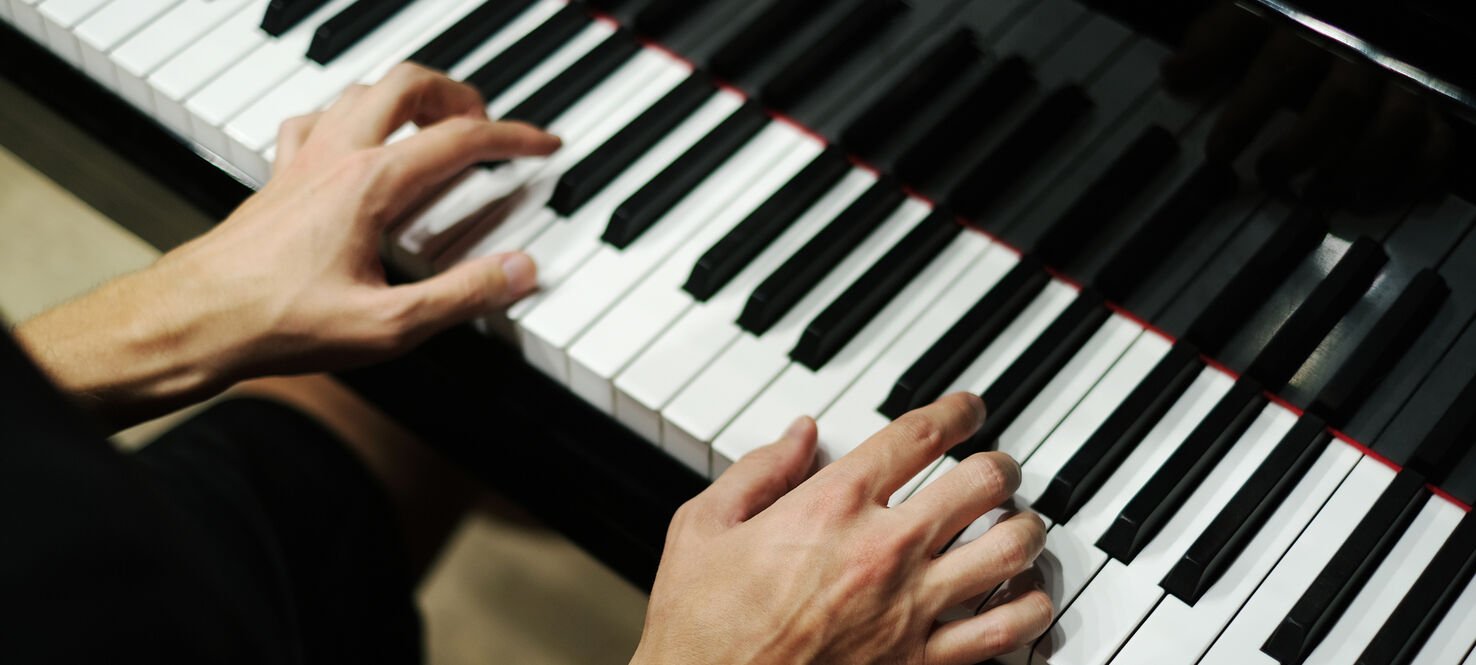
How many octaves on a piano? A standard full-size piano has 88 keys spanning 7¼ octaves — seven full octaves plus a minor third, running from A0 at the bass end to C8 at the treble end. That 88-key layout is the modern standard for acoustic pianos and full-size digital pianos alike.
But not every keyboard has 88 keys, and the “extra quarter octave” confuses a lot of beginners. Here’s the complete answer: what an octave actually is, how the keys break down, how smaller keyboards compare, and why pianos settled on 88.
The Quick Answer
- Standard piano (88 keys): 7¼ octaves (A0 to C8)
- 52 white keys + 36 black keys = 88 total
- Each full octave = 12 keys (7 white + 5 black)
- The span from A0 to C8 measures seven octaves plus three semitones — hence “7¼ octaves”
What Is an Octave, Exactly?
An octave is the distance between one note and the next note with the same name — from one C to the next C, for example. The higher note vibrates exactly twice as fast as the lower one, which is why octaves sound like the “same” note at a different pitch. The word comes from the Latin octavus, meaning eighth, because an octave spans eight notes of the diatonic scale (C-D-E-F-G-A-B-C).
On a piano, each octave contains 12 keys: 7 white keys (the natural notes A through G) and 5 black keys (the sharps and flats between them). That 12-key pattern repeats across the whole keyboard — once you learn it in one octave, you know it everywhere.
How the 88 Keys Break Down
The standard keyboard starts on A0 (the lowest A) and ends on C8 (the highest C). Because it starts on A rather than C, the keys divide up like this:
- Bottom partial octave: A0, A♯0, B0 — 3 keys
- Seven full octaves: C1 through B7 — 84 keys
- Top key: C8 — 1 key
- Total: 3 + 84 + 1 = 88 keys
That span — seven full octaves plus the extra notes at each end — is what’s summarized as “seven and a quarter octaves,” per Pilpil Music’s breakdown of the 52-white / 36-black key layout.
Octaves on Smaller Keyboards
Not every keyboard has the full 88. Here’s how the common sizes compare:
- 88 keys: 7¼ octaves — the full standard (acoustic pianos, pro digital pianos)
- 76 keys: ~6¼ octaves — common on mid-range digital pianos and stage keyboards
- 61 keys: 5 octaves — the classic beginner/portable keyboard size
- 49 keys: 4 octaves — compact controllers and starter keyboards
- 25 keys: 2 octaves — mini MIDI controllers for production, not performance
Is 61 keys (5 octaves) enough to learn on? For the first year or two, yes — most beginner pieces stay within a 5-octave range. But you’ll outgrow it. Serious students eventually need the full 88, which is why teachers recommend starting with a full-size weighted keyboard if the budget allows. (See how long it takes to learn piano for what to expect at each stage.)
Why 88 Keys? A Short History
Pianos didn’t start with 88 keys. The earliest pianos, built by Bartolomeo Cristofori around 1700, had about 4–5 octaves. By Mozart’s era, 5 octaves (61 keys) was standard. As concert halls grew and composers demanded more range and volume, makers kept adding keys — 6 octaves, then 7.
The 88-key standard settled in after World War I, driven largely by Steinway & Sons, whose late-19th-century instruments helped popularize the layout. It stuck because it’s practical: 88 keys cover virtually all piano repertoire ever written, and standardization means a pianist can sit at any full-size piano in the world and find the same keyboard.
Fun exceptions exist: Bösendorfer makes pianos with extra bass keys down to F0 or even C0 (up to 97 keys), primarily for the added sympathetic resonance rather than repertoire — almost no music actually uses those notes.
Octave Notation: Reading the Numbers
You’ll see notes labeled like C4 or A0. That’s scientific pitch notation:
- Middle C = C4 — the reference point near the center of the keyboard
- Numbers increase going up: C5 is an octave above middle C
- The lowest key on a standard piano is A0; the highest is C8
One quirk: octave numbers change at C, not at A. So the notes from C4 up to B4 are “octave 4,” and C5 starts the next one — even though A0 sits below C1 on the keyboard.
Piano Octave FAQs
How many octaves does a beginner need?
Five octaves (61 keys) covers the first year or two comfortably. But if you’re buying an instrument to grow into, get 88 weighted keys from the start.
What’s the difference between an octave and a key?
A key is one physical note on the keyboard. An octave is a distance — 12 semitones from any note to its same-named neighbor. So “7 octaves” describes range, while “88 keys” counts the actual notes.
Do all 88-key pianos start and end on the same notes?
Yes — A0 to C8 is universal on standard 88-key instruments, acoustic or digital. That’s the whole point of the standard.
Why isn’t it exactly 7 or 8 octaves?
Historical accident, essentially. Makers extended the range asymmetrically over decades — a few extra bass notes here, a top C there — and the A0-to-C8 layout is what stuck. It covers the music; that’s what mattered.
How many black keys are in an octave?
Five per octave (the sharps/flats), alongside seven white keys — 12 total. Across the full keyboard that’s 36 black and 52 white.
The Bottom Line
A standard piano has 88 keys covering 7¼ octaves, from A0 to C8. Smaller keyboards offer 5–6 octaves and work fine for beginners, but the 88-key standard exists so that every pianist, everywhere, plays the same instrument. Learn the 12-key pattern once, and you’ve learned it for all seven octaves.