Most people worry about the wrong end of the problem. They feel guilty about a plastic straw, rinse a jar three times before recycling it, and unplug a phone charger as if that settles the account — while the house cools an empty room all afternoon, the car idles through short trips on low tires, and a third of the groceries quietly expire. The small acts are visible. The large ones are not. That mismatch is why so many careful households barely move their footprint at all.
For a typical Texas household, roughly three buckets hold most of the total: transport at about 30 percent, home energy near 25 percent, and food around 15 to 20 percent. Treat those shares as approximate, not exact for your home. The order is what matters. Fix the big buckets with changes you set once, and you can cut a real share of your footprint without moving, going vegan, or giving up the car.
Mistake One: Chasing Symbols While the House Leaks Energy
The classic error is spending willpower on tiny, daily decisions and leaving the house itself unchanged. A home in Texas spends a large share of its energy on heating and cooling, and summer cooling alone can dominate a bill for months. If the thermostat runs on a fixed schedule whether anyone is home or not, if bulbs still burn hot and wasteful, and if game systems, TVs, and chargers draw power all night, the house leaks energy every hour. No amount of straw guilt offsets that.
The fix is to automate the savings so they do not depend on your mood. Set the home up once, correctly, and let the equipment do the boring work while you live your normal life. That is the whole strategy: fewer daily choices, more one-time settings.
Mistake Two: Paying for Dirty Power When Clean Power Is a Menu Choice
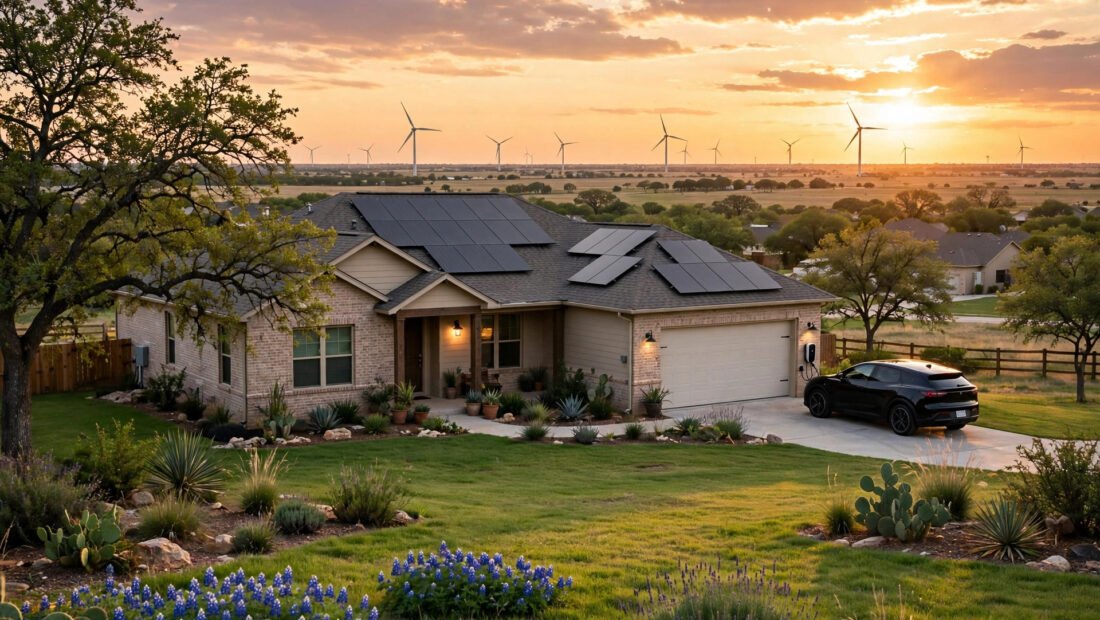
In much of Texas, electricity is not one fixed product. The deregulated retail market lets most households pick their provider and their plan. Staying on a conventional plan by habit, year after year, is one of the costliest quiet mistakes a Texas household can make, because switching to a 100 percent renewable plan often takes about twenty minutes online and changes nothing about how your home feels or runs. The lights, the air conditioner, and the fridge work exactly the same. Only the source behind them changes.
Read the plan facts label before you switch, not just the headline rate. Check the term, any early exit fee, and whether the rate is fixed or variable. A clean plan at a fair fixed rate you can keep for a full term beats a teaser rate that jumps in three months. If you rent, this still applies in most of Texas: renters usually choose their own retail provider, so no landlord permission is needed for the single biggest home switch.
Mistake Three: Cooling and Heating on Guesswork
A smart thermostat, typically about $100 to $250 before any utility rebate, trims roughly 8 to 15 percent off heating and cooling energy on its own by learning or following a real schedule. It eases off while you are at work or asleep and brings the house back before you need it. In a state where a summer afternoon can push a system hard for hours, those trimmed hours add up fast.
Pair it with plain maintenance. Replace or clean filters on schedule, keep vents clear, and seal the obvious drafts around doors you can feel with the back of your hand. None of this is glamorous. All of it lowers the load the system has to fight. If your home is older and you are ready for larger steps, the best energy-saving upgrades for an older home are worth weighing in order of payback, not in order of what a salesperson pushes first.
Mistake Four: Burning Money on Light and Standby Draw
Leaving old incandescent bulbs in the busiest rooms is a slow, needless cost. LED bulbs use about 75 percent less energy than incandescents and last for years, so one shopping trip can finish the job for the whole house. Start with the kitchen, living room, and porch — the lights that burn longest — and the savings begin at once.
Standby draw is smaller per device and still worth killing once. TVs, game consoles, cable boxes, and chargers sip power around the clock. One smart power strip, around $25, can cut power to the whole entertainment cluster when the main device turns off. Do the same in a home office. You set it once and never think about that cluster again.
Mistake Five: Heating Water to Wash Clothes
About 90 percent of the energy for a typical wash load goes to heating the water, not turning the drum. Modern detergents are built to clean well in cold water for everyday loads, so washing cold is one of the rare changes with almost no downside. Save hot washes for the loads that truly need them, such as heavily soiled work clothes or illness in the house. Run full loads, and line-dry when it is convenient rather than treating the dryer as automatic for every item. Jeans and towels are good candidates on a dry, breezy day.
The same logic applies to showers and dishes. A low-flow showerhead you install once saves both water and the energy used to heat it. Running the dishwasher full, on its normal efficient cycle, usually beats careful hand washing for both water and energy. Small plumbing choices matter because hot water is energy in disguise.
Mistake Six: Driving the Expensive Way by Default
Texas will stay a driving state. The mistake is not owning a car. The mistake is wasting fuel in ways you never notice. Underinflated tires, a dirty air filter, and skipped maintenance can cut mileage by roughly 5 to 15 percent. Checking tire pressure once a month takes minutes and pays you back in fuel and in tire life. Batching errands into one loop helps too, because a cold engine uses more fuel in its first few minutes. Five short trips cost more than one planned loop.
Speed is the other quiet cost. On highways posted at 75 to 85, holding closer to 65 to 70 where it is safe and legal can improve fuel economy by roughly 15 to 25 percent for many vehicles. Leaving ten minutes earlier is the trade, and many drivers find the calmer arrival worth it on its own. If your job allows even one work-from-home day a week, that is about a 20 percent cut in commute driving with no change to the car at all. When you do fly, a direct flight in economy usually carries a lower per-person footprint than a connecting trip or a half-empty premium cabin, because takeoffs burn fuel hard and empty seats spread emissions across fewer people.
Mistake Seven: Treating Food Waste as Inevitable
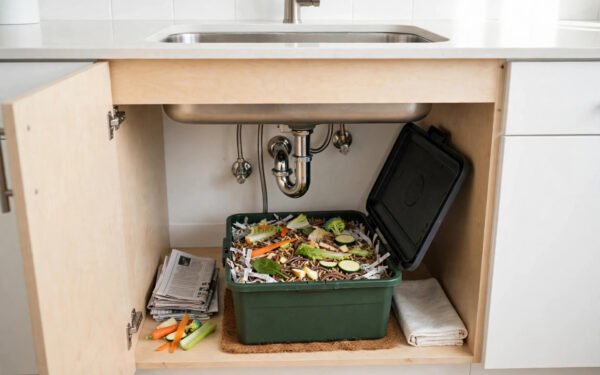
Food carries emissions from growing, shipping, storing, and — when it rots in a landfill — releasing methane. Roughly 30 percent of food in the United States is wasted, so the painless win is not a new diet. It is throwing away less of the diet you already buy. Plan for the week you will actually have, not the ideal week. Keep an “eat first” box at the front of the fridge for leftovers and soft produce. Freeze bread, cooked grains, and extra portions before they turn.
Beef is the heaviest common food by emissions, so one beef-free day a week can trim food emissions by roughly 10 to 15 percent without any other change. Chicken, pork, beans, eggs, and lentils all sit far below beef. You do not need a label for this. Pick one regular dinner — a Monday taco night, a Friday pasta — and make that the lighter one. Families who frame it as a standing house meal, not a sacrifice, tend to keep it.
The Correct Order, Put Simply
Start at the top and work down. Switch the electricity plan first, because it is fast and large. Add the smart thermostat and finish the LED swap next. Put smart strips on the two biggest standby clusters. Set cold wash as your default. Check tire pressure and batch your trips. Then tackle food waste with a simple plan and one lighter dinner a week. To see your own starting point instead of guessing, the EPA’s household carbon footprint guidance and calculator can give you a rough baseline in a short sitting.
Renters can do nearly all of this. The electricity switch, thermostat where your lease allows it, bulbs, power strips, showerhead, cold washing, driving habits, and food habits need no ownership and no major install. Keep any original fixtures you swap out in a labeled box and put them back when you move. The only big items that truly belong to owners are insulation, major appliances, and rooftop solar.
What to Stop Worrying About
Recycle, carry the reusable bag, and skip the straw if you like. Just do not count those acts as your climate plan, and do not let them drain the energy you need for the changes that count. Perfection is also the wrong target. A household that does the big fixes imperfectly will cut far more than a household that agonizes daily and changes nothing structural. If two changes are all you can manage this month, take the electricity switch and the thermostat. Add the rest across the season.
The honest close is encouraging. None of the fixes above ask you to move, sell the car, or rebuild your life around emissions. They ask you to stop worrying in the wrong places and set the right defaults once: cleaner power, a thermostat that thinks, lights that sip, laundry that runs cold, a car kept in shape and driven a touch slower, and food bought to be eaten. Do those, and the footprint falls as a side effect of a better-run house — lower bills included.