Texas weeds don’t mess around. Nutsedge, crabgrass, dallisgrass, and bindweed laugh at half-measures, and the instinct is to reach for the heavy-duty herbicides — glyphosate, 2,4-D, the stuff with warning labels in three languages. But harsh chemicals come with real costs: dead zones in your lawn, contaminated runoff in Texas waterways, risks to kids, pets, and pollinators, and weeds that evolve resistance anyway. The good news: a chemical-free weed strategy isn’t hippie wishful thinking. It’s a system — prevention, manual removal done right, and targeted natural treatments — that actually works in Texas’s brutal growing conditions. Here’s the complete playbook. For more detail on a related topic, see our article on how to use up leftover vegetables before they spoil.
Why Chemicals Often Fail in Texas Anyway
Understanding the enemy explains why the non-chemical approach wins long-term:
- Resistance is real: decades of herbicide use have bred resistant pigweed, ryegrass, and other Texas weeds. Spraying harder stops working; the survivors just get tougher.
- Texas heat degrades herbicides: many products break down faster or volatilize in 100°F+ heat, reducing effectiveness while increasing drift risk to your tomatoes and your neighbor’s roses.
- They kill the wrong things: broadleaf herbicides don’t distinguish between dandelions and your wildflower patch; pre-emergents can stunt desirable seeds too.
- The weed seed bank: every square foot of Texas soil holds thousands of dormant weed seeds. Chemicals kill this year’s weeds; the seed bank just waits. Lasting control means depleting the seed bank, not winning one spray battle.
Strategy 1: Prevention (80% of the Battle)
The best weed is the one that never sprouts:
- Mulch deeply: 3–4 inches of wood mulch in beds blocks light from weed seeds. In Texas heat, mulch also retains soil moisture and cools roots — triple duty. Top up yearly as it decomposes.
- Mow high: set your mower to 3.5–4 inches for St. Augustine and 2.5–3 for Bermuda. Taller grass shades the soil, starving weed seedlings of light. Scalping your lawn (the Texas default) is practically a weed invitation.
- Dense planting: bare soil grows weeds; covered soil doesn’t. In beds, plant groundcovers or space plants so canopies close. Nature abhors a vacuum — fill it before weeds do.
- Landscape fabric (use carefully): works under mulch in ornamental beds, but don’t use it in vegetable gardens (blocks soil biology) and avoid cheap thin fabrics that weeds pierce within a season.
- Clean tools and mulch: weed seeds hitchhike on mower decks and in cheap bulk mulch. Clean equipment between areas; buy reputable mulch.
Strategy 2: Manual Removal Done Right
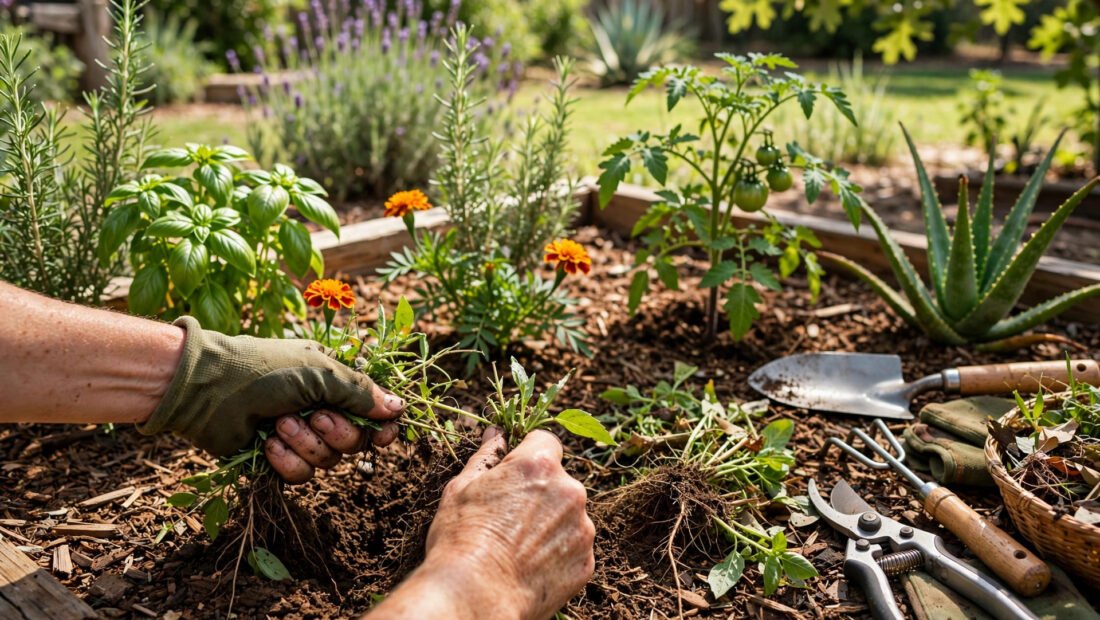
Pulling weeds works — if you do it correctly:
- Pull after rain or watering: Texas clay releases roots willingly when moist and grips like concrete when dry. Time your weeding for the day after rain or irrigation.
- Get the root: dandelions, thistles, and nutsedge regrow from root fragments. Use a stand-up weeder or hori-hori knife to extract the full taproot. For nutsedge (the #1 Texas lawn nemesis), you must remove the tiny nutlets — pulling the tops just stimulates more.
- Never let weeds seed: one pigweed plant produces 100,000+ seeds. Pulling a weed that’s already seeded just distributes the next generation. If it’s gone to seed, bag it — don’t compost it.
- The 10-minute daily habit: pulling 10 weeds daily beats a 3-hour monthly marathon. Weeds pulled young (before establishing roots) come out effortlessly.
- Solarization for bad infestations: cover weedy areas with clear plastic for 4–6 weeks in Texas summer. The soil heats to 140°F+, killing weed seeds, pathogens, and nutsedge nutlets. Brutal, effective, chemical-free.
Strategy 3: Targeted Natural Treatments
For weeds that survive prevention and pulling:
- Boiling water: kills weeds in driveway cracks and paths instantly. Simple, free, brutally effective on hardscape weeds. (Don’t use near desirable plants — it kills indiscriminately.)
- Horticultural vinegar (20–30% acetic acid): burns top growth of young weeds on contact. Much stronger than kitchen vinegar (5%). Caution: it’s still a chemical burn risk to skin and eyes — wear protection. Best on young annual weeds; perennials regrow from roots.
- Corn gluten meal: a natural pre-emergent that inhibits seed germination. Apply in early spring before Texas weeds sprout. It won’t kill existing weeds, but it thins each year’s crop — and it’s also a mild fertilizer.
- Flame weeding: a propane torch passed briefly over weeds bursts their cell walls. Satisfying, fast, and excellent for paths and driveways. Check local burn regulations first — some Texas counties restrict open flame during drought.
- Smothering: cardboard (overlapped, wetted) topped with mulch kills everything underneath in 6–8 weeks — the no-dig bed-prep method that also improves soil.
Texas-Specific Weed Intel
- Nutsedge: the yellow-green fast-growing sedge that outruns your lawn. Pulling spreads the nutlets; solarization, dense turf, and (for severe cases) targeted sedge-specific products are the options. Prevention via healthy dense grass is the real cure.
- Crabgrass: thrives in thin, scalped lawns. Mow high, overseed bare patches in fall, and apply corn gluten in early spring before soil temps hit 55°F.
- Dallisgrass: the clumpy perennial that herbicides barely dent. Dig out entire clumps (roots and all) — it’s the only reliable non-chemical method.
- Henbit and chickweed (winter weeds): pull in fall before they seed; a thick fall overseeding of ryegrass crowds them out.
For broader garden planning that reduces weed pressure from the start, planning your garden for your specific location helps you choose plants and layouts that outcompete weeds naturally.
Conclusion
Stopping weeds without harsh chemicals in Texas is a systems game, not a product swap: prevent with deep mulch and high mowing, remove manually with correct timing and technique, and spot-treat survivors with boiling water, horticultural vinegar, or flame. It requires more consistency than spraying — the 10-minute daily habit beats the quarterly chemical blitz — but it builds soil health, protects pollinators and waterways, and never breeds resistant superweeds. Give it one full growing season. By next spring, your weed pressure will be a fraction of what it was, and you’ll never miss the warning labels. For science-based organic methods, the USDA’s conservation resources offer excellent free guidance. The EPA publishes guidance on reducing pesticide use around homes and gardens.
Frequently Asked Questions
Does vinegar really kill weeds?
Horticultural vinegar (20–30% acetic acid) burns young weed foliage on contact — effective on annual weeds, less so on established perennials that regrow from roots. Kitchen vinegar (5%) is too weak for meaningful control. Wear eye and skin protection; it’s still a caustic substance.
How do I get rid of nutsedge without chemicals?
Nutsedge is the toughest Texas weed to beat chemically-free: pulling spreads its nutlets, so focus on prevention (dense healthy turf), solarization of bad areas in summer, and persistent removal of new shoots before they establish. It takes 1–2 seasons of diligence.
Is corn gluten meal effective as a pre-emergent?
Modestly — studies show 50–60% reduction in weed germination with correct timing (before weeds sprout, typically early spring in Texas). It’s not as potent as synthetic pre-emergents, but it improves with yearly application and doubles as fertilizer.
Will boiling water kill weeds permanently?
On hardscape (driveways, paths): yes, very effectively. In soil/beds: it kills top growth and shallow roots but deep-rooted perennials may regrow. It’s best for cracks and edges, not garden beds near desirable plants.
How long does it take to control weeds without herbicides?
Expect meaningful improvement in one growing season and strong control by year two, as the weed seed bank depletes. The first season requires the most effort; maintenance drops sharply once prevention systems (mulch, dense turf) are established.