Somewhere between the 12-step routines and the “just splash water on your face” minimalists, a deceptively simple technique went viral: massage your cleanser into your skin for a full 60 seconds instead of the usual rushed 10-second scrub. Devotees claim it transformed their skin — fewer blackheads, less congestion, better product absorption. Skeptics call it another TikTok gimmick. So what is the 60-second rule in skincare, does the science support it, and is it worth adding a minute to your routine? The answer is more interesting than either camp admits. For more detail on a related topic, see our article on what colors look best on warm skin tones.
What the 60-Second Rule Actually Is
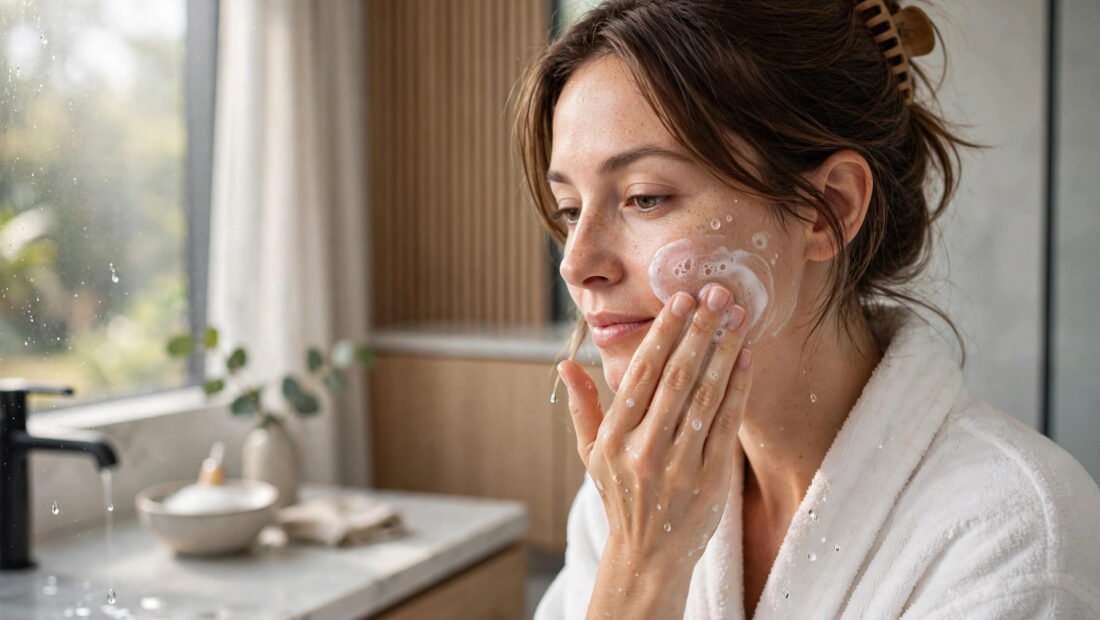
The rule is simple: spend a full 60 seconds massaging your cleanser into your face — using fingertips in gentle circular motions — before rinsing. That’s it. No special product required, no new purchase. The premise has two parts:
- Cleansing chemistry needs contact time. Surfactants (the cleaning agents in your cleanser) work by surrounding oil, sunscreen, and debris so water can rinse them away. That emulsification isn’t instant — 10 seconds barely starts the job, while 60 seconds lets the surfactants fully dissolve the day’s buildup, especially stubborn sunscreen and long-wear makeup.
- Massage has its own benefits. A minute of gentle facial massage boosts microcirculation (that post-cleanse glow is real blood flow), provides mild lymphatic drainage that can reduce morning puffiness, and — practically — forces you to slow down and actually cleanse your whole face instead of speed-scrubbing the T-zone and ignoring the hairline, jaw, and nose crevices where congestion hides.
What Science Says
Let’s be honest about the evidence: there are no large clinical trials on “the 60-second rule” by name. But the underlying principles are well supported:
- Contact time matters in cleansing. Dermatological research on cleanser efficacy consistently shows that longer, gentler cleansing removes more sunscreen residue and particulate matter than brief washing. Makeup artists and dermatologists have recommended “double cleansing” for the same reason — the first pass loosens, time and the second pass remove.
- Massage improves circulation. Studies on facial massage show measurable increases in skin blood flow and modest improvements in skin elasticity with regular practice. The effects are real but subtle — think “healthy glow,” not “facelift.”
- Most people under-cleanse. The average person spends about 10–15 seconds washing their face and misses zones entirely. Simply spending longer with attention to full coverage fixes the most common cleansing failure: incompleteness.
So the rule isn’t magic — it’s a behavioral hack that corrects the two most common cleansing mistakes (too fast, too patchy) while adding genuine massage benefits. Think of it as upgrading the foundation everything else sits on: serums and treatments absorb better into truly clean skin, and you’ll likely find you need fewer corrective products once daily buildup is properly removed. The American Academy of Dermatology’s face-washing guidance emphasizes gentle, thorough cleansing over harsh scrubbing — the 60-second rule is that principle with a timer.
How to Do It Right
- Use lukewarm water — hot water strips the barrier; cold doesn’t dissolve oil-based buildup well. Texas tap water runs warm in summer; let it cool to lukewarm.
- Apply cleanser to dry or damp skin (either works) and start your timer — count slowly, hum a verse of a song, or just estimate; precision doesn’t matter.
- Massage with fingertips in small circles, light pressure. Cover the full face: hairline, temples, nose creases, jawline, chin, neck. Spend extra time where you wear the most sunscreen or makeup.
- Don’t scrub. Pressure doesn’t clean better — contact time does. If your skin is red afterward, you’re pressing too hard.
- Rinse thoroughly — at least 15–20 splashes or a full 15 seconds under gentle running water. Residue left behind causes the irritation people blame on the cleanser.
- Pat dry, moisturize within 60 seconds while skin is slightly damp to lock in hydration.
Who Benefits Most — and Who Should Skip It
- Best for: oily/congested skin, heavy sunscreen or makeup wearers (hello, Texas), blackhead-prone noses and chins, anyone whose cleanser “doesn’t seem to work.”
- Use caution: very sensitive or rosacea-prone skin — a full minute of manipulation can trigger flushing. Try 30 seconds first. Active eczema or broken skin — skip the massage until healed.
- Pairing matters: use a gentle, low-pH cleanser for the 60 seconds, not a harsh foaming or exfoliating one. A full minute with a stripping cleanser is a barrier-damage recipe. The technique amplifies whatever your cleanser does — make sure that’s gentle.
- Morning vs. night: the full 60 seconds matters most at night, when you’re removing sunscreen, pollution, and the day. Morning can be a quicker 20–30 second cleanse.
If sunscreens tend to break you out, thorough evening cleansing becomes even more important — and choosing a non-comedogenic sunscreen means there’s less congestion-causing residue to remove in the first place.
Common Mistakes
- Scrubbing harder instead of longer: the benefit is time, not friction.
- Using an exfoliating cleanser for the full minute: daily acids + 60 seconds + twice daily = over-exfoliation. Keep chemical exfoliants to 2–3 times weekly, separate from this routine.
- Skipping the rinse: a minute of massaging followed by a 3-second rinse leaves surfactant residue that irritates. Rinse like you mean it.
- Expecting miracles: it improves cleansing quality and circulation. It doesn’t replace retinoids, treat hormonal acne, or fade hyperpigmentation. It’s a foundation upgrade, not a treatment.
Conclusion
The 60-second rule isn’t a miracle — it’s a correction. Most people cleanse too fast and too patchily, and giving your cleanser a full minute of gentle contact time fixes both problems while adding real circulation benefits, all for zero dollars. Use a gentle cleanser, light pressure, thorough rinsing, and save the full minute for your evening cleanse. It’s the rare viral skincare trend with actual logic behind it: not a new product to buy, just a better way to use the one you already own. Try it for two weeks — the difference in how clean your skin feels, especially around the nose and hairline, is usually obvious by day three. The FDA’s cosmetics resources explain how cleansers are regulated and what label claims actually mean.
Frequently Asked Questions
Does the 60-second rule work for all skin types?
Mostly yes, with adjustments. Oily and combination skin benefits most. Sensitive or rosacea-prone skin should start with 30 seconds and a very gentle cleanser, watching for flushing or irritation.
Can I do the 60-second rule twice a day?
You can, but the full minute matters most at night when removing sunscreen and buildup. A shorter 20–30 second cleanse is plenty in the morning for most skin types.
Will the 60-second rule clear my blackheads?
It helps prevent new ones by thoroughly dissolving the oil and debris that become blackheads, especially around the nose. Existing stubborn blackheads may also need a BHA (salicylic acid) product 2–3 times weekly.
What kind of cleanser should I use with the 60-second rule?
A gentle, low-pH gel or cream cleanser without harsh sulfates. Avoid using exfoliating or medicated cleansers for the full 60 seconds daily — the extended contact time amplifies their effects and can over-strip the skin.
Is there scientific proof for the 60-second rule?
No clinical trials test “60 seconds” specifically, but the underlying principles — that surfactant contact time improves cleansing efficacy and that facial massage boosts circulation — are supported by dermatological research. It’s an evidence-informed habit, not a proven protocol.