The breakouts finally calmed down — but they left souvenirs. Those dark marks and shallow pits on your cheeks are post-acne marks, and while dermatologist treatments like lasers and microneedling work, they cost $300–$1,500 per session in Texas metros. Here’s what the expensive clinics don’t advertise: for mild to moderate marks, a consistent at-home routine with the right OTC ingredients fades most discoloration significantly within 2–4 months, for under $50 total. The key is knowing which type of mark you have, because each responds to different ingredients.
First: Identify Your Mark Type
- Post-inflammatory hyperpigmentation (PIH): flat dark spots — brown, or reddish-purple — left where pimples healed. Most common, most treatable at home. The pigment sits in the upper skin layers.
- Post-inflammatory erythema (PIE): flat red or pink marks, not brown. This is damaged capillaries, not pigment — it blanches (turns white) when you press it. Lightening ingredients don’t help PIE much; time, niacinamide, and vascular lasers do.
- Atrophic scars: actual texture changes — icepick (narrow deep), boxcar (round with sharp edges), rolling (wavy). Topical products improve these modestly at best; significant texture change needs professional procedures.
Press a mark with clear glass or your finger: if it disappears under pressure, it’s PIE (vascular). If it stays, it’s PIH (pigment). This 5-second test determines your entire strategy.
The OTC Ingredients That Actually Fade PIH
Ranked by evidence:
- Vitamin C (L-ascorbic acid 10–20% or derivatives): inhibits melanin production and brightens overall tone. Use in the morning under sunscreen — it also boosts UV protection. Look for dark/opaque packaging; oxidized (brown) vitamin C is dead.
- Niacinamide (4–10%): reduces pigment transfer to skin cells, calms inflammation, and strengthens the barrier. One of the best-tolerated brighteners — good for sensitive Texas skin dealing with heat and hard water.
- Azelaic acid (10% OTC): prescription-strength is 15–20%, but OTC 10% meaningfully fades PIH while also preventing new breakouts. A two-for-one for acne-prone skin.
- Alpha arbutin (2%): a gentle hydroquinone derivative that inhibits tyrosinase (the pigment-making enzyme) without hydroquinone’s irritation risks.
- Retinoids (adapalene 0.1% OTC): accelerate cell turnover, pushing pigmented cells out faster. The long game — but also prevents the new acne that creates new marks.
- AHA exfoliants (glycolic/lactic acid 5–10%): dissolve the “glue” holding pigmented dead cells. 2–3 times weekly, not daily.
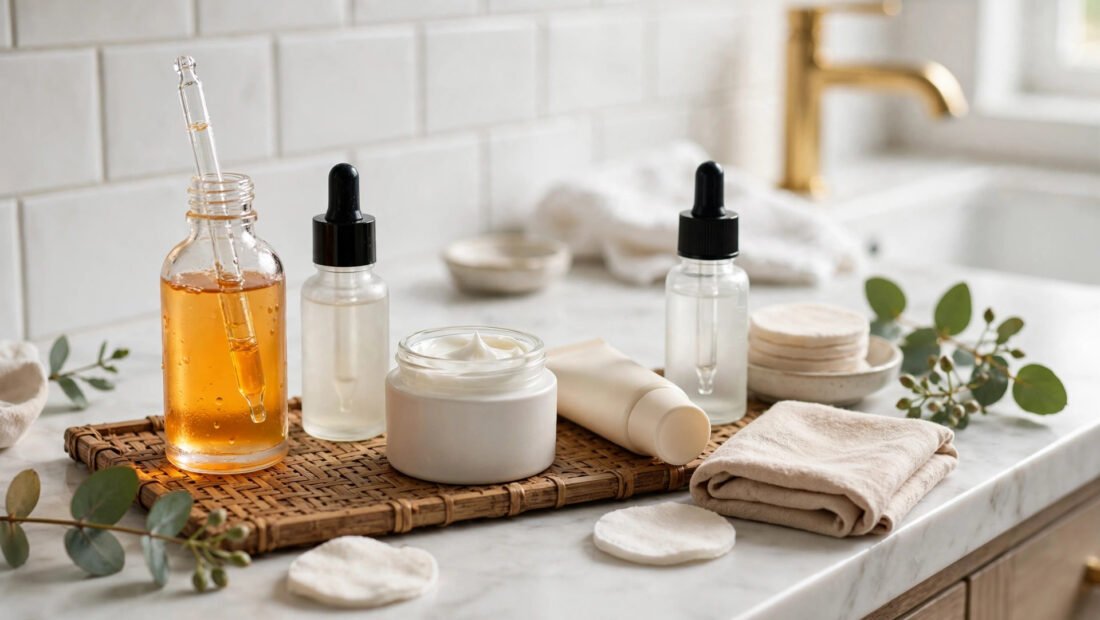
A realistic routine: vitamin C serum in the morning + sunscreen; azelaic acid or alpha arbutin at night, alternating with adapalene. Don’t layer all six at once — pick 2–3 and be consistent. The American Academy of Dermatology confirms these ingredients have the strongest evidence for fading hyperpigmentation.
The Non-Negotiable: Sunscreen
Every brightening ingredient is wasted without daily SPF. UV exposure darkens PIH within hours and can make marks permanent — and in Texas, you’re getting significant UV year-round. Use SPF 30+ broad-spectrum every morning, reapply if you’re outdoors. This single habit does more for fading marks than any serum. If sunscreens break you out, switch to a formula designed for sensitive, acne-prone skin rather than skipping it.
What About PIE (Red Marks)?
Red marks are the frustrating ones — pigment-lighteners barely touch them because the problem is blood vessels, not melanin. What helps:
- Time: PIE fades on its own over 3–12 months as vessels repair. Annoying but true.
- Niacinamide: modestly helpful for redness.
- Azelaic acid: anti-inflammatory properties help somewhat.
- Avoid irritants: harsh scrubs, hot water, and picking prolong PIE dramatically.
- Vascular laser (professional): pulsed-dye laser clears PIE in 1–3 sessions — the one case where professional treatment is genuinely the efficient answer.
Kitchen Remedies: What the Evidence Actually Says
The internet loves DIY scar treatments. Here’s an honest sorting of popular ones:
- Aloe vera: modest evidence for soothing inflammation and supporting healing. Won’t erase marks alone, but a fine supporting player — especially the pure gel, not the green drugstore kind loaded with alcohol and dye.
- Honey (raw/manuka): antibacterial and mildly anti-inflammatory. May help prevent the new breakouts that create new marks, but minimal direct fading effect.
- Lemon juice: skip it. The acidity is uncontrolled, it causes phytophotodermatitis (chemical burns when sun hits treated skin — a real risk in Texas), and it can worsen hyperpigmentation. One of the few DIY options that’s actively harmful.
- Apple cider vinegar: similar story — unbuffered acids at unknown concentrations irritate more than they fade. If you want acid exfoliation, buy a formulated 5–10% AHA product with a measured pH.
- Rosehip oil: contains natural vitamin A and fatty acids; gentle and pleasant, with weak but real evidence for improving scar appearance over months. Reasonable as a moisturizer step, not a primary treatment.
- Silicone sheets/gel: the best-evidenced “simple” option — originally for surgical scars, silicone improves raised scar texture with consistent use. Inexpensive and worth trying on textured marks.
The pattern: gentle, consistent, evidence-backed topicals outperform dramatic kitchen chemistry every time. Your $12 niacinamide serum beats a pantry full of lemon juice.
Realistic Timelines and Budget Options
- Budget routine (~$40): drugstore vitamin C serum + niacinamide moisturizer + sunscreen you already own. This handles mild PIH well.
- Timeline: visible fading at 4–6 weeks, significant improvement at 3–4 months. Pigment took months to form; it takes months to clear.
- When to stop DIY: deep atrophic scarring, marks that darken despite sunscreen and treatment (see a dermatologist — could need prescription hydroquinone), or any spot that changes shape, bleeds, or looks unlike your other marks (get it checked — that’s skin-cancer vigilance, not vanity).
Conclusion
Fading acne scars without expensive treatments is realistic for the most common mark types: identify whether you’re dealing with pigment (PIH), redness (PIE), or texture, then run a simple consistent routine — vitamin C by day, azelaic acid or retinoid by night, sunscreen always. Budget under $50, timeline 2–4 months, and the discipline to not pick new breakouts (every picked pimple is a future mark). Reserve your money for the cases DIY can’t fix: deep textural scarring and stubborn vascular redness, where a dermatologist’s laser earns its fee. For everything else, consistency with the right $15 serum beats a $500 facial every time. Cleveland Clinic dermatologists outline which scar treatments have real evidence behind them, from retinoids to professional procedures.
Frequently Asked Questions
How long do acne dark spots take to fade naturally?
Without treatment, PIH typically fades over 6–12 months (longer for deeper skin tones). With consistent use of brightening ingredients plus strict sunscreen, most people see significant fading in 2–4 months. For more detail on a related topic, see our article on what colors look best on warm skin tones.
Does vitamin C really fade acne scars?
For flat dark marks (PIH), yes — L-ascorbic acid inhibits melanin production and clinical studies show measurable brightening. It won’t fix indented/textural scars, which are structural rather than pigment problems.
What’s the difference between red and brown acne marks?
Brown/dark marks (PIH) are excess melanin and respond to brightening ingredients. Red/pink marks (PIE) are damaged capillaries — press one and it blanches white. PIE needs time and anti-inflammatory care; pigment products don’t help it much.
Can I use retinol and vitamin C together?
Yes, but separate them: vitamin C in the morning (it boosts sunscreen), retinoid at night. Using both at once often causes irritation. Introduce one at a time, two weeks apart.
When should I see a dermatologist for acne scars?
For deep icepick/boxcar scarring (needs microneedling, subcision, or laser), marks that darken despite treatment, or any unusual spot. Also if active acne keeps creating new marks — stopping new breakouts is step zero of scar treatment.