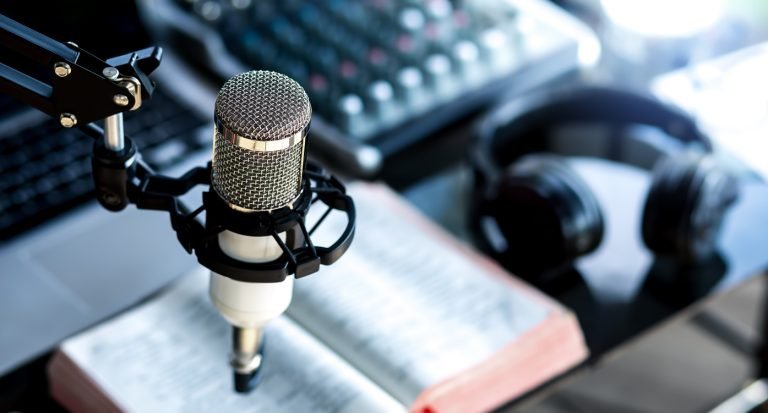
The podcast equipment industry wants you to believe you need a $300 microphone, a mixer, acoustic panels, and a degree in audio engineering. It’s nonsense — profitable nonsense, but nonsense. Some of the most successful podcasts in history started with a phone in a closet, and the barrier to sounding good is technique, not gear.
Starting a podcast with no expensive equipment is entirely about working with what you have: the surprisingly decent microphone in your pocket, free software that professionals use, and acoustic tricks that cost nothing. Here’s the complete $0-to-$50 setup, the recording techniques that matter more than gear, and how to publish.
The $0 Setup: How to Start a Podcast With No Expensive Equipment
Your phone is the microphone. Modern smartphone mics are genuinely good — the iPhone and Pixel mics that record your voice memos are the same hardware class as budget USB microphones from five years ago. Record in a quiet, small, soft-furnished room (the closet trick is real: clothes absorb echo beautifully), hold the phone 6 inches from your mouth slightly off-axis (not directly in front — that causes harsh plosives), and you’ve got audio better than half the podcasts on the charts.
For software: Audacity (free, open-source, does everything — recording, editing, noise reduction, exporting) on desktop, or Anchor/Spotify for Podcasters’ built-in tools on phone. For remote co-hosts: Riverside.fm and Zencastr have free tiers that record each person locally (huge quality advantage over Zoom audio), or just have everyone record a phone voice memo simultaneously and sync in editing. Distribution is free too — Spotify for Podcasters, among others, hosts and distributes to all platforms at no cost. Total equipment spend: $0. Total software spend: $0.
The Techniques That Matter More Than Gear
Room acoustics beat microphone price every time. Record in the smallest, softest room available — closets, cars (parked, engine off — genuinely excellent studios), rooms with curtains, rugs, and bookshelves. Hard, empty rooms create the echoey ‘bathroom sound’ that screams amateur; soft rooms sound professional regardless of mic. Turn off everything that hums or whirs: AC, refrigerators (temporarily), computer fans if possible. Record 10 seconds of ‘room tone’ (silence) before speaking — it gives you noise-print material for cleanup.
Mic technique: consistent distance (use a fist-width as your gauge), speak across the mic rather than into it, and control plosives (p, b sounds) with that off-axis angle. In editing, the free wins are enormous: noise reduction (Audacity’s is excellent), a high-pass filter to remove rumble, light compression to even out volume, and cutting the ums and dead air ruthlessly. An hour of raw recording becomes 40 tight minutes — editing is where podcasts are actually made, and it’s free.
Reference: Spotify for Podcasters.
Reference: Audacity free audio editor.
$0 Podcast Launch Checklist
From idea to published:
- Record on your phone: 6 inches away, slightly off-axis, in a closet or soft room.
- Kill background noise: AC off, fridge temporarily off, 10 seconds of room tone first.
- Edit in Audacity (free): noise reduction, high-pass filter, compression, ruthless cuts.
- Remote guests: free-tier Riverside/Zencastr, or simultaneous phone voice memos.
- Cover art: free Canva template, 3000x3000px. Good enough is good enough.
- Host free on Spotify for Podcasters — distributes to Apple, Spotify, everywhere.
- Write a real description with keywords — it’s how new listeners find you.
- Publish 3 episodes at launch (bingeability), then commit to a schedule you can sustain.
When (and Whether) to Upgrade
The honest upgrade path, when you’re ready: first, a $60–$100 USB microphone (the single biggest quality jump — everything after this is diminishing returns), then a $20 pop filter and a $15 mic arm (comfort and consistency), then — only then — consider acoustic treatment or an interface. Most podcasters never need more than the USB mic. The gear forums will try to sell you a $400 signal chain; your listeners cannot hear the difference between a $80 mic and a $400 mic in a well-treated room, but they absolutely hear the difference between a closet and a kitchen.
And the real secret: content beats audio quality, within reason. Listeners forgive imperfect audio for compelling content; they abandon perfect audio that’s boring in minutes. Spend 90% of your energy on the show — the concept, the preparation, the editing, the consistency — and 10% on gear. Launch with the phone, upgrade when the audience (not the forum) demands it. The best microphone is the one that gets you publishing this week instead of shopping next month.
Quick Answers to Common Questions
How good can phone audio really be?
Genuinely good — modern smartphone mics are the same hardware class as budget USB mics from five years ago, and countless successful podcasts started exactly this way. The phone isn’t the limitation; the room is. A phone in a closet (clothes absorb echo) outperforms a $300 mic in an empty kitchen. Technique and acoustics beat gear every time at this level.
What’s the first upgrade I should buy?
A $60–$100 USB microphone — the single biggest quality jump in podcasting, and everything after it is diminishing returns. Then a $20 pop filter and $15 mic arm for comfort. Stop there until you have an audience; the forums will try to sell you a $400 signal chain your listeners literally cannot distinguish from the $80 mic in a treated room.
How do podcasts make money?
The realistic paths: sponsorships/ad reads (needs audience scale, usually 5,000+ downloads per episode), listener support (Patreon, paid subscriptions — viable at smaller sizes with loyal fans), and indirect value (authority, business leads, creative fulfillment). Most podcasts never profit directly, and that’s fine — start for the love of it, and let monetization be a pleasant surprise, not the plan.
More from Daily USA Post
- what are fun party games for a group of ten adults, explained in detail
- Also see: what are the best apps for finding live events nearby
- Our complete guide: how can I find a local theater group to join
To start a podcast with no expensive equipment, record on your phone in a closet (6 inches, off-axis), edit free in Audacity, host free on Spotify for Podcasters, and publish — total cost $0. Room acoustics and editing technique matter more than any gear. Upgrade to a $60–$100 USB mic only when you’re committed; until then, the phone in the closet outperforms most ‘starter kits.’ The barrier was never equipment. It was pressing record.