
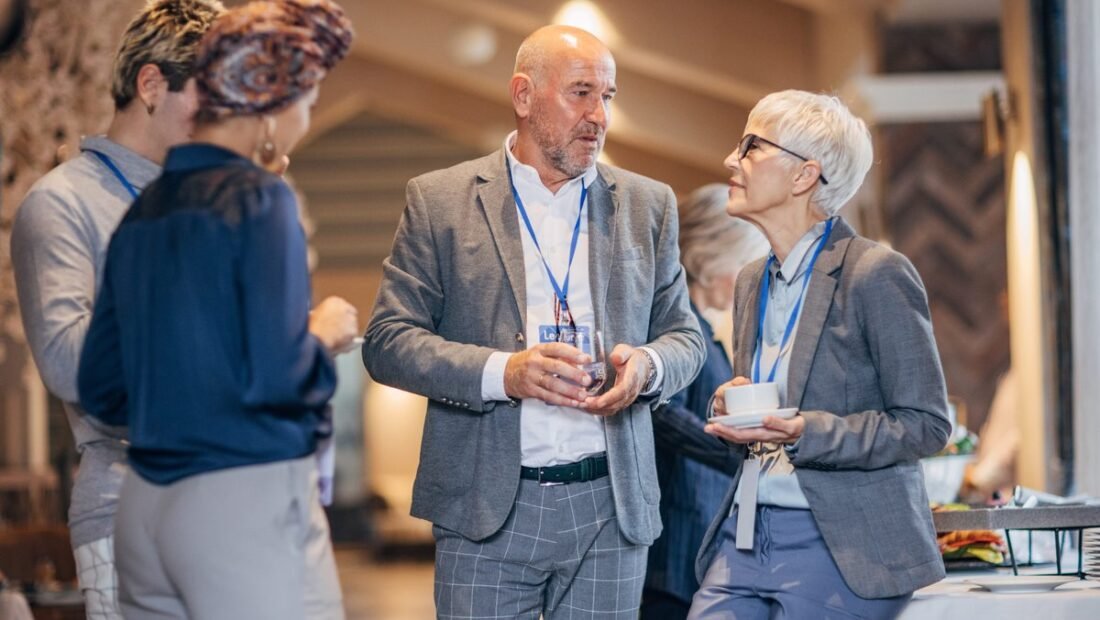
I used to dread networking events with a physical ache — standing alone with a drink, rehearsing ‘so, what do you do?’ and hating myself for it. Then a mentor told me the secret: nobody enjoys small talk, but everyone enjoys being interesting. Your job isn’t to be fascinating; it’s to make them feel fascinating.
Good conversation starters at a networking event do three things: they’re easy to answer, they invite stories (not one-word replies), and they give you something real to follow up on. ‘What do you do?’ fails all three — it’s boring, it gets a job title, and then what?
Here are 30 openers that actually work, plus the follow-up and exit strategies nobody teaches.
Openers That Beat ‘What Do You Do?’
The best openers are situational and specific. ‘What brought you to this event?’ beats ‘what do you do’ because it invites a story. ‘What’s been the most interesting part of your day so far?’ is disarming and memorable. ‘Have you been to one of these before?’ creates instant camaraderie with fellow attendees.
Compliments work if they’re specific and professional: ‘I caught the end of your question in the panel — that was sharp’ or ‘I love that you came straight from a client site, that’s commitment.’ Specific compliments signal you were paying attention, which is rarer than it should be. Avoid appearance compliments in professional settings — keep it to work, ideas, or choices.
The ‘ask for insight’ opener is secretly the most powerful: ‘I’m trying to understand how [their industry] is handling [trend] — what’s your take?’ People love sharing expertise, and you learn something. It positions you as curious rather than transactional, which is exactly how you want to be remembered. This same curiosity-first approach works when making friends as an adult too.
Follow-Ups That Keep It Going (and Exits That Don’t Burn Bridges)
The conversation after the opener is where networking actually happens. Use the ‘thread and needle’ technique: pick one interesting thread from what they said and ask a deeper question about it. ‘You mentioned expanding to Austin — what drove that decision?’ beats nodding and changing the subject. Listen for the thing they light up about and steer there.
Share briefly, then return the focus: a 30-second relevant story of your own builds reciprocity, but the ratio should be 70/30 them-to-you. Take mental notes of specifics — their kid’s soccer, the product launch, the conference — because your follow-up email referencing them is what converts a chat into a connection.
Exiting gracefully is a skill: ‘I’ve really enjoyed this — I want to make sure I meet a few more people, but can I connect with you on LinkedIn?’ is honest and flattering. Or the introduction exit: bring them to someone else (‘You two should meet — you’re both in fintech’) and you’ve done them a favor on your way out. Never just fade mid-sentence; the last impression lingers.
The Mindset Shift That Fixes Networking
Reframe the goal: you’re not collecting contacts, you’re having five interesting conversations. That reframe kills the desperation that makes networking feel gross. Aim to learn one surprising thing per conversation and to make one useful introduction for someone else. Givers are remembered; takers are tolerated.
Prepare three things before you go: your one-line introduction (who you help + how, not your job title), two current topics in your industry you can discuss, and one genuine question you’re curious about. Preparation eliminates 80 percent of networking anxiety — you’re not winging it, you’re executing.
Follow up within 48 hours: a short, specific message referencing your conversation. ‘Great meeting you — good luck with the Austin expansion. Here’s that article I mentioned.’ Most people never follow up, so doing it puts you in the top 10 percent instantly. The event is the introduction; the follow-up is the networking.
Conversation Starters at a Networking Event: The Introvert’s Playbook
If you’re introverted, stop trying to ‘work the room’ — it’s the wrong game for you. The introvert’s networking strategy is depth over breadth: have three genuinely good conversations instead of fifteen superficial ones. Arrive early (small groups are easier than the full roar), volunteer if possible (having a role eliminates the standing-around problem), and give yourself permission to leave after an hour. Three real connections from one focused hour beats fifty business cards you’ll never email. Quality networking is actually an introvert’s natural strength — deep listening, thoughtful questions, real curiosity.
The Harvard Business Review’s networking research backs this up: the most valuable professional networks are built on genuine curiosity and generosity, not schmoozing volume. Their researchers found that people who approach networking as learning — ‘what can I discover?’ rather than ‘what can I get?’ — build stronger networks and enjoy the process more. So reframe the event as field research: you’re there to learn three interesting things and help one person. That’s it. The same curiosity-first mindset works for making friends as an adult — the contexts differ, the human mechanics don’t.
30 Networking Conversation Starters
- What brought you to this event?
- What’s been the most interesting part of your day?
- Have you been to one of these before?
- What are you working on that’s exciting right now?
- How did you get into [their field]?
- What’s the biggest change you’ve seen in [industry] lately?
- What’s keeping you busiest these days?
- Are you working on anything fun outside of work?
- What did you think of the speaker/panel?
- Have you tried [nearby restaurant] yet?
- What’s one thing you’re looking forward to this quarter?
- How’s your team handling [current trend]?
- What advice would you give someone new to [industry]?
- What’s the most interesting project you’ve seen lately?
- Are you based here or visiting for the event?
- What connections are you hoping to make tonight?
- What’s something you’re learning right now?
- How do you usually spend your time at these events?
- I noticed [specific detail] — tell me about that
- What’s been your biggest win this year?
- What challenge is top of mind for you?
- If you weren’t in [field], what would you do?
- What’s a trend you think is overhyped?
- What’s a trend you think is underrated?
- Who’s the most interesting person you’ve met tonight?
- What are you reading/listening to lately?
- What’s your take on [recent industry news]?
- How did you and [mutual connection] meet?
- What would make tonight a win for you?
- What’s next for you after this event?
Be Interested, Not Interesting
The people everyone wants to talk to at networking events aren’t the most impressive — they’re the most interested. Ask good questions, listen like you mean it, remember details, follow up. That’s the entire game, and most people never play it.
Start with one event and a goal of three real conversations. You’ll be bad at first — everyone is. By event five, you’ll have a system, a few genuine connections, and maybe even start enjoying it.
Networking isn’t schmoozing. It’s just making friends with a professional context. And you’re already good at being curious — now point it at strangers.



