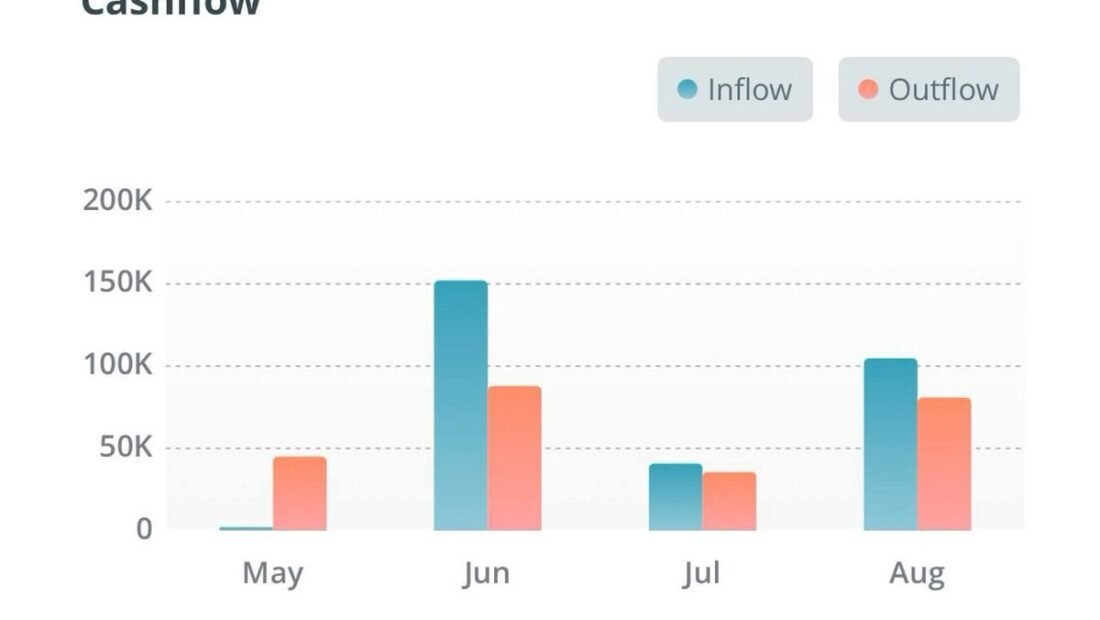
Every seasonal business lives the same strange year: months when money pours in faster than it can be counted, and months when the phone barely rings and the rent is due anyway. The difference between the seasonal businesses that survive decades and the ones that die in their second winter is rarely the product — it is a handful of cash-flow mistakes, repeated in the same order, by owners who feel rich in July and desperate in January. Here are the six that matter, and the system that replaces them.
Mistake one: judging your income by the peak month
The foundational error is emotional arithmetic: a $40,000 month in season feels like a $480,000-a-year business. It is not. It is a business whose annual revenue happens to arrive in lumps, and every decision made from the peak number — the hire, the lease, the new vehicle — is a commitment sized for a company that exists four months a year. The fix is a single reframing: divide last year’s total revenue by twelve and treat that as your monthly income for every planning decision. The peak months are not your salary months; they are your funding months for the whole year, including the quiet ones.
One seasonal year, mapped in numbers
The mistakes are easier to see on a single example year. Picture a landscaping business earning $240,000: roughly $35,000 a month across a seven-month season, and about $5,000 a month of light work through the five winter months. Its fixed costs — rent on the yard, insurance, two core salaries, truck payments, phones and software — run $11,000 every month, season or not. The winter math is therefore brutal: five months of $11,000 going out against $5,000 coming in means the business must carry roughly $30,000 of winter shortfall, plus a margin for the unexpected, before the season ends. In season, the same business clears $35,000 against $11,000 of fixed costs and perhaps $12,000 of seasonal labor and materials — leaving about $12,000 a month of true surplus, or $84,000 across the season, from which the $30,000-plus reserve, taxes, and the owner’s own pay all come. Seen on one page, the year is perfectly manageable. Seen month by month the way most owners see it, July feels like wealth and February feels like failure — and both feelings produce bad decisions. The map is the antidote.
Mistake two: having no off-season reserve target
“Save something in the good months” fails because it has no number. The number is knowable: add up your fixed costs for the full off-season — rent, insurance, core payroll, loan payments, the minimum to keep the lights on — and that sum is your reserve target, to be sitting in a separate account before the season ends. Separate is load-bearing. Money in the operating account gets spent by a thousand reasonable-looking decisions; money in the reserve account, touched only by a written rule, survives to January. Owners who hit the target sleep through the quiet months; owners who “meant to” spend them borrowing. Fund the reserve on a schedule, not from leftovers: a fixed percentage of every in-season deposit, transferred the day the money lands — fifteen to twenty-five percent is the typical range until the target is met — because a reserve built from “whatever is left” is built from nothing, in a season when spending expands to meet the balance like water filling a tank.
Mistake three: letting peak-season terms stay loose
In the rush, seasonal businesses invoice late, accept net-30 from everyone, and skip deposits — then enter the off-season owed money they cannot chase with any leverage. Tighten terms exactly when you are busiest, because that is when customers will accept them: deposits up front (30 to 50 percent is standard in seasonal services), milestone payments on long jobs, and invoices issued the day work completes, not the week after. Peak-season receivables collected on time are off-season survival that never has to come out of savings. The mechanics of getting clients to treat those invoices as urgent live in how to write an invoice that gets paid on time — seasonal businesses need that discipline more than anyone.
Mistake four: carrying year-round fixed costs on seasonal revenue
Every fixed cost signed in the flush months is a January bill. Seasonal operators who thrive audit their cost base with one question — does this need to be twelve-month money? — and convert what they can: seasonal staffing instead of year-round headcount for peak work, equipment rented for the season instead of financed across the year, subscriptions and services shifted to annual plans paid from peak cash rather than monthly drips in the lean months. The goal is a cost base shaped like your revenue: big when the money is big, small when it is not. A mismatch in either direction is survivable; a fat fixed base against a thin winter is the classic killer.
Mistake five: borrowing in the panic instead of arranging credit in the calm
The most expensive money in America is money borrowed by a business that needs it this week. A line of credit arranged during your strong season — when your statements look their best and the bank is happy to say yes — costs little or nothing while unused and waits, priced reasonably, for the month you actually need it. The same credit requested in the trough, from a position of visible need, arrives slower, smaller, dearer, or not at all. The SBA’s guidance on managing business finances makes the underlying point plainly: cash flow problems are usually timing problems, and timing problems are solved before they happen. Arrange the umbrella in the sunshine.
Mistake six: treating the off-season as dead time
The final mistake is strategic: writing off the quiet months entirely, when they are the only months with spare capacity in them. Off-season is when the maintenance, the marketing build-out, the staff training, the product development and next season’s early-bird sales happen — including selling next season early at a discount for cash now, which converts your customers into your cheapest lenders. Some seasonal businesses go further and build a counter-seasonal second line — the landscaper’s snow contracts, the beach town café’s holiday catering — but even without one, a deliberate off-season plan beats a dormant one. The businesses that compound are the ones whose quiet months are visibly busy building the next loud ones.
The trap inside the trap: taxes and your own pay run on a calendar, not a season
Two outflows ignore your season completely, and both ambush owners who plan only around customers. Estimated taxes are due quarterly on the IRS’s schedule — including the January payment, sized from your profitable season, landing in your poorest month; the reserve target in mistake two must silently include it, or January contains a five-figure surprise. And then there is your own salary. The seasonal owner’s classic self-inflicted wound is feast-and-famine personal pay: drawn heavily in summer, skipped in winter, chaotic for both the business’s books and the household’s. The survivors pay themselves the same averaged amount every month of the year — the business effectively employs them on the annual figure, smoothed — and let the reserve absorb the difference. It feels artificial in July and feels like sanity in February, which is exactly the point of every system in this article.
The tool that runs the system: a rolling forecast
All six fixes run on one humble instrument: a thirteen-week cash-flow forecast — next quarter, week by week, expected money in against expected money out, updated weekly. A spreadsheet is enough. Its power is that it converts “January will be tight” into “the account dips below the safety line in the second week of January unless the Henderson deposit lands,” which is a problem that can be acted on in October — terms tightened, an early-bird offer launched, a discretionary purchase deferred. Build it at the start of the season, when you least feel the need, and maintain it in fifteen minutes a week. Seasonal owners who run one describe the same effect: the off-season stops being a surprise that happens to them and becomes a schedule they are executing.
The system the survivors run
Plan on the twelve-month average, not the peak. Hold a named reserve — your full off-season fixed costs — in a separate account before the season closes. Tighten terms and collect hard while you are busy. Shape fixed costs to the season. Arrange credit while you look creditworthy. And run the off-season as a building season, not a waiting room. None of it requires more revenue. It requires treating the year’s money as one connected river instead of a flood followed by a drought — because for a seasonal business, cash-flow management is not a finance task. It is the business. Start this week with an honest map of last year’s real year, and let this season be the very first one funded deliberately and fully on purpose.