
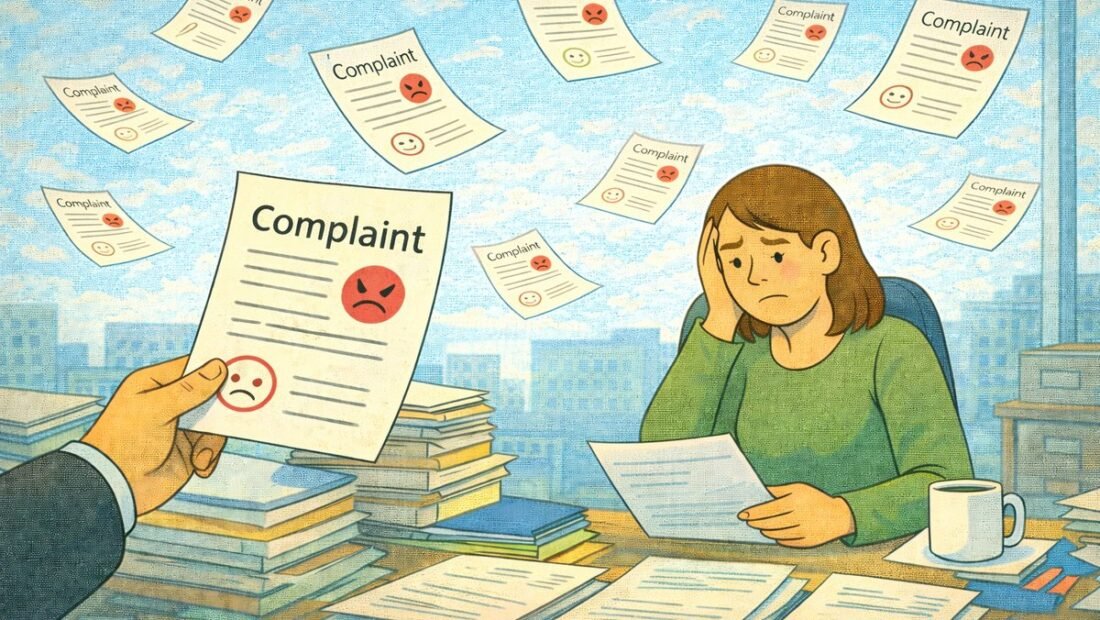
There’s an art to the complaint letter that gets results: firm but polite, specific about what happened, clear about what you want. Most angry drafts fail at all three — they’re either too furious to be taken seriously or too vague to act on. AI is surprisingly good at this exact translation: rage in, effective letter out.
Most guides give you the textbook version. I’d rather give you the version that survives contact with a busy schedule and a limited budget.
Ai help me write a complaint letter in the Real World
My airline lost my bag for six days and my first draft of the complaint was… let’s say emotionally honest. I had AI rewrite it keeping every fact but dropping the fury, adding a clear timeline, and ending with a specific ask: reimbursement for the essentials I’d bought, with receipts attached. The airline responded in four days with a check covering everything. The facts won the case; the tone just let them be heard.
One thing the hype cycle obscures: AI’s strengths and weaknesses are lopsided in useful ways. It’s phenomenal at drafting, summarizing, brainstorming, and pattern-matching across huge amounts of information. It’s unreliable at facts, judgment calls, and anything requiring real accountability. Map your use to the strengths, keep humans on the weaknesses, and you’ll get 90% of the benefit with 10% of the drama.
One more consideration: stay current, but on your own schedule. You don’t need to chase every new model release. A quarterly check-in on what’s new — what got better, what got cheaper — keeps you informed without the hype exhaustion.
For authoritative background on this topic, see the FTC complaint assistant.
Common Mistakes to Avoid
If you only remember one section of this article, make it this one. Avoiding these mistakes puts you ahead of most people trying the same thing.
- Sending the first furious draft — anger feels good and works badly
- Being vague about what you want (‘do better’ isn’t actionable)
- Forgetting the paper trail: dates, names, reference numbers, receipts
Your Action Plan
Time for the practical part. These steps are ordered so each one makes the next easier.
- Write your angry version first to get it out, then have AI make it firm and professional.
- Include a clear timeline of events with dates and reference numbers.
- State exactly what resolution you want: refund, repair, replacement, credit.
- Mention you’ll escalate (regulator, review, attorney general) only if you mean it — empty threats backfire.
Why This Matters More Than You Think
Think of AI help me write a complaint letter as literacy, not expertise. You don’t need to understand how the engine works to drive the car — but you do need to know the rules of the road. Basic AI literacy is becoming as fundamental as basic computer literacy was twenty years ago. The good news: the basics are learnable in weeks, not years.
What the Research and Real Experience Say
One finding worth knowing: people consistently overestimate what AI can’t do and underestimate what it gets subtly wrong. We’re good at noticing the dramatic failures and bad at catching the plausible-sounding errors — which is exactly why verification matters more than most users realize. The research is clear that human oversight remains the critical ingredient, not a temporary precaution.
Your First 30 Days
Your 30-day milestone for AI help me write a complaint letter should be a personal playbook: the prompts that work, the workflows that save time, the pitfalls you’ve learned to avoid. Write it down as you go. A month from now, that playbook will be more valuable than any tutorial, because it’s tuned to your actual life and work.
What Success Looks Like
What does success with AI help me write a complaint letter look like? Not becoming an AI expert — becoming someone who uses AI well as a matter of habit. You reach for it for the right tasks, verify the important stuff without thinking twice, and protect your data by default. It’s not dramatic. It’s just a quieter, faster, more capable version of your normal workflow. That’s the real AI transformation: mundane, personal, and compounding.
Quick Answers to Common Questions
What’s the single most important thing to get right?
Consistency beats perfection. Showing up regularly at 70% effort outperforms occasional 100% efforts by a wide margin. Build the habit first; optimize later.
How do I know if it’s working?
Pick one or two simple metrics and check them monthly — not daily. Daily noise will drive you crazy; monthly trends tell the truth. Write down your starting point so you have something honest to compare against.
Should I get professional help?
If you’re stuck after an honest 60-90 days of effort, yes. A professional spots in one session what might take you six months to figure out. It’s not admitting defeat — it’s buying speed.
Keep notes on what you try and what happens. Future you will be grateful, and patterns emerge from written records that you’d never spot from memory alone.
A final nudge: bookmark this page or save the action plan somewhere handy. Not because you’ll memorize it, but because future you — the one facing the actual decision — will appreciate having the checklist within reach.
Keep learning: How Recruiters Really Feel About AI-Written Cover Letters, Can AI Plan Your Garden Based on Your Location?, and Can AI Make Your Workout Plan More Effective?.
The Bottom Line
The most effective complaint letters are calm, specific, and clear about the ask. AI gets you there from furious in about two minutes — then let the facts do the fighting. For further reading, the Consumer Financial Protection Bureau complaints is a solid next stop.
When in doubt, choose the reversible option first. You can always get fancier later, but you can’t un-spend the money or un-burn the time.
Celebrate the unglamorous middle. The beginning is exciting and the end is satisfying, but the middle — where most people quit — is where the actual results live.
Ask yourself what ‘good enough’ looks like before you start. Without a finish line, everything expands to fill all available time and budget.



