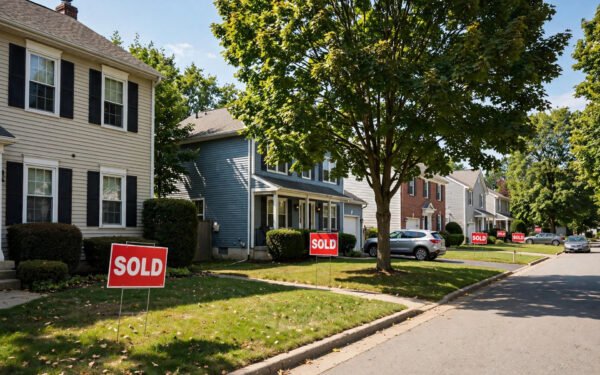
“Should I buy now or wait?” — the question every prospective Texas homebuyer asks, usually hoping for a clear answer the market refuses to give. Timing the housing market feels like timing the stock market: everyone wants to buy at the bottom, nobody rings a bell when it arrives, and waiting has costs nobody calculates. Here is an honest framework for deciding in 2026’s Texas market — not a prediction, but a decision tool.
Why Market-Timing Usually Fails
The uncomfortable truth: even professionals cannot consistently time housing markets. Prices are driven by mortgage rates, inventory, employment, migration, and investor activity interacting in ways no model predicts reliably. The buyers who “waited for the crash” in 2021 watched Texas prices surge 20%+ while they rented. Meanwhile, buyers who purchased at 2022’s rate peak and refinanced later did fine. The data pattern is consistent: time in the market beats timing the market for primary residences, because you are buying a home to live in for years — short-term price wiggles matter far less than the accumulated equity, forced savings, and rent avoided over a decade. If your time horizon is 7–10+ years, timing precision is nearly irrelevant.
The Real Cost of Waiting (Do This Math)
Waiting is not free — calculate it: rent paid while waiting (a year of $1,800/month rent is $21,600 gone forever); price appreciation risk (if Texas prices rise even 3–4% annually, a $350,000 home costs $10,500–$14,000 more next year); rate risk cuts both ways (waiting for lower rates while prices rise can leave you worse off — and you can refinance a rate but cannot rebuy a price); equity not built (early mortgage years build slowly, but they build); and tax benefits deferred (mortgage interest and property-tax deductions — consult a CPA on your situation; our overview of home-related tax deductions covers the landscape). The honest comparison is not “buy now vs. buy later at lower prices” — it is “buy now vs. rent-and-buy-later with full uncertainty on both sides.”
When Buying Now Makes Sense
You plan to stay 5–7+ years: transaction costs (closing, selling commissions) need years to amortize — but beyond that horizon, ownership usually wins. Your rent rivals a mortgage payment: in many Texas markets, monthly ownership costs approximate rents — every such month is equity you are gifting your landlord. You found the right home at a workable price: the perfect house at a fair price beats a theoretical better deal someday. Your finances are ready: stable income, emergency fund intact, down payment plus reserves, DTI comfortable — readiness matters more than market conditions. Life demands it: growing family, job relocation, or simply the stability ownership provides — life timing often matters more than market timing. And remember: you can refinance the rate, not the price — buying at today’s rates with a future refinance option is a legitimate strategy if prices are reasonable.
When Waiting Is Smarter
Your finances are not ready: thin emergency fund, unstable income, DTI stretched — buying amplifies financial fragility. Fix the foundation first. You will move within 3 years: transaction costs will likely exceed any equity built — rent and revisit. Your local market shows clear overheating signals: price-to-rent ratios far above historical norms, investor frenzy, bidding wars on every listing — patience has value when markets are euphoric (though “clear signals” are rarer than they feel). Major life uncertainty: potential job change, relationship changes, or health issues — flexibility has real option value. You would buy the wrong home from urgency: settling for a poor-fit house because “we must buy now” is worse than waiting — the wrong house costs far more than the right timing saves.
Reading the 2026 Texas Market (Framework, Not Forecast)
Evaluate your specific metro on: inventory trends (months of supply — under 3 months favors sellers, over 5 favors buyers; Texas metros vary widely); price-to-rent ratios (compare annual rent to purchase price — ratios above ~20 increasingly favor renting); new-construction pipeline (Texas builds aggressively — heavy new supply in your submarket pressures existing-home prices); mortgage-rate direction (rates affect affordability monthly-payment-first — model payments at multiple rates); local employment (your metro’s job engine underpins demand); and migration flows (Texas’s inbound migration supports demand structurally). Your agent should provide this data hyper-locally — metro averages hide neighborhood realities. For understanding how listings and search dynamics work today, our piece on AI’s impact on home searches is useful context.
The Decision Framework: Answer These Five
1. Will I stay 5+ years? (No → rent.) 2. Are my finances solid independent of market conditions? (No → wait and strengthen.) 3. Does owning cost roughly what renting costs monthly? (Yes → strong buy signal.) 4. Am I buying a home to live in, or timing an investment? (Primary residences should be decided on life fit + affordability, not speculation.) 5. If prices dropped 10% next year, would I regret buying — or if they rose 10%, would I regret waiting? (Regret-minimization clarifies risk tolerance.) If answers point to buying, buy the right home at a price your budget handles comfortably — and stop watching the market daily afterward.
The Rent-vs.-Buy Calculator Approach
Move beyond gut feel with structured comparison. A proper rent-vs.-buy analysis includes: on the buy side — mortgage payment (principal, interest, taxes, insurance), HOA dues, maintenance reserve (1–2% of value yearly), minus principal paydown (forced savings), minus tax benefits, plus expected appreciation; on the rent side — monthly rent plus renter’s insurance, plus the investment return on the down payment had you invested it instead (the honest opportunity cost most analyses skip). Quality calculators — the National Association of Realtors and the CFPB both offer respected versions — let you adjust appreciation, rent-growth, and investment-return assumptions to see breakeven horizons. The insight most buyers miss: the breakeven horizon is the decision. If the calculator shows buying wins after 4 years and you will stay 10, the market-timing question dissolves — buy when ready. If breakeven is 9 years and you might relocate in 5, waiting (or renting strategically) is the rational call regardless of what prices do next year. Run the numbers with conservative assumptions (3% appreciation, 6% investment returns, realistic Texas taxes and insurance) — optimistic inputs produce optimistic conclusions, and this decision deserves honesty, not hope.
Conclusion
The buy-now-or-wait question has no universal answer, but it has a personal one: if you will stay put for years, your finances are solid, monthly costs pencil out against rent, and you have found a home fitting your life — buy, and let time do the work. If finances are shaky, your horizon is short, or you would be settling — wait, strengthen, and revisit. Markets reward patience selectively and punish it randomly; personal readiness is the variable you actually control. Optimize that, and the timing takes care of itself.
Frequently Asked Questions
Is 2026 a good year to buy a house in Texas?
It depends on your metro, finances, and time horizon — not the calendar year. Evaluate local inventory, price-to-rent ratios, and your personal readiness (5+ year horizon, solid finances) rather than seeking a universal market verdict.
Will Texas home prices drop?
No one can reliably predict this. Texas markets vary enormously by metro and neighborhood; heavy new construction in some areas pressures prices while strong migration supports others. Base decisions on your readiness and local data, not forecasts.
Should I wait for mortgage rates to drop before buying?
Not necessarily — you can refinance a rate later but cannot rebuy a price, and waiting risks further price appreciation. If the payment works at current rates and you plan to stay long-term, buying now with a future refinance option is legitimate.
How long should I plan to stay to make buying worthwhile?
Generally 5–7+ years for transaction costs to amortize and equity to build meaningfully. Shorter horizons favor renting unless you get an exceptional deal or expect significant appreciation.