Can $50 buy real Bitcoin, or only a picture of some? The short answer is genuinely real, down to the satoshi. Bitcoin was built to divide into tiny pieces, so $50 buys a true slice of the asset, with the same percentage gains and losses as any other holding. The longer answer is about fees, custody, and what that $50 is actually for, because those three things decide whether a small buy is smart or wasteful.
How much Bitcoin does $50 actually buy?
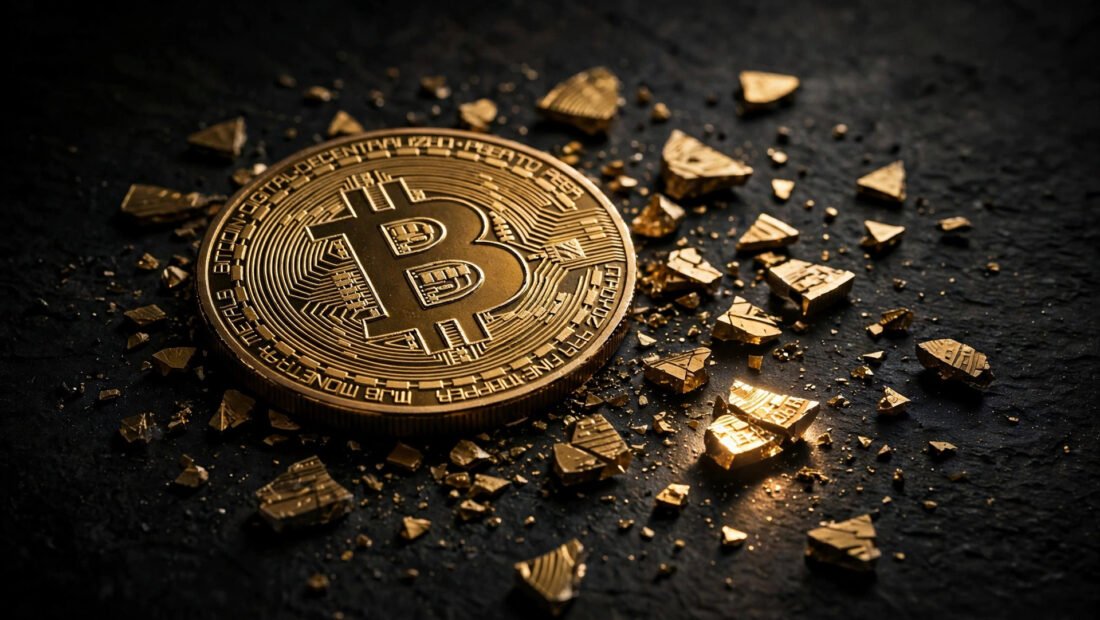
One Bitcoin divides into 100 million satoshis. A satoshi is the smallest unit, worth 0.00000001 BTC. You never need to buy a whole coin, and no platform expects you to. At a hypothetical price of $100,000 per Bitcoin, $50 buys 0.0005 BTC, which is 50,000 satoshis. The exact amount changes with the market price on the day you buy, but the principle never changes: you type in a dollar amount, and the platform converts it into the matching fraction.
Every major exchange and app supports fractional purchases as the normal way to buy. The screens are built around dollars, not whole coins. Enter $50, confirm, and the balance appears as a decimal amount of Bitcoin in your account. If the divisibility itself is new to you, Bitcoin.org’s beginner guide to how Bitcoin works explains the design in plain terms.
Do you own real Bitcoin if you only buy a fraction?
Yes. A fractional holding is real Bitcoin, credited to your account balance on the exchange or app where you bought it. It is not a token, a voucher, or a pretend version. On platforms that allow withdrawals, you can move that fraction off the platform into a personal wallet, exactly as a whole-coin holder can. The balance is smaller. Everything else about ownership works the same way.
Percentages do not discriminate by size, either. If Bitcoin rises 10 percent, a $50 holding becomes $55, the same 10 percent a 5 BTC holder earns on a much larger balance. If it falls 10 percent, the holding becomes $45. Small buyers share the market fully, in both directions, which is worth remembering before treating $50 as consequence-free.
Where should you buy a $50 amount?
Ranked by typical all-in cost for a $50 buy, the cheapest route is the advanced-trading view on a major exchange. Those screens charge percentage fees of roughly 0.5 to 1 percent, so a $50 buy costs cents rather than dollars. The interface looks busier than a simple buy button, but the saving repeats on every purchase, and the view is worth learning once.
Next come simple Bitcoin apps such as Cash App and Strike. They price through a spread rather than a clear fee, and the effective cost usually lands around 1 to 2 percent. For a first $50 buy, that trade of a little cost for a lot of simplicity is reasonable. The one-tap buy screens on large exchanges cost more again, typically 1.5 to 2.5 percent all-in. They are fine once, and expensive as a habit.
Bitcoin ATMs sit at the bottom of the list by a wide margin, with fees of 7 to 15 percent. On a $50 buy, that is $3.50 to $7.50 gone before the price moves at all. An ATM is never the answer for a $50 learning buy. Before any first purchase, a full walkthrough of how to buy Bitcoin safely for the first time covers account setup and verification in order.
Why do fees matter so much more on small buys?
Because a flat fee takes a fixed bite out of a small amount. A $3 flat fee on a $50 buy is 6 percent gone instantly, before any price movement. The same $3 on a $1,000 buy is 0.3 percent, barely noticeable. Small buyers get punished by flat minimum fees and rewarded by percentage fees, so the fee structure matters more than the headline price of Bitcoin itself.
Read the confirmation screen before confirming, every time. Look for three numbers: the amount of Bitcoin you will receive, the fee, and the spread built into the quoted price. If the total cost on a $50 buy is several dollars, a different platform or the advanced-trading view on the same platform will usually cut it sharply. Two minutes of comparison protects every future buy, not just the first one.
Can you buy less than $50?
Yes. Most platforms allow minimum purchases of $1 to $10, so $50 is a comfortable starting point rather than a floor. Smaller test buys make sense for learning the screens. Just watch the fee trap at tiny sizes: a $2 fee on a $5 buy destroys 40 percent of the purchase instantly. Keep very small buys on percentage-fee platforms, where the cost shrinks with the amount instead of staying fixed.
Will $50 of Bitcoin change your life?
No, and any honest answer starts there. Through price appreciation alone, $50 stays small money. Even a tenfold rise, an extraordinary outcome, turns it into $500. Helpful, pleasant, and not life-changing. Anyone promising that a $50 buy will make you rich is selling something other than Bitcoin.
That honesty is exactly why the $50 still makes sense, for three separate reasons. The first is learning. Owning real Bitcoin teaches wallets, addresses, price swings, and security habits in a way no amount of reading matches. You learn how an exchange account works, how a balance moves, and how a sharp drop feels when it is your money. A 10 percent swing on $50 is $5, which is cheap tuition for lessons you would rather not learn at $5,000.
The second reason is habit-building, covered in the next section. The third is optionality. An account that is already set up, verified, and understood lets you act calmly later, at a size you choose, instead of rushing through verification during a price spike while learning everything at once. Think of the first $50 as tuition for the cheapest finance education available, one that might also appreciate while it teaches.
What does $50 become as a habit?
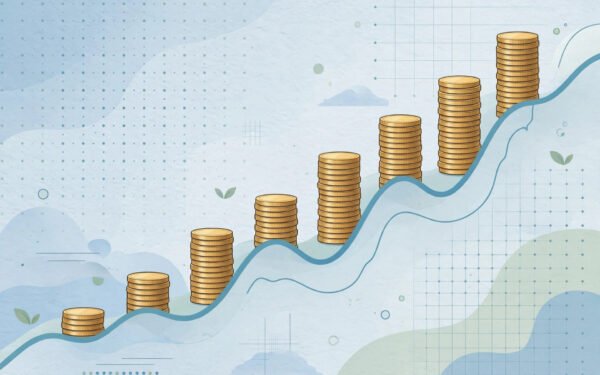
Repeated on a schedule, $50 stops being a token amount. Buying $50 every week is $2,600 a year. Buying $50 every two weeks is $1,300 a year. That pattern has a name: dollar-cost averaging. You buy a fixed dollar amount on a fixed schedule, so you automatically pick up more satoshis when the price dips and fewer when it peaks, and your average cost smooths out over time.
The bigger gain is behavioural. A scheduled buy removes timing decisions, which removes the two most expensive beginner habits: buying in a rush after a price spike, and panic-selling after a drop. Most major apps support recurring buys with a single setup. Choose an amount you would barely miss per payday, let it run, and review it a few times a year rather than daily.
What should you expect in the first month after buying?
Expect the balance to move more than a bank balance ever does. A $50 holding can sit at $54 one week and $43 the next without anything unusual happening. That movement is the asset behaving normally, and watching it with a small amount teaches you your own reaction while the stakes are tiny. Some people discover they check the price twenty times a day and hate the feeling. That self-knowledge is worth having at $50 rather than at a size that affects rent or sleep. Resist two urges in that first month: adding money in a rush after a rise, and selling in a dip to end the discomfort. A quiet first month, with the account secure and the records saved, is a successful one.
How should you store and secure a small holding?
Security habits matter at every size, because the habits built with $50 are the ones relied on with $5,000. Turn on two-factor authentication, preferably with an authenticator app rather than text messages. Use a unique password for the exchange account, stored in a password manager, and protect the email account tied to it just as carefully, since email access can reset everything else.
For $50 held on a reputable exchange, leaving it there while you learn is sufficient. Moving small amounts to a personal wallet adds steps, fees, and new ways to make mistakes, such as losing a recovery phrase. Custody deserves more attention as the balance grows into the hundreds and thousands. At that point the cost and effort of a proper wallet setup become proportionate. Until then, a secured account on a well-known platform is a sensible home for a learning amount.
What is the sensible way to make the first $50 buy?
Pick a major, regulated platform. Secure the account before depositing money. Buy through the cheapest route you are comfortable using, ideally a percentage-fee screen. Confirm the Bitcoin amount, the fee, and the remaining cash balance after the order completes, and save the confirmation for your records. Then decide in advance whether this is a one-off lesson or the start of a scheduled habit, and set the recurring buy up while the reasoning is fresh.
Handled that way, $50 buys three things at once: a real fraction of Bitcoin, a working understanding of how buying and holding actually function, and the start of a system that can grow at a pace your budget controls. The amount is small. What it starts does not have to be.