The morning after the storm, there is a shingle lying in your driveway like a shed skin — and by the following week there is a bucket in the attic under a slow, patient drip. A roof replacement usually begins exactly like this: not as a plan, but as a suspicion. What follows is the whole process laid out in its real phases, with the money attached to each one, because a new roof is less a purchase than a short construction project — and the homeowners who fare best are the ones who knew the phases before the first quote.
Phase 1: The Decision — Is It Really Time? (Week 0)
Before any spending, confirm the suspicion. Signs a roof is at the end: shingles curling, cracking, or shedding their gritty surface into the gutters by the handful; leaks appearing in more than one place (a single leak is often a flashing repair, not a funeral); dark streaks and bald patches visible from the street; and simple age — a standard asphalt roof lives roughly 20–25 years, and a roof near that birthday with symptoms is telling the truth. Get a roofer or inspector on the roof for a look before you assume: sometimes Phase 1 ends with a $300 repair and three more years of life, and an honest contractor will say so. Most of this phase costs nothing but a ladder and an hour. Do the ground-level part yourself first, with binoculars if you have them: scan for the curling, missing, and patched-looking areas from all four sides, check the attic on a sunny day for pinpricks of light and on a rainy one for active drips, and look at the ceiling corners of the top floor for the water stains that confess to leaks you have not yet felt. Showing up to Phase 2 already knowing where your roof hurts makes you a noticeably harder customer to oversell.
Phase 2: Quotes and the Material Decision (Weeks 1–3)
This is where the money is really decided. The national picture for a full replacement in 2026: most homeowners pay between $10,000 and $19,500 in total, at $4 to $11 per square foot installed — about $7 on average, per HomeAdvisor’s national cost data (their roof replacement cost guide tracks the ranges by material and region). A typical 2,000-square-foot roof lands around $11,000–$25,000 once everything is counted. Learn the roofer’s unit: a “square” is 100 square feet, so a quote of “$450 per square” is $4.50 per square foot — fluency here ends most confusion in quote comparisons.
The material menu, installed per square foot: 3-tab asphalt shingles ($4–$5) — the budget classic, whole roofs at $5,500–$8,000, thinner and shorter-lived. Architectural shingles ($6–$10) — thicker, dimensional, better looking; the 15–30% premium buys lifespan and curb appeal, and most homeowners land here. Metal roofing ($8–$30+) — standing-seam lasts 50+ years, shrugs off hail, and can trim cooling bills, at a serious upfront multiple. Clay or concrete tile ($10–$25) — beautiful, lasts 75–100 years, and heavy enough that some houses need structural reinforcement first (a cost hiding inside that range’s top end). Natural slate ($20–$40+) — the luxury endgame, a roof that can outlive the mortgage twice over. Get at least three quotes in this phase, in writing, with the material named — “shingles” is not a specification.
Where You Live Rewrites the Quote
The national ranges above conceal a map. Labor is typically the largest single share of a roof’s price, so high-wage metros — the Northeast corridor, the West Coast — price the same roof thousands above the rural South and Midwest, where both labor and permit costs run lower. Climate bends the numbers further: hurricane country pays for higher-rated materials and, in the weeks after a major storm, for scarcity itself, when every roofer within three counties is booked out and prices spike on demand. Snow country pays in ice-and-water shield coverage and sturdier underlayment standards. Two identical houses, one in Ohio and one outside Boston, can honestly differ by 40% — which is why national averages set expectations and only local quotes, in Phase 2’s stack of three, set budgets.
Phase 3: Preparation — Tear-Off, Deck, and Paperwork (the Week Before)
Two decisions in this phase move your total. Tear-off versus overlay: a new roof can sometimes be laid over one existing layer, saving the tear-off cost, but stripping to the deck is the better default — it reveals rotten decking, starts the new roof on a true surface, and many warranties and codes prefer it; most roofs in this price discussion are tear-offs. Decking condition: the plywood or boards beneath your shingles are invisible until this phase — budget a contingency for replacing damaged sheets, priced per sheet in your contract, because “we found rot” is the industry’s favorite surprise invoice. Permits are pulled in this phase (roofing permits run a few hundred dollars in most jurisdictions and are the contractor’s job to arrange, yours to verify), materials get delivered, and a dumpster appears in your driveway. A sensible payment schedule is agreed now too — never full price upfront; a modest deposit, a payment at material delivery or tear-off, and the balance on completion is the healthy shape.
The Complexity Factors Hiding Inside a Quote
When two same-sized houses get different quotes, complexity is usually the reason. Pitch: a steep roof is slower, more dangerous work requiring more safety setup — roofers charge for the slope your house was born with. Shape: a simple gable roof is the cheapest geometry there is; hips, valleys, dormers, and intersecting planes multiply cuts, flashing, and time. Stories and access: a two-story house with tight side yards costs more to service than a ranch with a clear driveway. Penetrations: every chimney, skylight, and vent stack needs flashing work, and skylights old enough to match the roof often deserve replacing in the same project — an extra line worth approving while the roof is open rather than as a leak repair later. Ventilation: a good contractor checks attic ventilation during Phase 2, because poor airflow cooks shingles from beneath and can void material warranties; adding ridge venting is a small line that protects the whole purchase. None of these is padding. They are the difference between a roof and your roof, and a contractor who can walk your roof and explain each one in a sentence is telling you the truth about your quote.
Phase 4: Installation Days (1–3 Days for Most Homes)
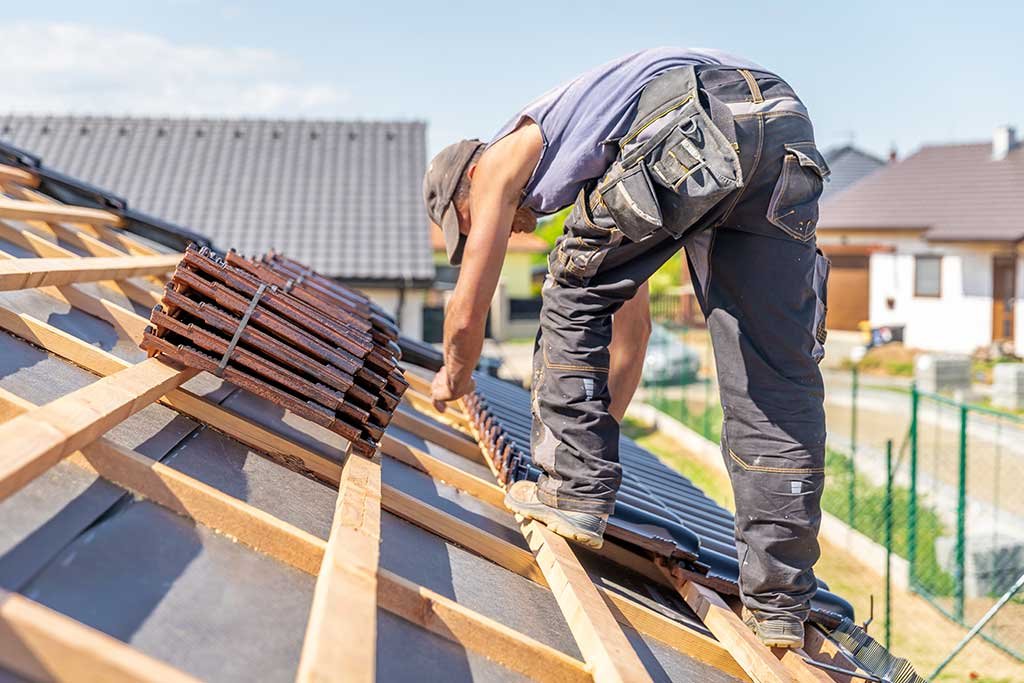
Install itself is fast, loud, and strangely theatrical. Day one is usually tear-off: the old roof comes off in a morning of controlled chaos, the deck is inspected and repaired, and then the quiet precision begins — underlayment (felt or synthetic) across the deck, ice-and-water shield at the eaves and valleys where leaks are born, drip edge metal, and then the shingles themselves, course by course, with flashing worked carefully around chimneys, vents, and valleys. Most single-family roofs finish in one to three days, weather permitting. Your jobs in this phase: move cars out of range of the dumpster and falling debris, take pictures off walls that will vibrate, keep pets and kids inside during tear-off, and walk the site each evening with the foreman. The warranty level of the installation is set here too — manufacturer warranties cover materials, but the workmanship warranty is the contractor’s own promise, and its length (2 years? 10? 25?) belongs in your contract, not in a handshake.
Phase 5: Finishing, Inspection, and the Paper Trail (the Following Week)
A finished roof is not finished until four things happen. Cleanup: the crew should run magnetic sweepers for nails — check the driveway, lawn edges, and gutters yourself, because a tire finds the nails a magnet missed. Final inspection: many permits require a municipal sign-off; make sure it actually happens and closes. Documentation: collect the material warranty registration (some must be filed within a deadline to be valid), the workmanship warranty in writing, the final invoice marked paid, and photos. The insurance question: if storm damage started this story, your homeowners policy may cover replacement minus deductible and depreciation rules — but wear-and-age alone is never covered, so the time to learn which story yours is remains Phase 1, not Phase 5. A roof that has been through all five phases properly is the least dramatic money in homeownership: properly bought, it will not ask anything of you again for decades — unlike the foundation beneath it, whose costs and warning signs we break down in our guide to what foundation repair costs, if the house is asking for help at both ends.
The Phases, Priced in One Breath
Decision: free. Quotes: three afternoons, and the difference between the $5,500 budget roof and the $25,000 premium one is chosen here, mostly in the material line. Preparation: permits, tear-off, and a decking contingency of a few hundred to a couple of thousand. Installation: the famous total — $10,000–$19,500 for most American homes. Finishing: nothing but attention. The drip in the attic started this; a roof bought in phases, rather than in a panic, is how it ends.