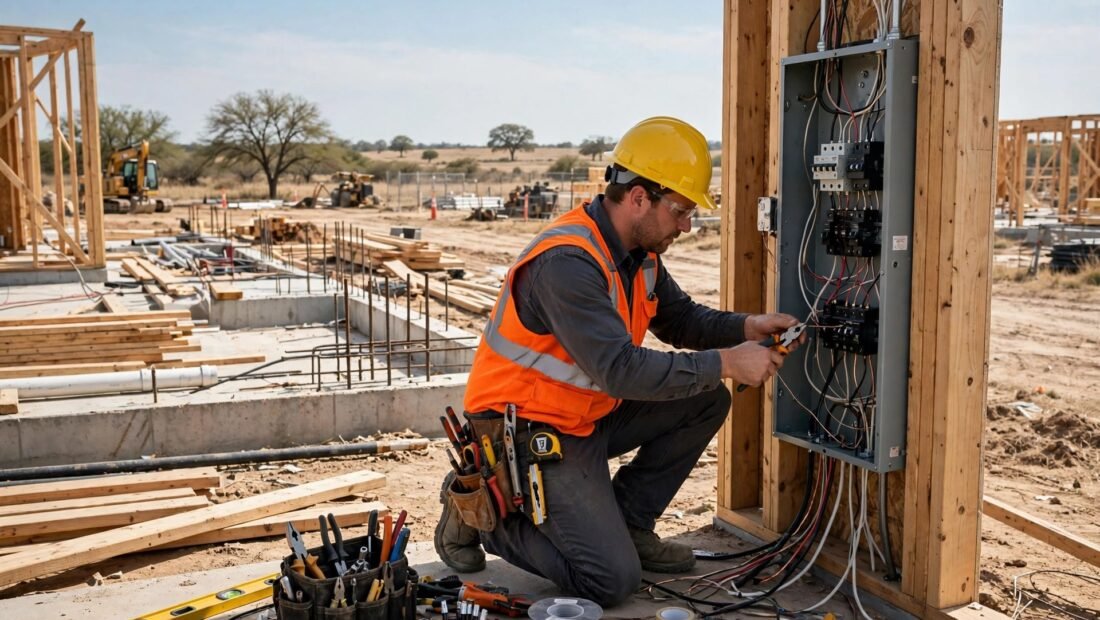
The college-earnings premium is real — but it’s an average, not a destiny. Across Texas, hundreds of thousands of people earn six figures without a bachelor’s degree, working in skilled trades, tech, healthcare support, sales, and public safety. With the state’s booming construction, energy, and logistics sectors hungry for workers, 2026 is arguably one of the best moments in decades to build a high-paying career on certifications, apprenticeships, and demonstrated skill rather than a diploma.
This guide covers the highest-paying no-degree paths in Texas, what each actually requires, realistic salary ranges, and how to break in without student debt.
Skilled Trades: The Six-Figure Backbone
Texas runs on tradespeople, and the pay reflects the demand. Licensed electricians in Texas metro areas commonly earn $60,000 to $95,000, with master electricians and those in industrial or oilfield work crossing $100,000. The path runs through a 4-to-5-year apprenticeship — you earn while you learn, starting around $35,000 to $45,000 and rising steadily.
Plumbers follow a similar arc: journeyman plumbers in Texas earn $55,000 to $85,000, with master plumbers running their own shops earning well into six figures. HVAC technicians, elevator installers (among the best-paid trades nationally, often $90,000+), and welders — especially rig welders in the Permian Basin — round out the top tier. The Bureau of Labor Statistics occupational outlook projects continued strong demand for these roles as infrastructure ages and Texas keeps growing.
How to enter the trades
Apply to union apprenticeships (IBEW for electricians, UA for plumbers/pipefitters) or non-union programs through Associated Builders and Contractors chapters. Community colleges across Texas offer pre-apprenticeship certificates that make your application stand out. Avoid expensive for-profit trade schools that promise the moon — compare their placement rates and total cost against apprenticeship wages first.
Tech Without the Degree
Tech has quietly become one of the most credential-flexible industries. What employers test is what you can build, not where you studied. Realistic no-degree tech paths in Texas include:
IT support to systems administration: Start with CompTIA A+ and Network+ certifications ($400-$700 in exam fees), land a help-desk role at $45,000-$55,000 in Dallas or Austin, and climb toward systems admin or network engineer roles paying $75,000-$110,000.
Cloud and DevOps: AWS or Azure certifications plus a portfolio of deployed projects can open cloud support roles at $70,000-$90,000, with senior engineers well past $130,000 — and Texas has major cloud hiring in Austin, Dallas, and increasingly Houston.
Cybersecurity: Security+ certification plus hands-on labs can lead to SOC analyst roles starting around $65,000-$80,000. Texas’s energy and finance sectors are desperate for security talent.
Web development: A genuine portfolio of shipped work beats any certificate. Freelance or agency junior dev roles in Texas start $55,000-$75,000; experienced developers clear $100,000 regardless of education.
For anyone weighing how automation reshapes hiring, it’s worth reading which jobs are safest from AI automation before choosing a direction.
Healthcare Support Roles
Healthcare offers some of the most stable no-degree careers in Texas. Radiation therapists (associate degree, ~$85,000-$100,000 in Texas), dental hygienists (associate degree, $75,000-$95,000), and registered nurses (ADN route, $75,000-$95,000+) are the standouts — these require associate degrees or certificates, not bachelor’s degrees.
Shorter paths include medical coding/billing (certificates, $45,000-$60,000, often remote), surgical technologists ($50,000-$65,000), and paramedics. Texas’s massive hospital systems — Texas Medical Center in Houston is the largest in the world — hire constantly.
Sales, Real Estate, and Business Paths
Commission-based sales remains the purest meritocracy: top B2B sales reps, medical device reps, and enterprise software sellers in Texas earn $120,000-$200,000+ with no degree requirement. Real estate agents in hot Texas markets can earn six figures, though income is volatile and the first year is lean — budget accordingly.
Other strong options: insurance agents and brokers, commercial truck drivers (CDL holders in specialized hauling earn $70,000-$90,000), air traffic controllers (FAA academy route, $130,000+ median nationally), and power plant operators. Police officers and firefighters in major Texas cities earn $65,000-$90,000 with overtime, plus pensions — a compensation structure college grads often envy.
The Real Cost Comparison
A bachelor’s degree in Texas averages $40,000-$100,000+ in total cost at public universities, with four years of foregone earnings. An apprenticeship or certification path often costs under $5,000 total while paying you from month one. The degree holder starts at 22 with debt; the electrician apprentice starts at 18 with income and is a journeyman by 23. Over a lifetime, the degree premium persists on average — but for the top quartile of tradespeople and tech workers, there is no premium at all. They out-earn most graduates.
If you’re considering self-employment down the line, learn how much tax a freelancer pays on $50,000 of income early — many high-earning tradespeople eventually go independent.
How to Choose and Break In
Match the path to your temperament. Trades reward physical stamina and hands-on problem solving; tech rewards obsessive self-teaching; sales rewards resilience to rejection; healthcare rewards steadiness under pressure. Pick the game you’re built to win.
Get the cheapest credible credential first. One respected certification beats three dubious ones. For trades, that’s the apprenticeship acceptance. For tech, one vendor cert plus a portfolio. For healthcare, the state license.
Use Texas workforce programs. Texas Workforce Commission programs and community college workforce grants often cover training costs entirely for in-demand occupations — free money most people never claim.
Women in High-Paying Trades: The Overlooked Opportunity
Skilled trades remain heavily male — women make up under 5% of electricians and plumbers — which means employers, unions, and apprenticeship programs are actively recruiting women, often with dedicated scholarships, mentorship programs, and pre-apprenticeship tracks. Organizations like Texas Women in Trades and national tradeswomen programs connect women with paid apprenticeships.
The economics are identical regardless of gender: the pay scales are standardized, the demand is desperate, and the physical requirements are more about technique and endurance than brute strength (modern tools and methods have reduced the raw-strength component substantially). For women seeking high pay without degrees, trades represent one of the most undervalued opportunities in the Texas labor market — less competition for entry, strong institutional support, and six-figure potential on the same timeline as anyone else.
Conclusion
The highest-paying jobs without a degree in Texas share a pattern: they solve expensive problems (broken electrical systems, cyberattacks, health crises, revenue shortfalls) and they can’t be easily automated or offshored. Electricians, cloud engineers, dental hygienists, and top salespeople all clear six figures because the market pays for scarce, valuable skill — not for diplomas. Pick a lane, get the credential that matters, and let compound experience do the rest. The degree was never the point; the skill was.
For official guidance on entering the trades, DOL resources on apprenticeships and training is the best starting point.
Frequently Asked Questions
What is the highest-paying job in Texas without a degree?
Air traffic controllers, elevator installers, experienced rig welders, and top B2B salespeople are among the highest earners without bachelor’s degrees, with many exceeding $100,000-$150,000. Licensed master electricians and plumbers running their own businesses can earn substantially more.
Can I really get a tech job in Texas without a degree?
Yes — IT support, cloud, cybersecurity, and web development all hire based on certifications and portfolios. Austin and Dallas employers in particular emphasize demonstrable skill. Expect to start around $45,000-$65,000 and climb quickly with experience.
How long does an electrician apprenticeship take in Texas?
Typically 4 to 5 years of combined classroom instruction and paid on-the-job training. You earn wages throughout, starting around $35,000-$45,000 and rising each year toward journeyman pay of $60,000-$95,000.
Are trade schools worth it?
It depends. Union and ABC-affiliated apprenticeships pay you while training and cost little; expensive for-profit schools can leave you with debt and no job placement. Always compare total cost, graduation rates, and employer connections before enrolling.
Do I need a degree to become a real estate agent in Texas?
No — you need a high school diploma, 180 hours of approved pre-licensing education, and to pass the state exam. Income is commission-based and highly variable, especially in the first year.