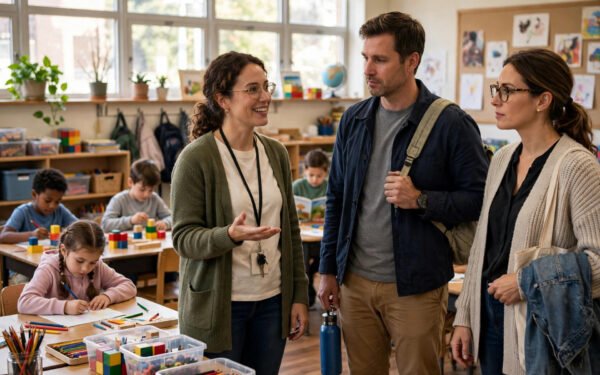
Your child dreads school mornings. Grades slide despite obvious intelligence. The teacher suggests “trying harder,” but you suspect the problem is not effort — it is fit. For Texas parents of struggling students, homeschooling increasingly looks like an escape hatch: no more bullying, no more one-size-fits-all pacing, no more falling through cracks. But is it actually a good option for a child who is already struggling? The answer depends entirely on why they struggle — and on honest assessment of what homeschooling demands from you.
When Homeschooling Genuinely Helps Struggling Students
Pacing mismatch: The most common case. Schools march at one speed; your child needs slower (or faster) in specific subjects. Homeschooling lets a 4th-grader do 2nd-grade math and 6th-grade reading simultaneously — meeting the child where they actually are, which is where learning happens.
Undiagnosed or underserved learning differences: Dyslexia, ADHD, processing disorders — Texas schools provide services, but quality varies wildly and waits can stretch months. At home, you can implement evidence-based interventions (structured literacy for dyslexia, movement breaks for ADHD) immediately and consistently.
Anxiety, bullying, or school trauma: When the school environment itself is the problem — chronic bullying, severe anxiety, toxic teacher dynamics — removing the child from the toxic environment is sometimes the necessary first step. Healing requires safety.
Asynchronous development: Gifted-but-struggling kids (often called “twice-exceptional”) are poorly served by age-based grade levels. Homeschooling accommodates the 10-year-old doing algebra but struggling with handwriting.
When Homeschooling Makes Things Worse
Intellectual honesty requires the other side. Homeschooling backfires when: the struggle is really about structure — some children need external accountability, peer presence, and professional teachers more, not less; removing structure from an unstructured child deepens the hole. Parents lack the bandwidth — homeschooling a struggling learner is more demanding than homeschooling a typical one, requiring research, patience, and hours daily; an overwhelmed, working-full-time parent cannot fake this. The issue needs professionals — significant learning disabilities, behavioral disorders, or mental-health crises need specialists, not just a different setting; homeschooling can delay proper intervention. Social isolation deepens — struggling students often already feel different; full isolation without deliberate community replacement can worsen depression and social skills. And avoidance masquerades as solution — if the child struggles with any demand or authority, homeschooling teaches that escape solves problems, a lesson with terrible long-term interest.
Texas: The Homeschool-Friendly Landscape
Texas is among the most homeschool-friendly states: no required notification, no mandated curriculum, no testing, no teacher qualifications — legally, homeschools are considered private schools. That freedom is double-edged for struggling learners: no bureaucracy blocking you, but also no guardrails ensuring quality. Texas offers abundant resources: massive homeschool co-ops in every metro (many with specialized classes for struggling learners), the Texas Homeschool Coalition’s guidance, special-needs homeschool networks, and dual-enrollment options at community colleges for advanced subjects. But the lack of oversight means outcomes depend entirely on parental diligence — choose curriculum and methods based on evidence, not marketing.
Diagnose Before You Decide
Do not homeschool on a hunch. Before withdrawing: get a proper evaluation — psychoeducational testing (through the school, which Texas must provide on request, or privately) identifying exactly what is wrong. “Struggling” is not a diagnosis; dyslexia, ADHD, auditory processing disorder, anxiety, and vision problems each demand different responses. Try school-based interventions first — 504 plans, RTI tiers, tutoring — and document what failed; this both informs your homeschool plan and preserves the option to return. Consult the current teachers honestly — ask “what does she need that we are not providing?” rather than announcing your decision. And trial it: many families test homeschooling over a summer before committing to a year.
Making It Work: The Struggling-Learner Playbook
If you proceed, these practices separate success from expensive failure: use evidence-based curriculum matched to the diagnosis — structured literacy (Orton-Gillingham-based) for reading struggles, not whatever looks fun; outsource your weak spots — co-op classes, tutors, online programs for subjects you cannot teach well; build in external accountability — standardized testing (optional in Texas but valuable as a diagnostic), co-op classes with real teachers, portfolio reviews; protect socialization deliberately — co-ops, sports, scouts, church groups, part-time jobs for teens — scheduled, not assumed; track progress objectively — without school benchmarks, parents must measure: quarterly assessments, work samples, clear goals; and get support for yourself — homeschooling-parent burnout is real and contagious. Our guides to AI in schoolwork and detecting AI-written work apply to homeschool assignments too, and parental controls matter when devices carry the curriculum.
The Exit Strategy (Plan It Now)
Every homeschool plan for a struggling student needs a re-entry plan: under what conditions would you return to school? (Specific academic or social milestones.) How will you keep records that schools accept? (Transcripts, portfolios, standardized scores.) Discussing this upfront prevents homeschooling from becoming a trap — years passing with neither progress nor alternatives. The goal is the child’s thriving, not the method’s vindication.
Curriculum Options for Struggling Learners
Curriculum choice makes or breaks homeschooling for strugglers — and the market is full of shiny programs with weak evidence. For reading struggles/dyslexia: use Orton-Gillingham-based programs (All About Reading, Barton Reading & Spelling, Logic of English) — structured, multisensory, sequential; this is the approach the research supports, and it looks different from typical “reading programs” (slower, more repetitive, explicitly phonetic). For math struggles: look for mastery-based programs with concrete-to-abstract progressions (Math-U-See’s manipulative approach, RightStart Mathematics) rather than spiral programs that move on before mastery. For ADHD learners: short-lesson formats (Teaching Textbooks’ bite-size lessons, Moving Beyond the Page’s activity-based units) sustain attention better than dense textbooks. For writing struggles: programs separating composition from mechanics (Institute for Excellence in Writing’s structural approach) reduce the overwhelm of doing everything at once. General principles: match the curriculum to the diagnosis, not to what looks engaging; pilot before committing (most publishers offer samples or trial periods); supplement, don’t replace — one strong core program plus targeted intervention beats five mediocre ones; and reassess quarterly — if no measurable progress in 8–12 weeks, the curriculum (or the diagnosis) is wrong, not the child. The Home School Legal Defense Association maintains curriculum guidance and special-needs resources, and the Department of Education’s What Works Clearinghouse lets you check whether a program’s claims have actual evidence behind them.
Conclusion
Homeschooling can be transformative for struggling students whose core problem is pacing, fit, or environment — and disastrous when the problem is structure-need, parental bandwidth, or diagnosable conditions needing specialists. In Texas’s permissive landscape, the decision and its quality rest entirely with you. Diagnose first, trial honestly, use evidence-based methods, build community deliberately, and keep the exit open. Done right, it is not escape — it is finally giving your child the education that fits.
Frequently Asked Questions
Is homeschooling good for kids with ADHD?
It can be — flexible scheduling, movement breaks, and reduced distraction help many ADHD learners. But children who need external structure and peer energy may struggle more at home. Success depends on the child’s specific profile and the parent’s ability to provide consistent structure.
Do I need teaching credentials to homeschool in Texas?
No. Texas considers homeschools private schools with no required notification, curriculum approval, testing, or teacher qualifications. The freedom is complete — which makes curriculum choice and self-accountability entirely your responsibility.
How do homeschooled struggling students socialize?
Through deliberate enrollment: co-ops, sports leagues, scouts, church youth groups, 4-H, part-time jobs for teens, and dual-enrollment classes. Socialization must be scheduled — it does not happen automatically at the kitchen table.
Can my homeschooled child go back to public school later?
Yes. Keep thorough records (work samples, any standardized testing, curriculum lists) to ease placement. Schools typically assess and place by demonstrated ability. Having an exit plan from the start makes transitions smooth.