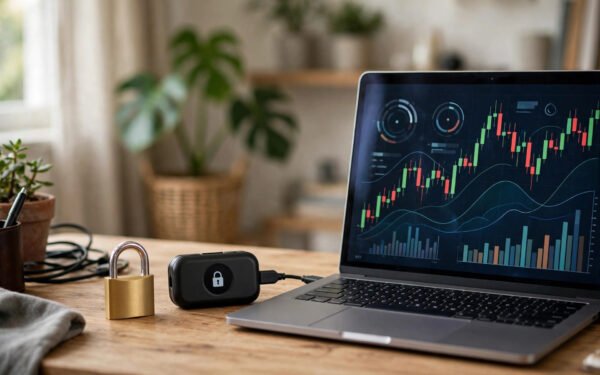
DeFi removes the bank from the middle of finance and hands that job to you. That sounds freeing until you sit with what the job actually includes: holding the keys, checking every address, catching your own errors, and keeping records no one will keep for you. Beginners who do well here start with a short readiness list and clear limits. Beginners who lose money usually skip both.
Start Here: The Safe-Start Checklist
- A wallet you control. Set up a self-custody wallet, write the recovery phrase on paper, store it offline, and test a small send and receive before any DeFi step.
- A tiny learning budget. Set aside $50 to $100 total for first experiments. Treat it as tuition you can lose in full without stress.
- A cheap network. Learn on a low-fee network such as a layer-2 chain or Solana instead of Ethereum mainnet, where a single transaction can cost $5 to $50 in gas during busy times.
- One established protocol. Pick one well-known lending or swap platform with years of use and public audits. Learn that one deeply before touching a second.
- Tax records from day one. Save transaction hashes, dates, and dollar values for every swap, deposit, and reward. Start a simple sheet or use crypto tax software before the list gets long.
The Wallet Comes First
DeFi has no accounts in the bank sense. Your wallet is your account, your vault, and your signature all at once. Whoever holds the recovery phrase controls the funds. There is no password reset desk and no fraud department to call. That is why wallet setup deserves slow, boring care.
Choose a widely used wallet and install it only from the official site or official app store listing. Write the recovery phrase by hand. Do not screenshot it, do not store it in email, and do not type it into any website that asks. If a site asks for that phrase to connect, close the tab. Legitimate DeFi apps ask you to connect a wallet. They never need the phrase itself.
Practice before you deposit. Send a few dollars in, send a few dollars out, and watch how network fees and confirmations work. Learn where the network selector sits, because sending funds on the wrong network is one of the most common beginner losses. For wallet choice and setup basics, compare options in the piece on the safest crypto wallet for beginners in Houston before you fund anything beyond test amounts.
Why the Budget Stays Small
A $50 to $100 learning budget is not about being timid. It is about matching the size of your mistakes to the stage of your skill. Early DeFi errors are normal. People approve the wrong token, pay too much in fees, or deposit into a pool they do not fully grasp. With a small budget, each error teaches a clear lesson and costs a few dollars. With rent money, the same error teaches the same lesson and wrecks a month.
Pick a Network That Forgives Practice
Every DeFi action costs a network fee, often called gas. On Ethereum mainnet, that fee swings with demand and can jump from a few dollars to $5 to $50 or more for one action during a busy stretch. A beginner who needs five or six actions to complete one simple deposit can burn a large share of a small budget on fees alone.
Layer-2 networks built on top of Ethereum and other low-cost chains cut that cost to cents in many cases. The core ideas are the same: connect a wallet, swap a token, deposit into a pool, withdraw. Learning those moves where each try costs pennies lets you repeat them until they feel routine. Move to a pricier network later only if you have a clear reason, and check the fee before you confirm every transaction. A fee that looks wrong is a reason to stop, not to click faster.
What DeFi Actually Is, in Plain Words
DeFi is short for decentralized finance. It means financial tools built from smart contracts, which are programs that run on a blockchain and follow their code automatically. Instead of a company holding your money and deciding each trade or loan behind a counter, the code holds the rules where anyone can inspect them.
Three building blocks cover most of what a beginner will meet. First, decentralized exchanges let you swap one token for another straight from your wallet. A pool of tokens supplied by other users sets the price by formula, and the swap happens without opening an account with a company. Second, lending pools let you deposit a token so others can borrow it. Borrowers post collateral worth more than the loan, and part of the interest they pay flows back to depositors. Third, stablecoins are tokens designed to track one dollar, which lets you hold a steady value inside DeFi without leaving the system each time you want to step out of price swings.
Self-custody runs through all of it. Your assets stay in your wallet until a contract you approved moves them by its rules. No clerk can freeze your account on a whim, and no executive can quietly lend your deposits out for side bets. The trade is just as clear. No clerk means no help desk that can reverse a bad send. The code does what it says, bugs included. Good background reading at Ethereum.org’s plain-language explainers on DeFi and how it works helps the terms settle before real money is involved.
One Protocol, Learned Well
New users often open five apps in the first weekend. They understand none of them well enough to spot a warning sign. A safer path is to choose one established protocol and learn its full loop at small size. Deposit a stablecoin. Watch how interest accrues. Withdraw part of it. Withdraw the rest. Read the help pages. Learn where fees appear and where the risks are listed.
Established matters here. A protocol that has handled large sums for years, survived sharp market drops, and published independent audits has been tested by time and by attackers in a way a new launch has not. That does not make it risk-free. It makes the risk better understood. Boring is a feature at this stage. A new protocol offering eye-catching rewards can wait until you can explain, in your own words, where its rewards come from.
The Honest Risk Picture
Smart contracts can fail. Attackers study the code for flaws, and in peak years exploits drained very large sums across the DeFi space. Audits lower that risk because outside reviewers hunt for flaws before launch, but an audit is not a guarantee. Even well-reviewed protocols have been hit. Small position sizes are your main defense while you learn which platforms have earned trust over time.
Stablecoins carry their own risk, despite the calm name. Some are backed by reserves. Others have tried to hold a dollar value mainly by algorithm and market incentives. TerraUSD collapsed in 2022 and showed how fast a so-called stable asset can fall apart when confidence breaks. A beginner should know exactly what backs any stablecoin before depositing it, and should treat an unfamiliar stablecoin as a separate risk, not as cash.
Yield needs the same scrutiny. If a pool pays 20 percent or more, that return comes from somewhere. It might come from borrower demand, trading fees, or a flood of newly issued tokens that will lose value as they are sold. If no one can explain the source in plain words, treat the number as a warning, not an invitation. Steady single-digit returns from lending on established platforms have a clearer source: real borrowers paying real interest. High numbers with no clear source tend to end the same way, with late joiners holding the loss.
User error rounds out the picture, and for beginners it may be the largest risk of all. A wrong address, a wrong network, a fake website that looks just like the real one — each can send funds where they cannot be pulled back. DeFi transactions are final by design. Slowing down to verify the site address from a bookmark, not from a search ad or a direct message, prevents more losses than any advanced strategy.
The Defensible Beginner Use
With the risks named, one beginner use stands up better than the rest: lending stablecoins on an established protocol. You deposit a dollar-tracking token such as USDC into a large, well-known lending pool and earn a modest yield, often in the range of roughly 3 to 8 percent depending on demand. The loop is easy to follow. The price swings are small compared with holding a volatile token. You learn deposits, interest, and withdrawals without also riding a market roller coaster.
That does not make it a savings account. There is no federal insurance behind a DeFi deposit. The protocol could be exploited, the stablecoin could lose its peg, and rules could shift. Keep the amount small, keep the rest of your savings in insured, boring places, and review the position on a set schedule instead of checking it ten times a day. Earning a bit while you learn is sensible. Betting the emergency fund on a smart contract is not.
Records, Taxes, and Texas Notes
Every swap, deposit reward, and interest payment can count as a taxable event under federal rules. DeFi makes many small events very quickly, and rebuilding a year of activity from scattered wallet screens is miserable work. Log each action as you go: date, what went in, what came out, dollar value at the time, and the transaction hash. A spreadsheet started on day one beats a weekend of detective work in tax season.
Red Flags That End the Visit
Close the tab and walk away when you see pressure to deposit within hours for a bonus. Honest protocols do not need a countdown clock to be worth using. Walk away from anonymous teams with no track record launching unaudited pools. Walk away from yields no one can explain, from audit claims with no published report to read, and from any page that asks for your recovery phrase. Walk away from links sent by strangers, however friendly, and from search ads that sit above the real site with a near-identical name.
DeFi hands you the bank’s tools and the bank’s burdens in the same box. The checklist at the top — your own wallet, a tiny budget, a cheap network, one established protocol, and records from the first day — is how a beginner carries those burdens without dropping them. Start small, learn the loop, and let understanding, not excitement, decide when to do more.