
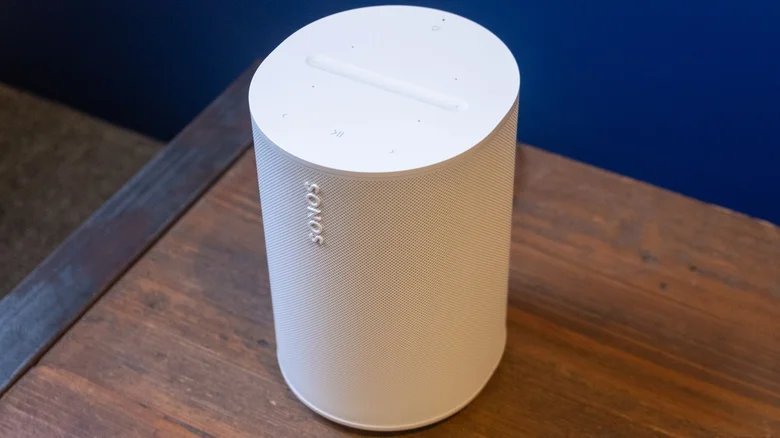
Your speaker is always listening for its wake word. Your doorbell camera records the sidewalk. Your thermostat knows when you’re home. Smart home devices are convenient precisely because they’re observant — and that observability is the entire privacy debate in one sentence.
Fair warning: some of this will sound obvious. The obvious stuff is usually the stuff people skip — and skipping it is why they’re stuck.
Privacy concerns with ai smart home devices in the Real World
A neighbor discovered her smart speaker had been keeping voice recordings for two years — every ‘what’s the weather,’ every kid’s homework question, all stored in her account. She was creeped out, then practical: she turned on auto-delete every three months, muted the mic when guests were over, and reviewed which third-party skills had access. The devices stayed. The defaults didn’t. That distinction — convenience with boundaries — is the whole game.
One thing the hype cycle obscures: AI’s strengths and weaknesses are lopsided in useful ways. It’s phenomenal at drafting, summarizing, brainstorming, and pattern-matching across huge amounts of information. It’s unreliable at facts, judgment calls, and anything requiring real accountability. Map your use to the strengths, keep humans on the weaknesses, and you’ll get 90% of the benefit with 10% of the drama.
One more consideration: stay current, but on your own schedule. You don’t need to chase every new model release. A quarterly check-in on what’s new — what got better, what got cheaper — keeps you informed without the hype exhaustion.
For authoritative background on this topic, see the FTC on smart home privacy.
Common Mistakes to Avoid
A quick tour of what not to do, learned the hard way by people (including me) who did them first.
- Never changing the default privacy settings, which are usually set to maximum data collection
- Putting smart speakers and cameras in bedrooms without thinking about what’s recorded
- Ignoring which third-party apps and skills can access your devices
Your Action Plan
Enough theory. Here’s a concrete plan you can start this week.
- Turn on auto-delete for voice recordings — most major platforms offer 3-month or 18-month options.
- Review connected third-party skills and apps yearly; revoke what you don’t use.
- Use the physical mute button when you want guaranteed privacy — it cuts power to the mic.
- Segment smart devices on a separate wifi network if your router supports it.
Why This Matters More Than You Think
Think of privacy concerns with AI smart home devices as literacy, not expertise. You don’t need to understand how the engine works to drive the car — but you do need to know the rules of the road. Basic AI literacy is becoming as fundamental as basic computer literacy was twenty years ago. The good news: the basics are learnable in weeks, not years.
What the Research and Real Experience Say
One finding worth knowing: people consistently overestimate what AI can’t do and underestimate what it gets subtly wrong. We’re good at noticing the dramatic failures and bad at catching the plausible-sounding errors — which is exactly why verification matters more than most users realize. The research is clear that human oversight remains the critical ingredient, not a temporary precaution.
Your First 30 Days
Your 30-day milestone for privacy concerns with AI smart home devices should be a personal playbook: the prompts that work, the workflows that save time, the pitfalls you’ve learned to avoid. Write it down as you go. A month from now, that playbook will be more valuable than any tutorial, because it’s tuned to your actual life and work.
What Success Looks Like
Success here is measured in reclaimed hours and better decisions, not in how many tools you’ve tried. If privacy concerns with AI smart home devices is saving you real time each week, improving your output quality, or helping you avoid real mistakes, it’s working — regardless of whether you’re using the latest model or last year’s. Outcomes over novelty, always.
Quick Answers to Common Questions
Is it too late for me to start?
Almost certainly not. Whatever your age or situation, starting now beats starting later, and later beats never. The best results go to people who start where they are instead of waiting for ideal conditions that never arrive.
What should I do first, specifically?
The smallest action from the action plan above that you could do today. Not tomorrow, not Monday — today. Momentum comes from motion, and motion starts embarrassingly small.
How do I stay motivated long-term?
Stop relying on motivation — it’s unreliable by design. Build systems, routines, and reminders that carry you through the unmotivated days. Motivation starts things; systems finish them.
When in doubt, choose the reversible option first. You can always get fancier later, but you can’t un-spend the money or un-burn the time.
A final nudge: bookmark this page or save the action plan somewhere handy. Not because you’ll memorize it, but because future you — the one facing the actual decision — will appreciate having the checklist within reach.
Keep learning: Can AI Help You Find a Better Job? A Practical Guide, What Happens to Your Data When You Use a Free AI Tool?, and Should an AI Chatbot Handle Your Store’s Customer Questions?.
The Bottom Line
Smart home privacy isn’t about ditching the devices — it’s about changing the defaults. Fifteen minutes in the settings turns an always-watching gadget into a helpful tool with boundaries. For further reading, the NIST privacy framework is a solid next stop.
Ask yourself what ‘good enough’ looks like before you start. Without a finish line, everything expands to fill all available time and budget.
The best time to start was a year ago; the second-best time is this week. Not someday, not when things calm down — this week, in whatever small way you can.
One more thing worth saying: progress here is rarely dramatic. It’s a slow accumulation of small, correct decisions. The people who win aren’t the brilliant ones — they’re the consistent ones who kept showing up after the novelty wore off.



