
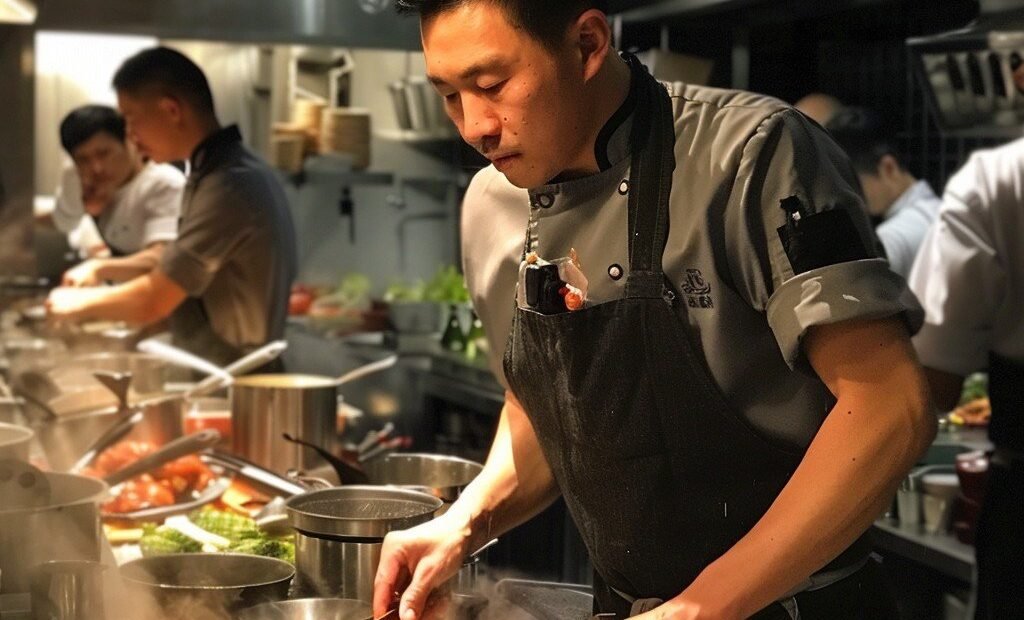
Everyone loves the idea of opening a restaurant. Great food, buzzing dining room, you’re the boss. Then reality shows up with a health inspection, a broken walk-in cooler, and a labor cost report that makes you want to cry. Most restaurants don’t fail because the food is bad — they fail because the business side was an afterthought.
Most guides give you the textbook version. I’d rather give you the version that survives contact with a busy schedule and a limited budget.
Mistakes new restaurant owners make in the Real World
I watched a talented chef open his dream spot with a menu of 40 dishes he loved. Forty. His food costs were chaos, his kitchen was constantly behind, and half the menu barely sold. A consultant friend finally convinced him to cut it to 14 dishes done brilliantly. Food costs dropped 9 points in two months and ticket times got cut in half. The menu he loved was killing the business he loved more.
Here’s what separates businesses that figure this out from the ones that don’t: they treat it as a system, not a one-time fix. The owners who win set up a simple process, review it monthly, and improve it a little each quarter. It sounds boring because it is boring — and boring is what compounds. I’ve watched too many smart founders chase clever hacks while ignoring the unsexy fundamentals that actually determine whether the numbers work.
One practical note: you don’t have to get this perfect. Done at 80% beats planned at 100% every time. Pick the single highest-leverage action from the plan below, do it this week, and let the rest follow. Momentum is a strategy.
For authoritative background on this topic, see the National Restaurant Association resources.
Common Mistakes to Avoid
Before the how-to, let’s clear the landmines. These are the mistakes I see over and over, and each one is completely avoidable.
- Opening with a giant menu instead of a tight one you can execute flawlessly
- Underpricing because you’re scared to charge what the food actually costs
- Hiring friends instead of professionals, then being unable to manage them
Your Action Plan
Here’s your move-by-move plan. Nothing fancy — just the steps that actually move the needle.
- Keep the menu small. Every dish should earn its place with margin and popularity.
- Price from your actual food and labor costs, not from what the place down the street charges.
- Track prime cost (food + labor) weekly. If it’s over 60-65%, you’re in the danger zone.
- Build a cash reserve before opening — most restaurants need 6+ months of runway.
Why This Matters More Than You Think
Most owners underestimate mistakes new restaurant owners make because it never feels urgent. There’s always a customer to serve, a fire to put out, a deadline screaming louder. But the urgent stuff keeps you running in place; it’s the important-but-quiet work like this that actually moves the business forward. I think of it as maintenance on the machine versus running the machine — skip maintenance long enough and the machine stops, usually at the worst possible moment.
What the Research and Real Experience Say
Look at businesses that failed and you’ll often find mistakes new restaurant owners make in the postmortem — not as the dramatic cause, but as one of the slow leaks that drained the ship. Success gets attributed to the brilliant product or the lucky break; failure analysis almost always reveals neglected fundamentals. Handle the fundamentals and you remove entire categories of failure.
Your First 30 Days
If 30 days sounds like a lot, shrink it to 30 minutes: the smallest useful action you can take on mistakes new restaurant owners make today. Make the call, open the account, run the numbers, send the email. Action creates clarity — you’ll learn more from one real step than from another week of thinking about it. The plan above will still be here when you’re ready for week two.
What Success Looks Like
Success with mistakes new restaurant owners make is measured in what doesn’t happen: the penalty you don’t pay, the crisis that never comes, the money that doesn’t leak. It’s an odd kind of victory — invisible. But add up a handful of these invisible wins across your business and you get something very visible: a company that’s calm, profitable, and resilient. That’s the compounding nobody posts about.
Quick Answers to Common Questions
What’s the hardest part?
Starting, and then the middle — the unglamorous stretch where the novelty is gone and the results aren’t visible yet. Knowing this in advance helps: when it gets boring and hard, that’s not a sign it’s failing. That’s the part where it works.
Can I do this alongside a busy schedule?
Yes, if you design for it. The approach here is meant to fit real life — small actions, flexible timing, no heroic time commitments. Busy people succeed at this all the time; they just build it into existing routines instead of waiting for free time.
Why do so many people quit?
Unrealistic expectations plus all-or-nothing thinking. They expect fast dramatic results, don’t get them, and conclude the whole thing doesn’t work — instead of adjusting expectations and continuing. Patience is the rarest and most valuable asset here.
It’s also worth talking to someone who’s done this before you. Ten minutes with an experienced person can save you ten hours of trial and error. People are surprisingly generous with advice when you ask specific questions.
Before you move on, decide what success looks like for you here — specifically. A number, a date, a done state. Write it down somewhere you’ll see it. Vague intentions evaporate; specific commitments have a way of getting done.
Keep learning: How Much Does It Cost to Insure a Small Retail Store?, Is a Coworking Space Worth It for Freelancers? An Honest Look, and How Do AI Chatbots Know the Answers? A Simple Explanation.
The Bottom Line
A restaurant is a business that happens to serve food, not the other way around. Nail the numbers — menu size, pricing, prime cost — and your great cooking actually gets the chance it deserves. For further reading, the SBA guide to starting a restaurant business is a solid next stop.



