In the winter of 1944 and 1945, food ran out in the western Netherlands. That period has a name in the research record, the Dutch Hunger Winter, and it is documented history, not family legend. Trains stopped, rations collapsed, and people conceived and born during those months entered the world under severe hunger. Decades later, researchers were still able to measure differences in their health and in chemical marks on their DNA.
That record is a hard place to start, but it is the right one for a question that is often sold too easily. Can daily life really change your genes? To keep the question honest, picture a present-day illustration rather than a real identified family. A grandmother in Texas tells her grandchildren that hard times marked her own mother, and she wonders what her own sleep, food, and stress are writing into her body now. Her day is ordinary. The science behind her question is not magic. It is about switches, not a rewritten text.
A single ordinary day, switch by switch
She wakes before dawn after a short night. She has work, a phone full of messages, and a long drive ahead. She skips breakfast, drinks coffee, eats quickly at noon, sits for hours, takes a late walk, and falls asleep with her mind still racing. Nothing in that day changes the letters of her DNA. Yet a great deal in that day touches the system that decides which genes are turned up, which are turned down, and which stay silent.
That system is called epigenetics. Every cell in her body carries the same DNA, but a skin cell, a liver cell, and a brain cell behave nothing alike. The difference is which instructions each cell uses. Chemical tags help set that pattern. The best known tag is methylation, where a small chemical group attaches near a gene and usually quiets it. Other tags sit on the proteins that DNA wraps around, loosening or tightening the wrap so a gene is easier or harder to read.
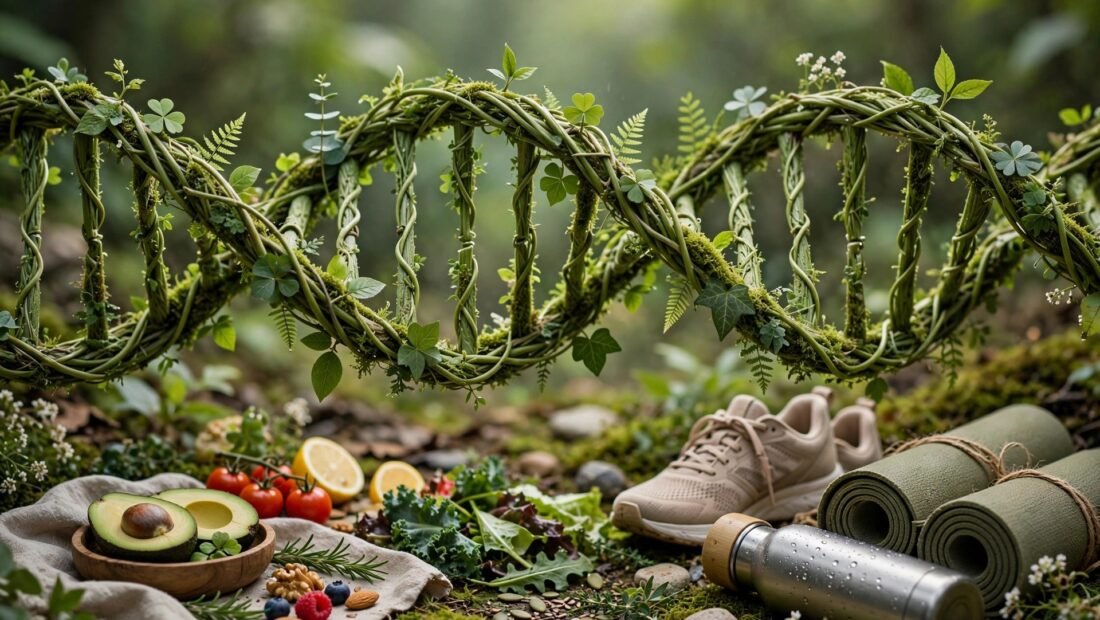
A house offers a plain picture. DNA is the wiring built into the walls. Epigenetic tags are the dimmer switches in each room. The wiring does not move during the day. The light levels change constantly, and some switch settings tend to stick. For a fuller grounding in the terms, the National Human Genome Research Institute’s explainers on epigenetics and genomics sets out how researchers use these ideas without the sales talk.
Sleep, the night shift for your clock genes
Her short night is the first lever of the day. Genes that run the body clock switch on and off in a daily rhythm, guiding sleep, hunger, temperature, and hormone release. When sleep is cut short or pushed to odd hours, studies in people find changes in the marks on some of those clock-related genes, along with wider shifts in metabolism and inflammation signals.
The practical point does not need hype to land. A steady 7 to 9 hours of sleep gives that rhythm a clean signal. A week of short nights blurs it. Shift work, which forces the clock to fight daylight, is linked in research to higher rates of metabolic problems, and disrupted gene regulation is one proposed part of that story. Sleep does not edit your code. It helps set the daily pattern for how your code is used, and the body notices when the pattern keeps breaking.
Food, stress, and movement through the same day
By noon she eats, and food talks to the same switch system. Some nutrients supply the raw material for methylation. Folate, vitamin B12, and choline are part of that supply chain, which is one reason severe shortage during pregnancy draws so much research attention. Other food compounds, including ones found in broccoli and green tea, affect the proteins that control how tightly DNA is wrapped. The effect of a normal meal is modest and mixed with everything else in the day. The effect of long shortage or long excess is where the clearer signals appear.
Stress arrives in the afternoon, in traffic and in a hard phone call. Stress hormones are meant to rise and fall. When pressure stays high for months, research finds lasting marks near genes that help regulate the stress response itself, including the glucocorticoid receptor gene. Studies of children who faced severe early adversity show some of these patterns decades later. That does not mean a bad week marks a person for life. It means the system learns from what repeats, and chronic strain repeats a lot.
Her late walk matters more than its short length suggests. A single bout of exercise changes methylation in muscle within hours, in genes tied to energy use. Regular training leads to steadier changes linked to metabolism and inflammation. Smoking, by contrast, leaves one of the strongest marks researchers know, including changes at a gene called AHRR that can persist for years after a person quits.
What the famine cohorts actually show
Return to the documented record. Babies conceived during the Dutch Hunger Winter were exposed to famine at a very early stage, before birth. When researchers examined them about six decades later, they found small but consistent methylation differences at certain genes compared with their own siblings who were not exposed at that stage. One of the most studied sites sits near a growth-related gene. The exposed group also showed higher rates of some health problems in adult life.
The next step, whether those marks pass cleanly to children and grandchildren as molecular inheritance, is where care is needed. Studies of famine descendants and of a Swedish community with detailed harvest records have reported health patterns across generations, and animal work shows that some marks can be carried forward. In humans, the evidence for true transgenerational epigenetic inheritance is thinner than the headlines suggest. The body wipes most marks clean in the early embryo and in the cells that become eggs or sperm. A few may escape, but proving a grandchild’s pattern came from a molecule rather than family habits, income, diet, and care is very hard.
What is solid should not be lost in that caution. A parent’s health and exposures shape a child’s prenatal environment in direct ways. Nutrition, smoking, alcohol, severe stress, and illness during pregnancy affect development through the placenta and the womb, with no need to invoke grandparent marks. That pathway is well supported, and it is reason enough to take pregnancy health seriously without overstating what has been proven about grandchildren.
The hype boundary, drawn hard
Epigenetics attracts bold marketing because the word sounds like control over fate. The science supports a narrower claim. Daily life can move some switches. It does not rewrite your DNA text. It does not let you pick traits like eye color for a child by eating a certain way, and it does not pass trauma down like a simple inherited trait in any proven, straightforward sense.
Most marks are also specific to the tissue studied. A pattern found in blood may not match the pattern in brain or liver, which limits what a single blood test can claim about the whole body. Many reported links between a mark and a disease are correlations. A mark may help cause a problem, result from it, or simply travel alongside it. Careful researchers separate those cases slowly, with follow-up work.
That caution applies to direct-to-consumer tests that promise a precise biological age or a diet tuned to your epigenome. Age-estimating tools built from methylation, often called epigenetic clocks, are real research instruments. In groups, they can predict health risk better than birthdays alone. For one person making daily choices, they are not yet reliable guides, and they should not be used to sell fear or expensive plans. A clock reading is not a diagnosis.
The same field that invites hype has also produced hard medicine. Some cancer drugs already work by removing or changing epigenetic marks, helping silenced genes in blood cancer cells turn back on. That clinical use matters because cancer is, in large part, a disease of gene regulation gone wrong. Researchers are also testing methylation patterns in blood as a way to detect some cancers earlier. Those are present, regulated uses, distinct from wellness claims, and they rest on trials rather than slogans.
Beyond that present sits a frontier that should be labeled as such. Scientists can now aim editing tools at a single gene’s switches, turning it up or down without cutting its DNA, and animal studies have shown striking results for pain, weight, and brain disease models. Human use is not standard care, and questions about delivery and precision remain open. It helps to hold both truths at once when reading about tools like what CRISPR is and how it could change medicine, since editing the text and adjusting its switches are related ideas with different risks and different timelines.
The verdict for an ordinary Texas day
Back to the grandmother and her ordinary day. She cannot change the DNA she inherited, and she does not need a new science to justify the habits that help her. Sleep 7 to 9 hours when life allows it. Move daily, even in short walks that break up sitting. Eat regular meals built from real food, with enough protein, produce, and the nutrients that support normal methylation. Do not smoke, and treat heavy drinking as the burden it is. Build in ways to bring stress down that you will actually use, from time outside to honest support from other people.
Those levers were good advice long before anyone measured a methyl mark. Epigenetics adds a useful explanation for why they matter at the level of gene use, and why their effects can build over years rather than vanish overnight. It also adds humility. Your switches respond to your life, but they are not a scoreboard you can read each morning, and they are not a promise that effort will erase risk or family history.
Her grandchildren may benefit from her habits in the most ordinary and proven ways. They will eat at her table, learn her routines, and grow up watching what a steady day looks like. Whether a molecule from her life reaches them directly is a question science has not settled. That her care, food, and example reach them is not in doubt at all, and it is the part fully within her hands today.