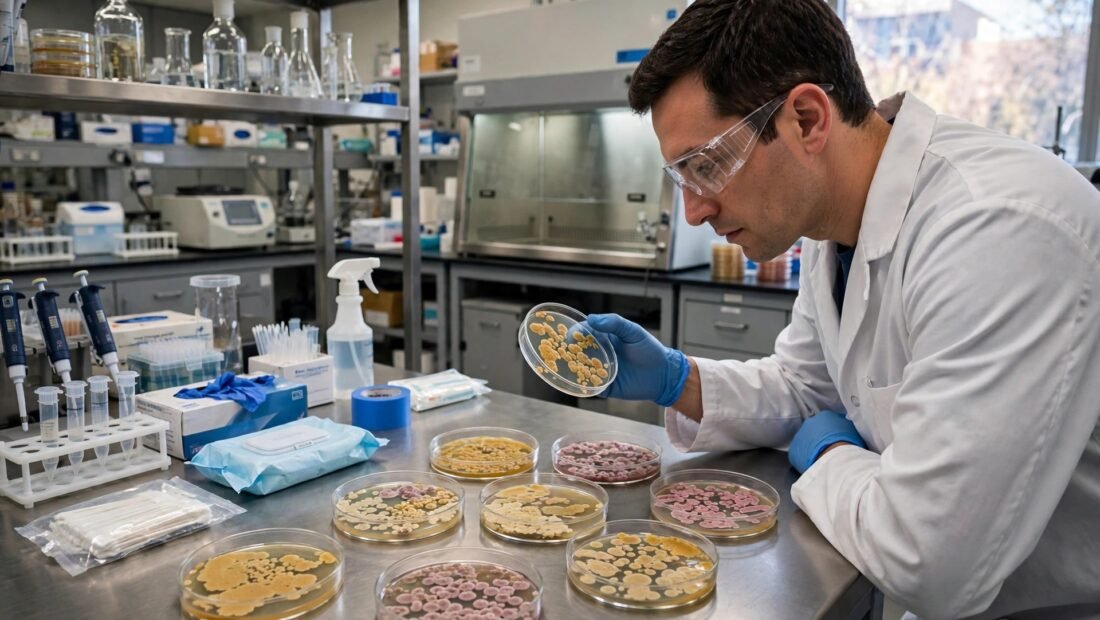
Before antibiotics, a scraped knee could kill you. Pneumonia was a leading cause of death, childbirth carried a constant risk of fatal infection, and routine surgery was a gamble with sepsis. Then came penicillin, and humanity gained what may be the single greatest medical advance in history: the ability to reliably cure bacterial infections. But that miracle is now in jeopardy. Antibiotic resistance — bacteria evolving to survive our drugs — already kills over a million people a year worldwide, and Texas’s massive healthcare and agriculture sectors sit squarely in the story.
Here’s how antibiotics work, why resistance happens, why it’s genuinely dangerous, and what you can do about it.
How Antibiotics Work: Five Ways to Kill Bacteria
Antibiotics exploit the differences between bacterial and human cells — attacking structures bacteria have and we don’t (or use differently). The major classes each target a bacterial vulnerability:
Cell wall synthesis inhibitors (penicillins, cephalosporins): bacteria need rigid cell walls to survive; human cells don’t have them at all. These drugs block wall construction, so growing bacteria literally burst. Elegant and selective — which is why penicillin was revolutionary.
Protein synthesis inhibitors (tetracyclines, macrolides like azithromycin): bacterial ribosomes (protein factories) differ structurally from human ones. These drugs jam the bacterial machinery, stopping the proteins bacteria need to grow and reproduce.
DNA replication inhibitors (fluoroquinolones like ciprofloxacin): they sabotage the enzymes bacteria use to copy their DNA, preventing reproduction.
Folate synthesis blockers (sulfonamides, trimethoprim): bacteria manufacture their own folate (a DNA building block); humans get it from food. Block the bacterial factory, starve the bacteria.
Membrane disruptors (polymyxins): last-resort drugs that punch holes in bacterial membranes — effective but toxic to kidneys, which is why they’re reserved for desperate cases.
Crucially: antibiotics do nothing to viruses. Colds, flu, COVID — all viral. Taking antibiotics for viral infections is pure downside: no benefit, all side effects, plus resistance fuel.
How Resistance Evolves: Evolution in Fast-Forward
Bacteria reproduce every 20 minutes and swap genes promiscuously — including across species via horizontal gene transfer. This makes them evolution’s speed-runners. Resistance develops through several mechanisms:
Natural selection under antibiotic pressure: in any bacterial population, a few mutants can survive a given drug. The antibiotic kills the susceptible 99.9% — and the resistant survivors, freed from competition, multiply into a resistant population. Every antibiotic course is a selection event. This is why finishing prescriptions matters (killing stragglers before they adapt) and why unnecessary prescriptions are dangerous (selection pressure with no benefit).
Gene sharing: bacteria pass resistance genes on plasmids — small DNA rings — to neighboring bacteria, even different species. A resistance gene born in a Texas feedlot E. coli can end up in a hospital Klebsiella across the state. Resistance is contagious between bacteria in a way the infections themselves aren’t.
The agricultural amplifier: roughly 70-80% of U.S. antibiotics by volume go to livestock — historically for growth promotion, now mostly for disease prevention in crowded conditions. This creates astronomical selection pressure. Texas, as the nation’s cattle capital, is central to this story: resistant bacteria from feedlots reach humans through meat, manure runoff, and farm workers. The CDC’s antimicrobial resistance program tracks this agricultural-human pipeline as a top priority.
Why Resistance Is Genuinely Dangerous
The numbers are stark: antimicrobial resistance directly caused an estimated 1.27 million deaths globally in 2019 — more than HIV or malaria — and contributed to nearly 5 million. In the U.S., 2.8+ million resistant infections yearly cause 35,000+ deaths. And the pipeline is dry: no truly new antibiotic class has been discovered since the 1980s, because antibiotics are poor business (short courses, stewardship limits use) compared to chronic-disease drugs.
The nightmare scenarios are already arriving: MRSA (methicillin-resistant Staph) kills ~20,000 Americans yearly; CRE (carbapenem-resistant Enterobacterales) resists nearly everything, with mortality up to 50% in bloodstream infections; drug-resistant gonorrhea threatens to become untreatable; C. difficile exploits antibiotic-wrecked gut flora. Beyond direct infections, resistance threatens all of modern medicine: without effective antibiotics, routine surgeries, C-sections, chemotherapy (which suppresses immunity), organ transplants, and premature infant care become lethally risky. Antibiotics are the invisible foundation of modern medicine — resistance is foundation rot.
Texas-specific stakes: the state’s huge hospital systems concentrate vulnerable patients; its border region sees resistant strains circulating internationally; and its livestock industry sits at the agricultural-resistance nexus. MD Anderson and other Texas centers are leaders in antimicrobial stewardship research precisely because the threat is local.
What You’re Doing Wrong (Probably)
Demanding antibiotics for colds/flu. Still one of the biggest drivers. A third or more of outpatient antibiotic prescriptions are unnecessary. If your doctor says it’s viral, believe them — and don’t doctor-shop for one who’ll prescribe.
Stopping early because you feel better. The survivors are the most resistant. Finish the course (though note: emerging research suggests shorter courses are fine for some infections — follow your doctor’s specific instructions, which reflect current evidence).
Using leftover antibiotics. Wrong drug, wrong dose, wrong duration — and it delays proper diagnosis. Never share prescriptions.
Antibacterial everything. Triclosan soaps and “antibacterial” household products offer no health benefit over plain soap (the FDA banned triclosan in consumer soaps for this reason) while adding selection pressure. Plain soap and water mechanically removes bacteria — no resistance possible.
What Actually Helps: Your Role and the Big Picture
Personal: only take antibiotics when prescribed for bacterial infections; finish courses as directed; never share or save leftovers; vaccinate (preventing infections prevents antibiotic use — flu, pneumococcal, and other vaccines are resistance-fighting tools); practice hand hygiene; and handle food safely (resistant bacteria ride on undercooked meat — a thermometer is a resistance intervention).
Systemic: support antimicrobial stewardship programs (hospitals that audit prescriptions cut resistance measurably); the push for new antibiotics needs economic reform — “subscription” payment models (paying for availability, not volume) are being piloted to make antibiotic development viable; rapid diagnostics that distinguish bacterial from viral infections in minutes would eliminate vast unnecessary prescribing; and phage therapy (viruses that kill bacteria) is emerging as a complement, with Texas researchers active in the field.
Understanding when symptoms warrant medical attention versus self-care helps reduce the pressure for unnecessary prescriptions — informed patients are stewardship allies.
Conclusion
Antibiotics work by exploiting bacterial vulnerabilities — walls, ribosomes, DNA machinery — that human cells don’t share. But bacteria evolve in fast-forward, and our overuse (in clinics and feedlots alike) has been selecting for resistance at a terrifying pace, while the drug pipeline runs dry. The post-antibiotic era isn’t a distant dystopia; in pockets — resistant gonorrhea, CRE outbreaks — it’s already here. The fix is collective discipline: prescribe carefully, use responsibly, vaccinate widely, and rebuild the economics of new drugs. The miracle of antibiotics was borrowed from nature; keeping it requires not squandering the loan.
If infections make you nervous about seeing a doctor, remember that feeling anxious before a doctor visit is common — and getting a proper diagnosis is what keeps antibiotic use appropriate.
Frequently Asked Questions
How do antibiotics kill bacteria?
Different classes target different bacterial vulnerabilities: cell wall construction (penicillins), protein synthesis (tetracyclines), DNA replication (fluoroquinolones), folate production (sulfonamides), or cell membranes (polymyxins). They exploit structures bacteria have and human cells don’t.
Why doesn’t finishing antibiotics matter anymore? (It does.)
Stopping early leaves the most resistant survivors alive to multiply. Always complete the course as your doctor directs — though for some infections evidence now supports shorter courses, so follow current medical guidance, not old rules of thumb.
Can antibiotic resistance be reversed?
Partially — reducing antibiotic use can lower resistance rates over time, as resistant strains often carry fitness costs. But some resistance genes persist indefinitely. Prevention (stewardship) vastly outperforms cure.
Do antibiotics work on viruses like colds or flu?
No — antibiotics target bacteria only. Using them for viral infections provides zero benefit while causing side effects and driving resistance. This misuse is a major resistance driver.
Why aren’t new antibiotics being developed?
Economics: antibiotics are short-course drugs subject to stewardship (limited use), making them unprofitable compared to chronic-disease medications. New payment models are being piloted to fix this market failure.