Puppy biting looks random from the outside. It is not. It runs on a developmental clock, with different causes peaking at different ages, and the fix works best when it follows that same clock. Baby teeth arrive, then fall out. A social window opens, then narrows. Sleep needs stay huge while energy arrives in wild bursts. Read the biting by phase, match the response to the phase, and a puppy that seems like a tiny alligator in week nine usually becomes a gentle dog on a predictable schedule. Rush the clock or fight the wrong phase and the same puppy just gets more wound up.
Phase one: the littermate lessons, roughly weeks three to eight
The first bite lessons happen before you ever meet your puppy. In the litter, puppies mouth, wrestle, and nip each other constantly, and they learn from the feedback. Bite a sibling too hard and the sibling yelps and stops playing. Bite softly and the game continues. That yelp-and-freeze exchange is the original bite inhibition lesson, and it teaches a puppy that pressure has consequences long before a human hand enters the picture.
You cannot redo this phase, but you need to understand it, because you are about to become the stand-in for those littermates. Your job in every later phase is to deliver the same clear signal the siblings delivered: hard bites end the fun, gentle mouthing does not earn panic, and a toy is always the better target. Puppies taken from the litter very early sometimes missed part of this schooling, and those puppies often need extra patience with the lessons that follow.
Phase two: arrival and first rules, weeks eight to twelve
The puppy that arrives home at eight to twelve weeks already has its deciduous teeth in. Those baby teeth erupt at three to four weeks, so the needle-sharp set is fully installed by moving day. The socialization window is also wide open in this phase. It runs from about three to fourteen weeks, and experiences during it shape how the adult dog handles people, places, and handling for years.
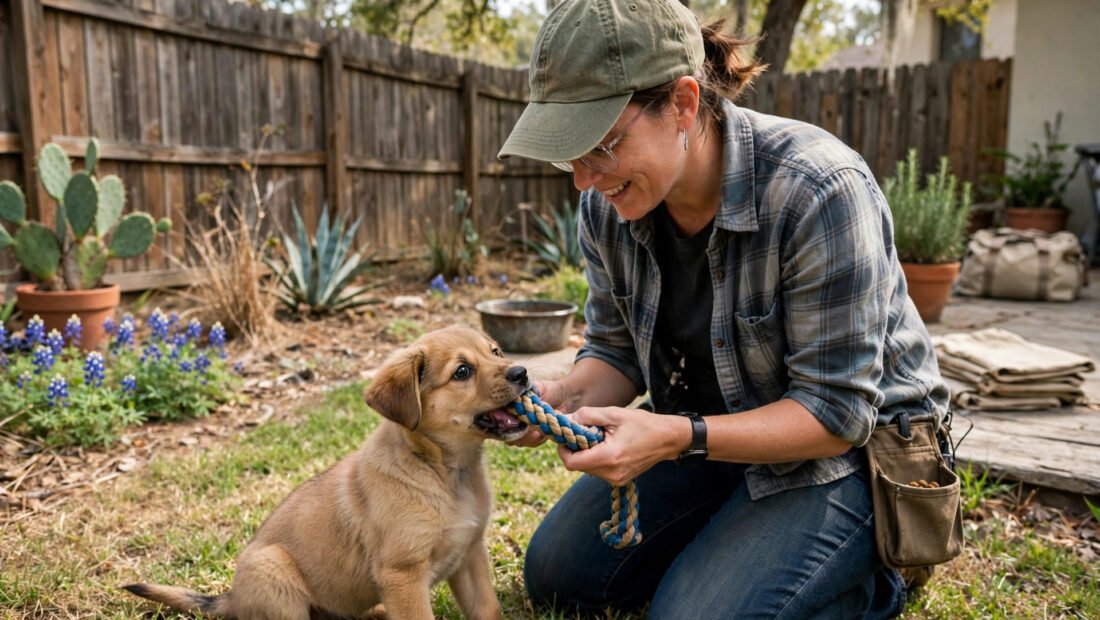
Biting in this phase is at its most cheerful and least personal. The puppy is not aggressive. It is uneducated. It explores the world with its mouth the way a toddler grabs with both hands. That is why the core method starts here and then carries through every phase after it. Teach bite inhibition before bite elimination. When a bite is hard, yelp or say a calm ouch, freeze, and let your hand go limp. A limp, boring hand is no fun to bite. When the biting continues anyway, stand up and end the game for thirty seconds. Walk away if you need to. Then, every time, redirect onto a toy the puppy is allowed to destroy. Offer the toy, praise the switch, and repeat the lesson until chew this, not me becomes the household rule the puppy actually believes.
Over days and weeks, tighten the standard gradually. First respond to the hardest bites. Then respond to medium ones. The puppy learns to soften its mouth in stages, which matters for life. A dog that learned as a puppy to control pressure does far less harm if pain or fear ever causes a snap as an adult. Everyone in the home has to run the same script. One person yelping and freezing while another wrestles and laughs through biting teaches the puppy that rules depend on the victim, and the biting lasts months longer. A solid home base helps here too, and learning how to crate train a puppy fast in Texas gives you the calm rest space the next phases depend on.
Phase three: teething at full pressure, roughly weeks twelve to twenty-four
This is the peak, and it helps to know why it feels worse just as training starts to work. Adult teeth replace baby teeth between four and six months, and the whole swap leaves gums sore and itchy for weeks. A teething puppy is not being defiant. It is looking for pressure on gums that hurt, and it will find that pressure on chair legs, shoes, or your hands if nothing better is on offer.
Stock this phase properly. Frozen wet washcloths, twisted and chilled, give a puppy something cold and firm to work on. Frozen carrots do the same job for many puppies. Proper chew toys sized for the puppy’s mouth earn their keep now more than at any other age. Rotate them so yesterday’s boring chew feels new again, and keep one within reach in every room where the puppy spends time. A puppy mid-teethe with no legal chew nearby will invent an illegal one in seconds.
Hands and feet need separate tactics in this phase, because they trigger different instincts. Hands usually get bitten during play and handling, so the yelp, freeze, and redirect method applies directly. Feet are a different trigger. Moving feet read as prey and, for herding breeds, as stock to be rounded up. The rule for feet is freeze. Do not dance away, hop, or kick out, because movement is the reward that makes the game worth repeating. Stand still, go boring, redirect onto a toy, and if ankles have become an obsession, park the puppy briefly with a chew in its pen until the urge passes. Reward calm behavior around moving feet heavily. That calm is hard for a young herder, and it should pay well.
The management layer that runs underneath every phase
Training fails without management, and sleep is the largest piece of it. Puppies need 18 to 20 hours of sleep a day. An overtired puppy is a biting puppy, and the wild evening version that ambushes the whole family is usually an exhausted puppy, not a bad one. Build enforced naps into the day. After every one to two hours awake, settle the puppy in a crate or pen for a real sleep, lights low and household noise down. Owners are often stunned by how much of the biting problem was a sleep problem wearing teeth.
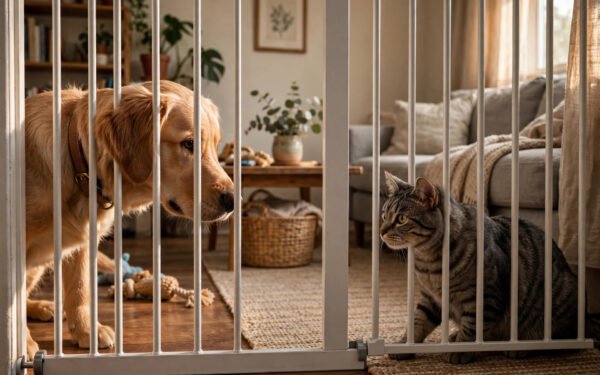
Management also means setting up the space. Keep legal chews everywhere, lift shoes and remotes out of reach instead of scolding a puppy for finding them, and use gates or a pen to limit access during the wildest hours. Short training sessions, sniff-heavy walks, and puzzle feeders drain the mental energy that otherwise turns into mouthing. Hand-feeding part of a meal, one small handful at a time with a soft mouth required for each piece, fits this layer well too. It slows eating, practices gentle pressure right at the source, and teaches the puppy that hands deliver good things when teeth stay polite. For broader grounding on these early months, the American Kennel Club’s puppy training guidance covers socialization, handling, and early manners in plain steps that pair well with the phase plan here.
The never list, in every phase
Three responses are off the table at every age, no matter how sore your hands are. Never hit the muzzle. Never hold the puppy’s mouth shut. Never use alpha rolls, pinning a puppy on its back to assert rank. All three teach the same damaging lesson: hands near the face mean danger. A puppy that learns that lesson may stop biting during play and start biting out of fear during handling, grooming, or vet visits. That trade is how fear biters are manufactured, and it is far harder to undo than puppy mouthing ever was.
Add yelling to the cautious list while you are at it. A loud reaction either excites a puppy further or frightens it, and neither state learns well. Calm, dull, and consistent beats loud every time. The boring adult who freezes, ends the game, and offers a toy is not being soft. That adult is running the exact feedback system the litter used, and puppies understand it at once.
The Texas layer across the timeline
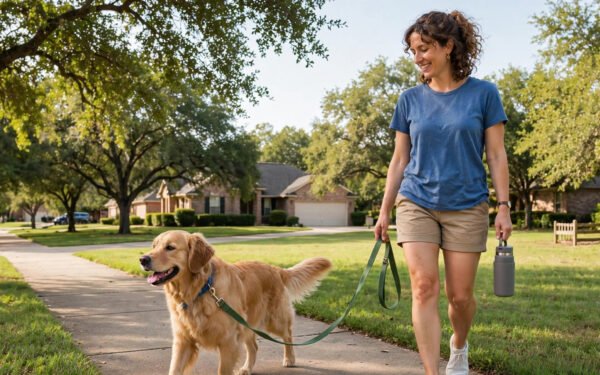
Texas weather shapes how you run these phases. Use the mild spring and autumn weeks inside the socialization window for outdoor practice, introductions, and handling work. In summer, keep paws off scorching pavement, which can burn pads in minutes at midday, and move play and training to early morning and evening. An overheated, frustrated puppy bites more and learns less.
Disease caution runs alongside socialization here. Be careful about paws-down time in busy public places until vaccinations are complete. Carry the puppy, use clean private yards, and choose puppy classes with strict hygiene rules. The goal is a well-socialized puppy, not a well-exposed one, and the two can be balanced with a little planning during the eight-to-fourteen-week stretch.
The red-flag line and the honest finish line
Most biting stays on the normal side of the line. Crossings look specific. Hard, uninhibited biting persisting past six months is one. Biting paired with growling and stiffening over food or toys is another. A puppy that bites when startled, cornered, or handled and cannot settle afterward also needs more than home advice. Any of those patterns goes to a certified professional trainer with the CPDT-KA credential or to a veterinary behaviorist, promptly. Early professional help changes outcomes in a way extra weeks of guessing cannot.
For the normal puppy, keep the honest timeline in view on the hard days. Most puppies improve significantly by four to five months, as teething ends and the bite inhibition lessons stack up. Most are reliably gentle by six to eight months. There will be relapses, usually during the worst teething weeks or on overtired evenings, and a relapse is a phase doing what phases do. Consistency does the work here, not force and not speed. Meet each phase with its own tactic, protect the sleep, keep the chews coming, and the needle teeth become a short chapter instead of a long one.