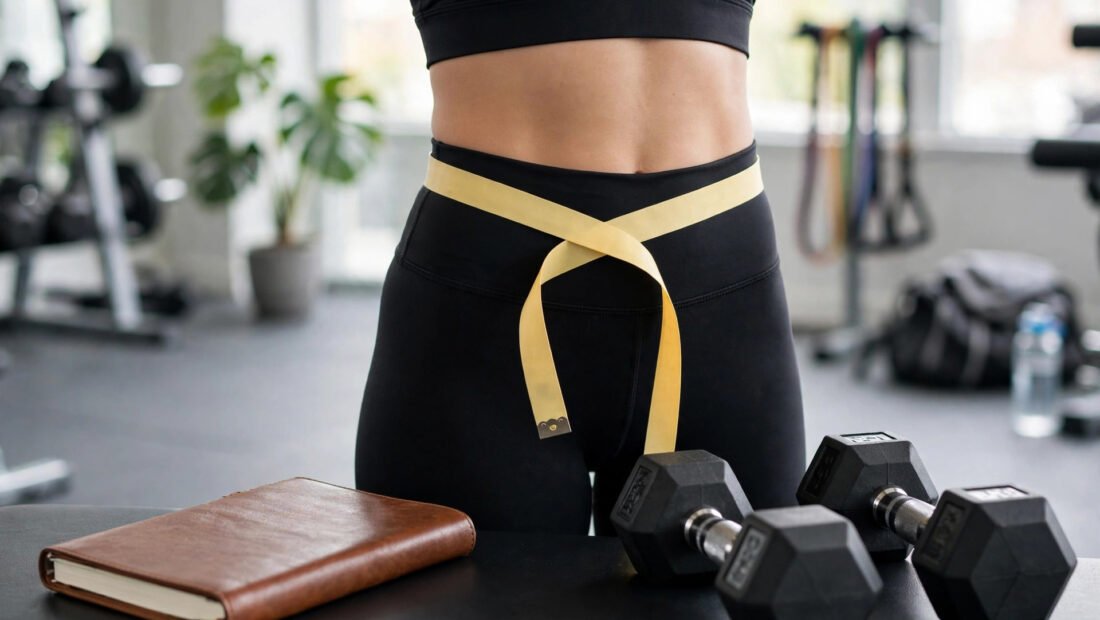
Three weeks of steady workouts, and the scale has not moved a pound. Then you pull on your jeans and the belt lands on a new notch. Both things can be true at once, and the second one often tells you more. Weight can swing 3 to 5 pounds in a single day from water, food, salt, and hormones. That swing hides fat loss, muscle gain, and better fitness for weeks. If the scale is your only scoreboard, you will miss progress that is already happening and you may quit right before it becomes obvious.
A better system uses five checks. None takes long. Together they show what your body can do, how its shape is changing, and whether you actually feel better living in it.
The five-pillar checklist to use instead
- Performance: log what you lifted, ran, or completed each session.
- Measurements: tape your waist, hips, chest, thighs, and arms once a month.
- Photos: take the same front and side photos once a month, in the same light and clothes.
- Clothes fit: test one pair of jeans and one fitted shirt each month.
- Energy and mood: rate energy, sleep, mood, stress, and comfort in your body from 1 to 10 once a week.
That is the whole checklist. You do not need an app for every metric or a spreadsheet with twenty tabs. A workout log you update after each session, a 10-minute monthly check for measurements and photos, and a 2-minute weekly note on your phone cover it. Review the full set every 12 weeks, not every morning.
Pillar 1: Performance tells you first
What you can do is the cleanest early sign that training is working. Strength, pace, and stamina usually improve in 2 to 4 weeks, well before a mirror shows much change. That early proof matters on the days motivation runs thin.
Pick markers that match your training. If you lift, write down the exercise, weight, and reps for your main lifts. Squatting 135 pounds for 8 reps and, two months later, squatting 155 for 8 is progress no scale reading can argue with. If you run or walk, track distance, time, and how hard the effort felt. Covering the same Texas neighborhood loop two minutes faster, at the same easy effort, counts. If you train with body weight, count push-ups, note plank time, or record how many rounds you finished.
Log every session, but judge the trend monthly. One bad workout after a poor night of sleep means little. Four weeks of slightly heavier lifts, extra reps, or longer walks means the plan is doing its job. If performance stalls for a full month while sleep and food stay steady, that is a real signal to adjust the program, add rest, or eat a bit more.
Keep the log simple enough that you will actually use it. A paper notebook in your gym bag works. So does a notes app with one line per workout. Fancy tracking you abandon in week two helps less than plain notes you keep for a year. For a useful comparison point on daily movement, it also helps to know whether 10,000 steps a day is actually enough exercise for the goals you have set, rather than treating step count as a pass or fail grade.
Pillar 2: Measurements catch shape change the scale misses
A $10 tape measure often beats a $100 scale. It can show fat leaving your waist while muscle holds or grows in your arms and thighs. That pattern, called recomposition, is exactly why weight can stay flat while clothes fit better.
Measure once a month, at the same time of day, with the tape snug but not digging in. Stand relaxed. Do not suck in your stomach for the waist reading. Write down waist at the navel, hips at the widest point, chest, mid-thigh, and upper arm. Repeat each spot once to check you did not pull the tape tighter the second time.
Look at the waist first. A shrinking waist with steady or rising strength is a strong sign of fat loss with muscle kept. A useful rough guide from the original tracking approach is keeping your waist under half your height. Treat it as a direction to move toward, not a daily test. Single readings bounce around. A trend over two or three months is what counts.
Do not measure daily. Bodies do not change shape overnight, and daily tape checks create the same stress as daily weighing, just with a different tool. Monthly is frequent enough to catch real change and rare enough to keep you sane.
Pillar 3: Photos show what daily mirror checks hide
You see yourself every day, so slow change is hard to spot. A photo taken under the same conditions each month removes that blind spot. People are often surprised by a 3-month comparison even when the scale insisted nothing had changed.
Set up the same shot each time. Same room, same lighting, same fitted clothes or swimsuit, same distance from the phone. Take front, side, and back views if you can do so comfortably. Stand naturally. Do not flex for one month and relax the next, or the comparison stops meaning anything.
Store the photos in a private folder and look at them only at your monthly or quarterly review. Checking them weekly invites the same picking apart that makes the scale so miserable. At 8 to 12 weeks, side-by-side photos often show changes in posture, waist shape, and shoulder and leg definition that no single number captures.
If photos feel hard at the start, take them anyway and do not study them that day. Many people are glad later that they have a true starting point instead of a memory that shifts with mood.
Pillar 4: Clothes fit measures what you care about
The jeans test is simple on purpose. Choose one pair of pants and one fitted shirt that were snug when you started. Try them on once a month, ideally at the same time of day. Note three things: how the waistband closes, whether the fabric pulls across the hips or chest, and how the clothes feel after you sit down and stand up again.
This check matters because it reflects daily life. Nobody walks around with their weight printed on their forehead. People notice how they move, how their clothes sit, and whether getting dressed feels easier. If the jeans button without a fight and the shirt hangs better, your body has changed in a way that matters to you, even if gravity reports the same total.
Pick benchmark clothes you will not wear so often that they stretch out or shrink in the wash between checks. Keep them in the same spot so the monthly test takes two minutes.
Pillar 5: Energy, sleep, and mood are real results
Fitness is supposed to make life better, not just make a body smaller. Once a week, rate five things from 1 to 10: energy, sleep quality, mood, stress, and how you feel in your body. Add one short note if something explains a low score, such as a late work night, a sick child, or Texas heat that wrecked your sleep.
These scores often rise before measurements move. Better sleep, steadier afternoon energy, and less dread before a workout are not side effects. They are central reasons to train. They also warn you early. If performance drops and energy, sleep, and mood slide for two weeks in a row, you may need more rest or food, not more workouts.
For a broader view of how professionals assess progress beyond weight, see the American Council on Exercise’s fitness resources. Strength, health markers, and daily function belong on the scoreboard alongside appearance.
How to run the system without letting it run you
Put the pieces on a schedule and then leave them alone between checks. After each workout, spend one minute logging performance. Once a week, spend two minutes on the energy check. Once a month, spend ten minutes on measurements, photos, and the clothes test. Every 12 weeks, sit down for about 15 minutes and read the whole record.
At that quarterly review, ask five plain questions. Are lifts, pace, or reps improving? Are measurements trending the right way? Do photos show change next to the set from 12 weeks ago? Are energy and sleep stable or better? Are you enjoying the process enough to keep going? If performance and energy are up but looks lag, stay the course. Body shape often follows performance with a delay. Change the program only when several pillars stall or slide together.
Track actions as well as results. Workouts completed, walks taken, and protein-rich meals eaten are things you control directly. Fat loss and muscle gain respond to those actions, but not on a neat daily schedule. A streak of completed sessions motivates without the cruelty of a bouncing scale number, and it points to the exact lever to pull when progress slows.
When the scale still has a limited job
None of this means a scale is useless in every case. It can help when a sport has a weight class, when a doctor is tracking recovery after illness, or when a clinician has set a specific weight target for a medical reason. Even then, it works best as one metric among many.
If you keep using one, weigh once a week, on the same day, at the same time, after the bathroom and before breakfast. Write it down and look at the 4-week average. Never react to a single morning reading. A salty restaurant meal, a hard leg workout, a poor night of sleep, or a hot day in Houston can each add temporary water weight that has nothing to do with fat.
For general fitness, the scale is optional. If stepping on it ruins your morning and makes you want to skip the workout that is actually helping you, put it in a closet for a month and run the five pillars instead. You will still know whether you are progressing. In fact, you will know it more clearly, from more angles, and with far less noise.
Progress is not one number dropping fast enough. Progress is a stronger squat, a smaller waist, photos that show a different shape, jeans that fit, and a week where you slept well and felt steady. Track those things on a calm schedule, give them 8 to 12 weeks to speak, and let the belt notch count for what it is: evidence.